fossil

Specimen nature

371 image(s) · 183 News

Image gallery

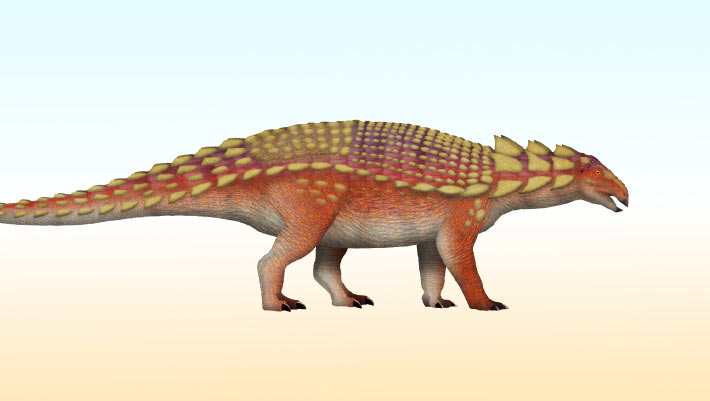
A hypothetical life restoration of Ampelosaurus atacis

• Ampelosaurus is known from hundreds of fossil specimens which show most of the dinosaur's osteological details, however, there are few articulated remains or reconstructions of the material so its overall proportions and life appearance are uncertain.
• Ampelosaurus is known to have supported osteoderms, only four are currently known. The number of these osteoderms that an individual Ampelosaurus would have supported in life and their and position on the body is not currently known. It's thought that due to the rarity of titanosaur osteoderms that they would be quite sparse on the body. The position and layout of the osteoderms has been loosely based on this interpretation, which is based on the work of Vidal et al 2015. [1]
Taxa Dashanpusaurus

A hypothetical life restoration of Ampelosaurus atacis • Ampelosaurus is known from hundreds of fossil specimens which show most of the dinosaur's osteological details, however, there are few articulated remains or reconstructions of the material so its overall proportions and life appearance are uncertain. • Ampelosaurus is known to have supported osteoderms, only four are currently known. The number of these osteoderms that an individual Ampelosaurus would have supported in life and their and position on the body is not currently known. It's thought that due to the rarity of titanosaur osteoderms that they would be quite sparse on the body. The position and layout of the osteoderms has been loosely based on this interpretation, which is based on the work of Vidal et al 2015. [1]

fossil specimen Ampelosaurus Bagualosauria +6
Lower Triassic fossil footprint (ichnite) of the ichnogenus Chirotherium, probably caused by an early archosaur, and first discovered 1833 in Hildburghausen (Thuringia, Germany). This specimen, however, ist from the Helsby Sandstone of the Storeton Quarry near Liverpool. Its species name is Chirotherium storetonense.[1]
Taxa Abelichnus

Lower Triassic fossil footprint (ichnite) of the ichnogenus Chirotherium, probably caused by an early archosaur, and first discovered 1833 in Hildburghausen (Thuringia, Germany). This specimen, however, ist from the Helsby Sandstone of the Storeton Quarry near Liverpool. Its species name is Chirotherium storetonense.[1]

Germany Triassic fossil specimen +9
Lower Triassic fossil footprint (ichnite) of the ichnogenus Chirotherium, probably caused by an early archosaur, and first discovered 1833 in Hildburghausen (Thuringia, Germany). This specimen, however, ist from the Helsby Sandstone of the Storeton Quarry near Liverpool. Its species name is Chirotherium storetonense.[1]
Taxa Anticheiropus

Lower Triassic fossil footprint (ichnite) of the ichnogenus Chirotherium, probably caused by an early archosaur, and first discovered 1833 in Hildburghausen (Thuringia, Germany). This specimen, however, ist from the Helsby Sandstone of the Storeton Quarry near Liverpool. Its species name is Chirotherium storetonense.[1]

Germany Triassic fossil specimen +9
Lower Triassic fossil footprint (ichnite) of the ichnogenus Chirotherium, probably caused by an early archosaur, and first discovered 1833 in Hildburghausen (Thuringia, Germany). This specimen, however, ist from the Helsby Sandstone of the Storeton Quarry near Liverpool. Its species name is Chirotherium storetonense.[1]
Taxa Argoides

Lower Triassic fossil footprint (ichnite) of the ichnogenus Chirotherium, probably caused by an early archosaur, and first discovered 1833 in Hildburghausen (Thuringia, Germany). This specimen, however, ist from the Helsby Sandstone of the Storeton Quarry near Liverpool. Its species name is Chirotherium storetonense.[1]

Germany Triassic fossil specimen +9
Lower Triassic fossil footprint (ichnite) of the ichnogenus Chirotherium, probably caused by an early archosaur, and first discovered 1833 in Hildburghausen (Thuringia, Germany). This specimen, however, ist from the Helsby Sandstone of the Storeton Quarry near Liverpool. Its species name is Chirotherium storetonense.[1]
Taxa Delatorrichnus

Lower Triassic fossil footprint (ichnite) of the ichnogenus Chirotherium, probably caused by an early archosaur, and first discovered 1833 in Hildburghausen (Thuringia, Germany). This specimen, however, ist from the Helsby Sandstone of the Storeton Quarry near Liverpool. Its species name is Chirotherium storetonense.[1]

Germany Triassic fossil specimen +9
Lower Triassic fossil footprint (ichnite) of the ichnogenus Chirotherium, probably caused by an early archosaur, and first discovered 1833 in Hildburghausen (Thuringia, Germany). This specimen, however, ist from the Helsby Sandstone of the Storeton Quarry near Liverpool. Its species name is Chirotherium storetonense.[1]
Taxa Dinehichnus

Lower Triassic fossil footprint (ichnite) of the ichnogenus Chirotherium, probably caused by an early archosaur, and first discovered 1833 in Hildburghausen (Thuringia, Germany). This specimen, however, ist from the Helsby Sandstone of the Storeton Quarry near Liverpool. Its species name is Chirotherium storetonense.[1]

Germany Triassic fossil specimen +9
Lower Triassic fossil footprint (ichnite) of the ichnogenus Chirotherium, probably caused by an early archosaur, and first discovered 1833 in Hildburghausen (Thuringia, Germany). This specimen, however, ist from the Helsby Sandstone of the Storeton Quarry near Liverpool. Its species name is Chirotherium storetonense.[1]
Taxa Dromaeosauripus

Lower Triassic fossil footprint (ichnite) of the ichnogenus Chirotherium, probably caused by an early archosaur, and first discovered 1833 in Hildburghausen (Thuringia, Germany). This specimen, however, ist from the Helsby Sandstone of the Storeton Quarry near Liverpool. Its species name is Chirotherium storetonense.[1]

Germany Triassic fossil specimen +9
Lower Triassic fossil footprint (ichnite) of the ichnogenus Chirotherium, probably caused by an early archosaur, and first discovered 1833 in Hildburghausen (Thuringia, Germany). This specimen, however, ist from the Helsby Sandstone of the Storeton Quarry near Liverpool. Its species name is Chirotherium storetonense.[1]
Taxa Eutynichnium

Lower Triassic fossil footprint (ichnite) of the ichnogenus Chirotherium, probably caused by an early archosaur, and first discovered 1833 in Hildburghausen (Thuringia, Germany). This specimen, however, ist from the Helsby Sandstone of the Storeton Quarry near Liverpool. Its species name is Chirotherium storetonense.[1]

Germany Triassic fossil specimen +9
fossil Europasaurus, Aathal Dinosaur Museum.

fossil Europasaurus, Aathal Dinosaur Museum.

museum fossil Dinosauria Europasaurus
Left humerus of Haestasaurus becklesii (NHMUK R1870). A, anterior view; B, posterior view; Abbreviations: af, anconeal fossa; dp, deltopectoral crest; hh, humeral head; ltf, lateral triceps fossa; mtf, medial triceps fossa.

This fossil was found in strata of the Hastings Beds (late Berriasian—Valanginian in age) on the coast near Hastings, East Sussex, England.

Left humerus of Haestasaurus becklesii (NHMUK R1870). A, anterior view; B, posterior view; Abbreviations: af, anconeal fossa; dp, deltopectoral crest; hh, humeral head; ltf, lateral triceps fossa; mtf, medial triceps fossa. This fossil was found in strata of the Hastings Beds (late Berriasian—Valanginian in age) on the coast near Hastings, East Sussex, England.

crest humerus Berriasian Valanginian +2
Holotype fossils of Glacialisaurus (PR 1823); metatarsals, tibia, fibula, ankle bones

Holotype fossils of Glacialisaurus (PR 1823); metatarsals, tibia, fibula, ankle bones

bone fossil holotype Glacialisaurus
Fossil Panphagia

Fossil Panphagia

fossil Panphagia
Fossil of Sthenarosaurus, an extinct reptile - Took the picture at Museum of Paleontology, Tuebingen

Fossil of Sthenarosaurus, an extinct reptile - Took the picture at Museum of Paleontology, Tuebingen

museum fossil Sthenarosaurus
fossil of seeleyosaurus

fossil of seeleyosaurus

fossil Seeleyosaurus
Fossil of Peteinosaurus zambellii (paratype MCSNB 3359), an extinct reptile

Fossil of Peteinosaurus zambellii (paratype MCSNB 3359), an extinct reptile

fossil Peteinosaurus
Fossil at the Museo Argentino de Ciencias Naturales in Caballito, Buenos Aires, Argentina.

Fossil at the Museo Argentino de Ciencias Naturales in Caballito, Buenos Aires, Argentina.

Argentina fossil Pterodaustro
1 2 3 4 5 6 7 8 9 10 11 12 13 14 15 16 17 18 19 20 21 22 23 24

News

New Species of Armored Dinosaur Identified in Japan
Japan fossil Ankylosauria Dinosauria Nodosauridae new species
Cranial fossils of a nodosaurid ankylosaur unearthed more than two decades ago on the Japanese island of Hokkaido have been recognized as belonging to a new genus and species. The post New Species of Armored Dinosaur Identified in Japan appeared first on Sci.News: Breaking Science News.
24/08/2026 sci-news
Remarkable Fossil Reveals the Diet of a Late Jurassic Ichthyosaur
Germany Jurassic Late Jurassic fossil specimen Aegirosaurus Ichthyosauria Jabalisaurus skeleton
Scientists studying the newly described ichthyosaur Jabalisaurus tethyensis have gained a remarkable insight into its diet. A beautifully preserved fossil from southern Germany contains evidence of the animal's last meals. In addition, the specimen preserves important details of the skeleton and body outline. The fossil, specimen number JME-SOS-08369, was previously assigned to Aegirosaurus. However, researchers
24/08/2026 everythingdinosaur
“One-in-a-million” sea creature fossil preserves soft tissue for 450 million years
tissue fossil Dinosauria
Scientists have identified exceptionally rare soft tissue preserved in a 450-million-year-old crinoid fossil, more than 200 million years older than the first dinosaurs. Its delicate tube feet offer a remarkable new window into how some of Earth’s earliest reef animals lived, fed, and evolved.
21/08/2026 sciencedaily
Fossil of Small Duck-Billed Dinosaur Relative Found in Japan
bone Japan Cretaceous fossil Canardia Dinosauria Iguanodontia Styracosterna
A fossilized bone unearthed two decades ago in northeastern Japan belongs to one of the smallest iguanodontian dinosaurs ever found in the country’s Cretaceous marine rocks, according to new research led by the University of Tsukuba. The post Fossil of Small Duck-Billed Dinosaur Relative Found in Japan appeared first on Sci.News: Breaking Science News.
20/08/2026 sci-news
Scientists say the human family tree may need a major rewrite
fossil Homo sapiens human origin phylogeny
The human family tree may be due for a major rewrite. Researchers argue that Australopithecus and Paranthropus should be folded into the genus Homo because new fossils have blurred many of the traits once used to separate them. The proposed shake-up could provide a simpler, more accurate picture of our surprisingly complicated evolutionary past.
20/08/2026 sciencedaily-paleo
1 2 3 4 5 6 7 8 9 10 11 12 13 14 15 16 17 18 19 20 21 22 23 24 25 26 27 28 29 30 31 32 33 34 35 36 37