fossile

Nature du spécimen

371 image(s) · 183 Actualités

Galerie d'images

A hypothetical life restoration of Ampelosaurus atacis

• Ampelosaurus is known from hundreds of fossil specimens which show most of the dinosaur's osteological details, however, there are few articulated remains or reconstructions of the material so its overall proportions and life appearance are uncertain.
• Ampelosaurus is known to have supported osteoderms, only four are currently known. The number of these osteoderms that an individual Ampelosaurus would have supported in life and their and position on the body is not currently known. It's thought that due to the rarity of titanosaur osteoderms that they would be quite sparse on the body. The position and layout of the osteoderms has been loosely based on this interpretation, which is based on the work of Vidal et al 2015. [1]
Taxons Dashanpusaurus

A hypothetical life restoration of Ampelosaurus atacis • Ampelosaurus is known from hundreds of fossil specimens which show most of the dinosaur's osteological details, however, there are few articulated remains or reconstructions of the material so its overall proportions and life appearance are uncertain. • Ampelosaurus is known to have supported osteoderms, only four are currently known. The number of these osteoderms that an individual Ampelosaurus would have supported in life and their and position on the body is not currently known. It's thought that due to the rarity of titanosaur osteoderms that they would be quite sparse on the body. The position and layout of the osteoderms has been loosely based on this interpretation, which is based on the work of Vidal et al 2015. [1]

fossile spécimen Ampelosaurus Bagualosauria +6
Lower Triassic fossil footprint (ichnite) of the ichnogenus Chirotherium, probably caused by an early archosaur, and first discovered 1833 in Hildburghausen (Thuringia, Germany). This specimen, however, ist from the Helsby Sandstone of the Storeton Quarry near Liverpool. Its species name is Chirotherium storetonense.[1]
Taxons Abelichnus

Lower Triassic fossil footprint (ichnite) of the ichnogenus Chirotherium, probably caused by an early archosaur, and first discovered 1833 in Hildburghausen (Thuringia, Germany). This specimen, however, ist from the Helsby Sandstone of the Storeton Quarry near Liverpool. Its species name is Chirotherium storetonense.[1]

Allemagne Trias fossile spécimen +9
Lower Triassic fossil footprint (ichnite) of the ichnogenus Chirotherium, probably caused by an early archosaur, and first discovered 1833 in Hildburghausen (Thuringia, Germany). This specimen, however, ist from the Helsby Sandstone of the Storeton Quarry near Liverpool. Its species name is Chirotherium storetonense.[1]
Taxons Anticheiropus

Lower Triassic fossil footprint (ichnite) of the ichnogenus Chirotherium, probably caused by an early archosaur, and first discovered 1833 in Hildburghausen (Thuringia, Germany). This specimen, however, ist from the Helsby Sandstone of the Storeton Quarry near Liverpool. Its species name is Chirotherium storetonense.[1]

Allemagne Trias fossile spécimen +9
Lower Triassic fossil footprint (ichnite) of the ichnogenus Chirotherium, probably caused by an early archosaur, and first discovered 1833 in Hildburghausen (Thuringia, Germany). This specimen, however, ist from the Helsby Sandstone of the Storeton Quarry near Liverpool. Its species name is Chirotherium storetonense.[1]
Taxons Argoides

Lower Triassic fossil footprint (ichnite) of the ichnogenus Chirotherium, probably caused by an early archosaur, and first discovered 1833 in Hildburghausen (Thuringia, Germany). This specimen, however, ist from the Helsby Sandstone of the Storeton Quarry near Liverpool. Its species name is Chirotherium storetonense.[1]

Allemagne Trias fossile spécimen +9
Lower Triassic fossil footprint (ichnite) of the ichnogenus Chirotherium, probably caused by an early archosaur, and first discovered 1833 in Hildburghausen (Thuringia, Germany). This specimen, however, ist from the Helsby Sandstone of the Storeton Quarry near Liverpool. Its species name is Chirotherium storetonense.[1]
Taxons Delatorrichnus

Lower Triassic fossil footprint (ichnite) of the ichnogenus Chirotherium, probably caused by an early archosaur, and first discovered 1833 in Hildburghausen (Thuringia, Germany). This specimen, however, ist from the Helsby Sandstone of the Storeton Quarry near Liverpool. Its species name is Chirotherium storetonense.[1]

Allemagne Trias fossile spécimen +9
Lower Triassic fossil footprint (ichnite) of the ichnogenus Chirotherium, probably caused by an early archosaur, and first discovered 1833 in Hildburghausen (Thuringia, Germany). This specimen, however, ist from the Helsby Sandstone of the Storeton Quarry near Liverpool. Its species name is Chirotherium storetonense.[1]
Taxons Dinehichnus

Lower Triassic fossil footprint (ichnite) of the ichnogenus Chirotherium, probably caused by an early archosaur, and first discovered 1833 in Hildburghausen (Thuringia, Germany). This specimen, however, ist from the Helsby Sandstone of the Storeton Quarry near Liverpool. Its species name is Chirotherium storetonense.[1]

Allemagne Trias fossile spécimen +9
Lower Triassic fossil footprint (ichnite) of the ichnogenus Chirotherium, probably caused by an early archosaur, and first discovered 1833 in Hildburghausen (Thuringia, Germany). This specimen, however, ist from the Helsby Sandstone of the Storeton Quarry near Liverpool. Its species name is Chirotherium storetonense.[1]
Taxons Dromaeosauripus

Lower Triassic fossil footprint (ichnite) of the ichnogenus Chirotherium, probably caused by an early archosaur, and first discovered 1833 in Hildburghausen (Thuringia, Germany). This specimen, however, ist from the Helsby Sandstone of the Storeton Quarry near Liverpool. Its species name is Chirotherium storetonense.[1]

Allemagne Trias fossile spécimen +9
Lower Triassic fossil footprint (ichnite) of the ichnogenus Chirotherium, probably caused by an early archosaur, and first discovered 1833 in Hildburghausen (Thuringia, Germany). This specimen, however, ist from the Helsby Sandstone of the Storeton Quarry near Liverpool. Its species name is Chirotherium storetonense.[1]
Taxons Eutynichnium

Lower Triassic fossil footprint (ichnite) of the ichnogenus Chirotherium, probably caused by an early archosaur, and first discovered 1833 in Hildburghausen (Thuringia, Germany). This specimen, however, ist from the Helsby Sandstone of the Storeton Quarry near Liverpool. Its species name is Chirotherium storetonense.[1]

Allemagne Trias fossile spécimen +9
fossil Europasaurus, Aathal Dinosaur Museum.

fossil Europasaurus, Aathal Dinosaur Museum.

musée fossile Dinosauria Europasaurus
Left humerus of Haestasaurus becklesii (NHMUK R1870). A, anterior view; B, posterior view; Abbreviations: af, anconeal fossa; dp, deltopectoral crest; hh, humeral head; ltf, lateral triceps fossa; mtf, medial triceps fossa.

This fossil was found in strata of the Hastings Beds (late Berriasian—Valanginian in age) on the coast near Hastings, East Sussex, England.

Left humerus of Haestasaurus becklesii (NHMUK R1870). A, anterior view; B, posterior view; Abbreviations: af, anconeal fossa; dp, deltopectoral crest; hh, humeral head; ltf, lateral triceps fossa; mtf, medial triceps fossa. This fossil was found in strata of the Hastings Beds (late Berriasian—Valanginian in age) on the coast near Hastings, East Sussex, England.

crête humérus Berriasien Valanginien +2
Holotype fossils of Glacialisaurus (PR 1823); metatarsals, tibia, fibula, ankle bones

Holotype fossils of Glacialisaurus (PR 1823); metatarsals, tibia, fibula, ankle bones

os fossile holotype Glacialisaurus
Fossil Panphagia

Fossil Panphagia

fossile Panphagia
Fossil of Sthenarosaurus, an extinct reptile - Took the picture at Museum of Paleontology, Tuebingen

Fossil of Sthenarosaurus, an extinct reptile - Took the picture at Museum of Paleontology, Tuebingen

musée fossile Sthenarosaurus
fossil of seeleyosaurus

fossil of seeleyosaurus

fossile Seeleyosaurus
Fossil of Peteinosaurus zambellii (paratype MCSNB 3359), an extinct reptile

Fossil of Peteinosaurus zambellii (paratype MCSNB 3359), an extinct reptile

fossile Peteinosaurus
Fossil at the Museo Argentino de Ciencias Naturales in Caballito, Buenos Aires, Argentina.

Fossil at the Museo Argentino de Ciencias Naturales in Caballito, Buenos Aires, Argentina.

Argentine fossile Pterodaustro
1 2 3 4 5 6 7 8 9 10 11 12 13 14 15 16 17 18 19 20 21 22 23 24

Actualités

Un fossile vieux de 30 ans cachait les os d'un mystérieux monstre marin ancien
os mâchoire Crétacé fossile Mosasaurus nouvelle espèce crâne
Des fossiles collectés à Osaka il y a plus de 30 ans ont révélé une surprise cachée à la vue de tous : quatre os jusqu'alors méconnus provenant d'un mosasaure géant du Crétacé. Parmi eux se trouve le premier prémaxillaire confirmé – l’os le plus en avant de la mâchoire supérieure – jamais identifié dans un fossile de mosasaure japonais. Plus intrigant encore, certaines parties du crâne présentent des caractéristiques anatomiques inhabituelles qui ne correspondent pas aux mosasaures connus, ce qui laisse penser que les restes appartiennent à une espèce entièrement nouvelle.
15/08/2026 sciencedaily ⚙ Traduction automatique
La paléontologie est ébranlée par des molécules organiques découvertes dans des os de dinosaures vieux de 66 millions d'années
os collagène protéine fossile Dinosauria découverte évolution
Les chercheurs ont trouvé des preuves solides que le collagène original peut survivre à l’intérieur des fossiles de dinosaures pendant des dizaines de millions d’années, renversant ainsi une hypothèse de longue date concernant la fossilisation. Cette découverte pourrait révéler des indices moléculaires cachés sur la biologie des dinosaures, leur évolution et la façon dont d’anciennes protéines ont réussi à survivre aussi longtemps.
14/08/2026 sciencedaily ⚙ Traduction automatique
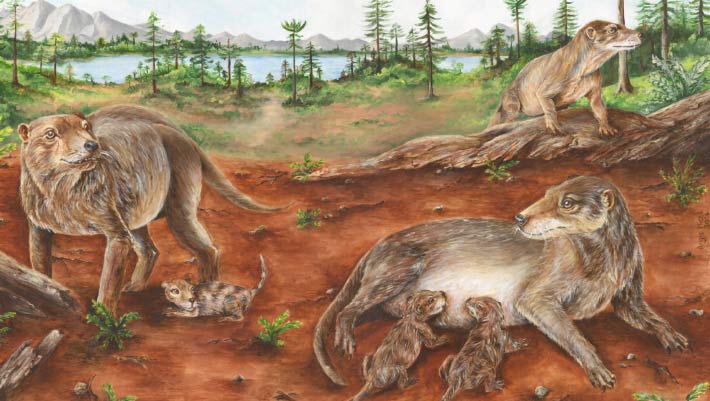
Fossil Evidence Pushes Back Origin of Live Birth by 90 Million Years
Les preuves fossiles repoussent l’origine des naissances vivantes de 90 millions d’années
reproduction Argentine fossile mammifères
Les paléontologues étudiant un fossile de cynodonte d'Argentine vieux de 236 millions d'années affirment avoir trouvé la première preuve de viviparité (naissance vivante) dans la lignée évolutive qui mène aux mammifères, repoussant l'origine de cette stratégie de reproduction de 90 à 95 millions d'années. L'article Les preuves fossiles repoussent l'origine des naissances vivantes de 90 millions d'années est apparu en premier sur Sci.News : Breaking Science News.
13/08/2026 sci-news ⚙ Traduction automatique
Un nouveau genre de dinosaure troodontidé du Nouveau-Mexique
os Mexique Campanien Crétacé Crétacé supérieur fossile Dinevenator Dinosauria Troodontidae nouvelle espèce crâne
Les paléontologues ont nommé une nouvelle espèce de dinosaure théropode du Nouveau-Mexique. Le dinosaure, Dinevenator Robustus, vivait il y a environ 73 millions d'années (stade faunique campanien du Crétacé supérieur). Les chercheurs ont identifié le dinosaure à partir d’un os fossile du crâne (un frontal) trouvé dans le nord-ouest du Nouveau-Mexique. Il représente un nouveau genre et une nouvelle espèce de troodontidé. Troodontidés
13/08/2026 everythingdinosaur ⚙ Traduction automatique
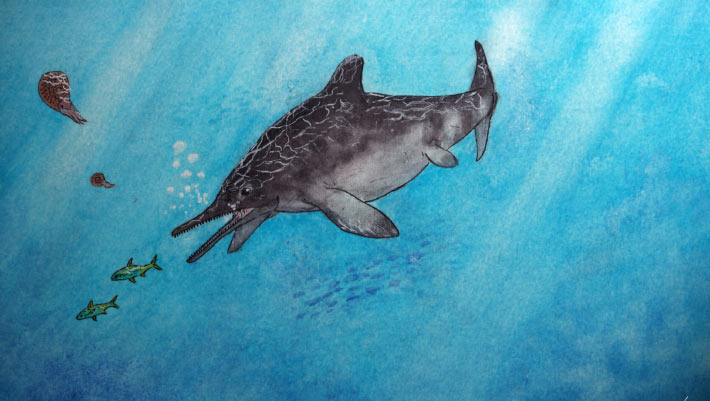
Germany’s Famous Fossil Beds Yield New Species of Jurassic Ichthyosaur
Les célèbres gisements de fossiles d’Allemagne donnent naissance à de nouvelles espèces d’ichtyosaures jurassiques
musée Allemagne Jurassique fossile Ichthyosauria Ichthyosaurus Jabalisaurus nouvelle espèce
Le Dr Erin Maxwell du Staatliches Museum für Naturkunde Stuttgart et ses collègues ont identifié une deuxième espèce dans les gisements calcaires allemands de Plattenkalk : Jabalisaurus tethyensis. L’article Les célèbres gisements de fossiles d’Allemagne produisent de nouvelles espèces d’ichtyosaures jurassiques est apparu en premier sur Sci.News : Breaking Science News.
11/08/2026 sci-news ⚙ Traduction automatique
1 2 3 4 5 6 7 8 9 10 11 12 13 14 15 16 17 18 19 20 21 22 23 24 25 26 27 28 29 30 31 32 33 34 35 36 37