←

Jurassique

Intervalle géologique

97 image(s) · 29 Actualités

Voir la fiche

Galerie d'images

An atypical (without intertidal and supratidal environment) carbonate platform settles down along the margin. Shallow water oolithes and oncoids are deposited in a narrow zone between a basin with Cancellophycus to the north and a marine/swampy plain with abundants mollusc fauna. However the Mytilus formation, rich in bathonian and callovian foraminifera (Septfontaine, 1984 etc.), develop thick limestone beds tenth of meter above, wrongly attributed to the upper Jurassic. See discussion in Septfontaine (1984).

An atypical (without intertidal and supratidal environment) carbonate platform settles down along the margin. Shallow water oolithes and oncoids are deposited in a narrow zone between a basin with Cancellophycus to the north and a marine/swampy plain with abundants mollusc fauna. However the Mytilus formation, rich in bathonian and callovian foraminifera (Septfontaine, 1984 etc.), develop thick limestone beds tenth of meter above, wrongly attributed to the upper Jurassic. See discussion in Septfontaine (1984).

Bathonien Callovien Jurassique formation
A map showing the distribution of paraves in Late Jurassic with the respective paleogeographic setting.

A map showing the distribution of paraves in Late Jurassic with the respective paleogeographic setting.

Jurassique Jurassique supérieur Paraves
Figure 1. Evolution of macroecological traits in Dinosauria. Large scale event in dinosaur evolution (a); the origin of dinosaurs (star), hyperthermals (volcano), the earliest fossil Avialae (bird), the earliest fossil angiosperm (flower), the Cretaceous/Palaeogene mass extinction (asteroid). Phylogeny of dinosaurs (b) redrawn from Sereno and adapted to the current consensus and upon which an ancestral state reconstruction of temperature niche (mean annual temperature) after Chiarenza et al. is plotted; Mesozoic palaeogeographies (c) for Triassic (T), Jurassic (J) and Cretaceous (K). Silhouette colours symbolize body mass for each of the taxa represented; information on dietary habits are plotted after Barrett and Zanno & Makovicky; numbers represent clades discussed through this study: 1, Ornithischia; 2, Thyreophora; 3, Ornithopoda; 4, Hadrosauroidea; 5, Marginocephalia; 6, Ceratopsia; 7, Saurischia; 8, Sauropodomorpha; 9, Sauropoda; 10, Theropoda; 11, Ceratosauria; 12, Tetanurae; 13, Coelurosauria; 14, Maniraptoriformes; 15, Maniraptora; 16, Deinonychosauria; 17, Avialae; 18, Ornithothoraces. Palaeogeographies modified from original plots via R package ‘mapast’ using plate models by Scotese.

Figure 1. Evolution of macroecological traits in Dinosauria. Large scale event in dinosaur evolution (a); the origin of dinosaurs (star), hyperthermals (volcano), the earliest fossil Avialae (bird), the earliest fossil angiosperm (flower), the Cretaceous/Palaeogene mass extinction (asteroid). Phylogeny of dinosaurs (b) redrawn from Sereno and adapted to the current consensus and upon which an ancestral state reconstruction of temperature niche (mean annual temperature) after Chiarenza et al. is plotted; Mesozoic palaeogeographies (c) for Triassic (T), Jurassic (J) and Cretaceous (K). Silhouette colours symbolize body mass for each of the taxa represented; information on dietary habits are plotted after Barrett and Zanno & Makovicky; numbers represent clades discussed through this study: 1, Ornithischia; 2, Thyreophora; 3, Ornithopoda; 4, Hadrosauroidea; 5, Marginocephalia; 6, Ceratopsia; 7, Saurischia; 8, Sauropodomorpha; 9, Sauropoda; 10, Theropoda; 11, Ceratosauria; 12, Tetanurae; 13, Coelurosauria; 14, Maniraptoriformes; 15, Maniraptora; 16, Deinonychosauria; 17, Avialae; 18, Ornithothoraces. Palaeogeographies modified from original plots via R package ‘mapast’ using plate models by Scotese.

écaille Crétacé Jurassique Mésozoïque +23
Diagram illustrating the "Temporal paradox" in paleontology. First given it's nickname by Alan Feduccia, the paradox is made up by the fact that almost all feathered dinosaurs are dated to have lived millions of years after Archaeopteryx, the oldest bird (late Jurassic, believed to have existed about 150 million years ago). Only a few of the feathered dinosaurs/birdlike dinosaurs are given an older date than Archaeopteryx.

Diagram illustrating the "Temporal paradox" in paleontology. First given it's nickname by Alan Feduccia, the paradox is made up by the fact that almost all feathered dinosaurs are dated to have lived millions of years after Archaeopteryx, the oldest bird (late Jurassic, believed to have existed about 150 million years ago). Only a few of the feathered dinosaurs/birdlike dinosaurs are given an older date than Archaeopteryx.

Jurassique Jurassique supérieur Archaeopteryx Coelurosauria +2
Restoration of Early Jurassic environment preserved at the SGDS, with the theropod Dilophosaurus wetherilli in bird-like resting pose, demonstrating the manufacture of SGDS.18.T1 resting trace.

Restoration of Early Jurassic environment preserved at the SGDS, with the theropod Dilophosaurus wetherilli in bird-like resting pose, demonstrating the manufacture of SGDS.18.T1 resting trace.

Jurassique inférieur Jurassique Dilophosaurus Neotheropoda +1
Geographic and geologic map showing the location and involved strata of the studied fossil sites in the Xinhe Formation. (A, B) location of the fossiliferous localities in the Gansu Province. (C) Geological map of the involved strata of the studied fossil site (from State Bureau of Surveying and Mapping, GS (2016)2884). White star=Jinchuanloong niedu. Black star=plesiosaur fossils. (D) Stratigraphic chart of the Jurassic at the localities.

Geographic and geologic map showing the location and involved strata of the studied fossil sites in the Xinhe Formation. (A, B) location of the fossiliferous localities in the Gansu Province. (C) Geological map of the involved strata of the studied fossil site (from State Bureau of Surveying and Mapping, GS (2016)2884). White star=Jinchuanloong niedu. Black star=plesiosaur fossils. (D) Stratigraphic chart of the Jurassic at the localities.

Jurassique fossile Jinchuanloong Plesiosauria +1
Life restoration of Tanycolagreus topwilsoni.
Based on Figure 2.16 of "New small theropod from the Upper Jurassic Morrison Formation of Wyoming" by Kenneth Carpenter, Clifford Miles, and Karen Cloward (The Carnivorous Dinosaurs pp. 23-48, Indiana University Press).

Life restoration of Tanycolagreus topwilsoni. Based on Figure 2.16 of "New small theropod from the Upper Jurassic Morrison Formation of Wyoming" by Kenneth Carpenter, Clifford Miles, and Karen Cloward (The Carnivorous Dinosaurs pp. 23-48, Indiana University Press).

Morrison Jurassique Coeluridae Dinosauria +2
Pencil drawing of Coelurus, a coelurosaurian dinosaur that lived from the Late Jurassic period (North America).

Pencil drawing of Coelurus, a coelurosaurian dinosaur that lived from the Late Jurassic period (North America).

dessin Jurassique Jurassique supérieur Coeluria +3
Coelurus fragilis, a coelurosaur from the Late Jurassic of North America, pencil drawing, digital coloring
Taxons Coeluridae

Coelurus fragilis, a coelurosaur from the Late Jurassic of North America, pencil drawing, digital coloring

dessin Jurassique Jurassique supérieur Coeluria +3
Coelurus fragilis, a coelurosaur from the Late Jurassic of North America, pencil drawing, digital coloring
Taxons Coeluridae

Coelurus fragilis, a coelurosaur from the Late Jurassic of North America, pencil drawing, digital coloring

dessin Jurassique Jurassique supérieur Coeluria +3
Original figure caption: .mw-parser-output .smallcaps{font-variant:small-caps}The Middletown Slab covered with the Footprints of Carnivorous Dinosaurs. The tracks are in high relief. Additional notes: Most if not all of these tridactylous (i.e. three-toed) footprints/tracks (but not the actual trackmaker!) are referred to as Grallator or as Grallator-type trace fossils. “High relief” means that these are actually casts of footprints forming a positive relief on the lower surface of the sandstone slab (so-called positive hyporelief). The material that originally formed the mud over which the dinosaurs walked was too friable to be recovered from the quarry in one piece. The slab consists of so called ‘brownstone’ which is the trading name of the sandstone quarried at Middletown, Connecticut. This sandstone belongs to the Lower Jurassic Portland Formation of the Hartford Basin (“Connecticut Valley”) and thus to the upper part of the Newark Supergroup. The trackmakers probably were relatively small ‘primitive’ theropod dinosaurs (coelophysoids) such as Podokesaurus the remains of which were recovered from Lower Jurassic deposits of the Hartford Basin.
Formations Portland

Original figure caption: .mw-parser-output .smallcaps{font-variant:small-caps}The Middletown Slab covered with the Footprints of Carnivorous Dinosaurs. The tracks are in high relief. Additional notes: Most if not all of these tridactylous (i.e. three-toed) footprints/tracks (but not the actual trackmaker!) are referred to as Grallator or as Grallator-type trace fossils. “High relief” means that these are actually casts of footprints forming a positive relief on the lower surface of the sandstone slab (so-called positive hyporelief). The material that originally formed the mud over which the dinosaurs walked was too friable to be recovered from the quarry in one piece. The slab consists of so called ‘brownstone’ which is the trading name of the sandstone quarried at Middletown, Connecticut. This sandstone belongs to the Lower Jurassic Portland Formation of the Hartford Basin (“Connecticut Valley”) and thus to the upper part of the Newark Supergroup. The trackmakers probably were relatively small ‘primitive’ theropod dinosaurs (coelophysoids) such as Podokesaurus the remains of which were recovered from Lower Jurassic deposits of the Hartford Basin.

Portland Jurassique moulage fossile +4
Eubrontes dinosaur track from the Jurassic of Connecticut, USA.
Trace fossils are any indirect evidence of ancient life.  They refer to features in rocks that do not represent parts of the body of a once-living organism.  Traces include footprints, tracks, trails, burrows, borings, and bitemarks.  Body fossils provide information about the morphology of ancient organisms, while trace fossils provide information about the behavior of ancient life forms.  Interpreting trace fossils and determination of the identity of a trace maker can be straightforward (for example, a dinosaur footprint represents walking behavior) or not.  Sediments that have trace fossils are said to be bioturbated.  Burrowed textures in sedimentary rocks are referred to as bioturbation.  Trace fossils have scientific names assigned to them, in the same style & manner as living organisms or body fossils.
This track was made by a theropod, a group of small to large, carnivorous, bipedal dinosaurs.  The specimen comes from a Triassic to Jurassic terrestrial sedimentary succession that filled up a half graben, many of which occur along America's eastern seaboard.  Such half-graben basins formed during the Triassic as the Pangaea supercontinent tried to rift apart, but failed.  Pangaea successfully broke apart during the Jurassic.
Stratigraphy: East Berlin Formation, Newark Supergroup, Lower Jurassic
Locality: unrecorded / undisclosed site at or near the town of Rocky Hill, central Connecticut, USA


Info. at:
mrdata.usgs.gov/geology/state/sgmc-unit.php?unit=CTJeb%3B0
and

en.wikipedia.org/wiki/Eubrontes

Eubrontes dinosaur track from the Jurassic of Connecticut, USA. Trace fossils are any indirect evidence of ancient life. They refer to features in rocks that do not represent parts of the body of a once-living organism. Traces include footprints, tracks, trails, burrows, borings, and bitemarks. Body fossils provide information about the morphology of ancient organisms, while trace fossils provide information about the behavior of ancient life forms. Interpreting trace fossils and determination of the identity of a trace maker can be straightforward (for example, a dinosaur footprint represents walking behavior) or not. Sediments that have trace fossils are said to be bioturbated. Burrowed textures in sedimentary rocks are referred to as bioturbation. Trace fossils have scientific names assigned to them, in the same style & manner as living organisms or body fossils. This track was made by a theropod, a group of small to large, carnivorous, bipedal dinosaurs. The specimen comes from a Triassic to Jurassic terrestrial sedimentary succession that filled up a half graben, many of which occur along America's eastern seaboard. Such half-graben basins formed during the Triassic as the Pangaea supercontinent tried to rift apart, but failed. Pangaea successfully broke apart during the Jurassic. Stratigraphy: East Berlin Formation, Newark Supergroup, Lower Jurassic Locality: unrecorded / undisclosed site at or near the town of Rocky Hill, central Connecticut, USA Info. at: mrdata.usgs.gov/geology/state/sgmc-unit.php?unit=CTJeb%3B0 and en.wikipedia.org/wiki/Eubrontes

États-Unis Jurassique Trias fossile +5
The type specimen of the ichnogenus Cheliceratichnus, from the Early Jurassic East Berlin Formation of Holyoke, Massachusetts.

The type specimen of the ichnogenus Cheliceratichnus, from the Early Jurassic East Berlin Formation of Holyoke, Massachusetts.

East Berlin Jurassique inférieur Jurassique spécimen +1
Bifurculapes laqueatus trackway (positive hyporelief, i.e. casts on the bottom surface of the bed) from the Early Jurassic East Berlin Formation (Hartford Basin) of Holyoke, Massachusetts (not the same specimen as this one). See coin (1 U.S. cent, 19.05 mm in diameter) for scale.

Bifurculapes laqueatus trackway (positive hyporelief, i.e. casts on the bottom surface of the bed) from the Early Jurassic East Berlin Formation (Hartford Basin) of Holyoke, Massachusetts (not the same specimen as this one). See coin (1 U.S. cent, 19.05 mm in diameter) for scale.

écaille East Berlin Jurassique inférieur Jurassique +3
Bifurculapes laqueatus trackway (positive hyporelief, i.e. casts on the bottom surface of the bed) from the Early Jurassic East Berlin Formation (Hartford Basin) of Holyoke, Massachusetts (not the same specimen as this one). See coin (1 U.S. cent, 19.05 mm in diameter) for scale.

Bifurculapes laqueatus trackway (positive hyporelief, i.e. casts on the bottom surface of the bed) from the Early Jurassic East Berlin Formation (Hartford Basin) of Holyoke, Massachusetts (not the same specimen as this one). See coin (1 U.S. cent, 19.05 mm in diameter) for scale.

écaille East Berlin Jurassique inférieur Jurassique +3
A trackway of the trace fossil Bifurculapes laqueatus (positive hyporelief, i.e. casts on the bottom surface of the bed) from the Early Jurassic East Berlin Formation (Hartford Basin) of Holyoke, Massachusetts (not the same specimen as this one). Scale is in cm.
Formations East Berlin

A trackway of the trace fossil Bifurculapes laqueatus (positive hyporelief, i.e. casts on the bottom surface of the bed) from the Early Jurassic East Berlin Formation (Hartford Basin) of Holyoke, Massachusetts (not the same specimen as this one). Scale is in cm.

écaille East Berlin Jurassique inférieur Jurassique +4
1 2 3 4 5 6 7

Actualités

Un cétiosaure aurait-il pu quitter la plus longue piste de sauropode ?
Royaume-Uni Bathonien Jurassique Jurassique moyen empreintes Cetiosauria Dinosauria
Récemment, nous avons publié un article mettant en avant les recherches en cours sur la remarquable « autoroute des dinosaures » de l'Oxfordshire.  Une carrière de calcaire conserve les restes de nombreuses traces de dinosaures.  Les traces sont conservées dans des strates déposées au Jurassique moyen.  Les paléontologues estiment que les traces ont environ 166 millions d'années (stade faunique bathonien).  Dans une récente radio
14/06/2026 everythingdinosaur ⚙ Traduction automatique
La piste des dinosaures de l'Oxfordshire pourrait être la plus longue piste de sauropodes connue
Royaume-Uni Jurassique empreintes Cetiosauria Dinosauria découverte
Les scientifiques qui étudient la célèbre « autoroute des dinosaures » de l'Oxfordshire ont annoncé que l'une des voies géantes pourrait représenter la plus longue voie de sauropode connue découverte au monde. La séquence remarquable d'empreintes de pas, découverte à la carrière de Dewars Farm, pourrait avoir été faite par un seul Cétiosaure alors qu'il errait dans une vasière jurassique autour de 166 millions d'années.
11/06/2026 everythingdinosaur ⚙ Traduction automatique
New Jurassic Pterosaur Unearthed in Germany
Un nouveau ptérosaure du Jurassique découvert en Allemagne
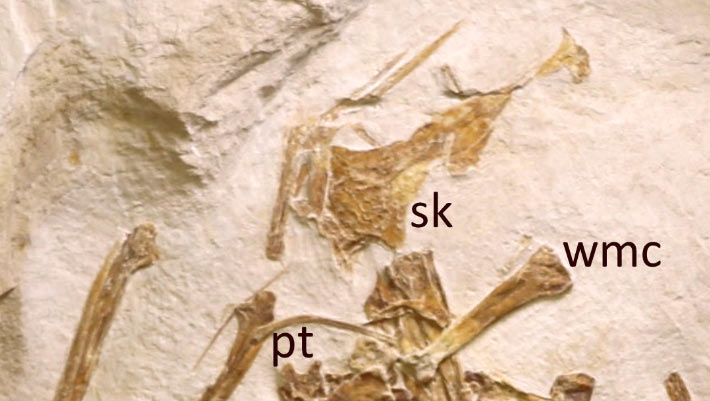
Allemagne Jurassique fossile Monofenestrata Pterosauria nouvelle espèce squelette
Les paléontologues ont décrit un nouveau genre et une nouvelle espèce de ptérosaure monofenestratan précoce sur la base d'un squelette fossile presque complet et bien conservé découvert en Bavière, en Allemagne. L'article Un nouveau ptérosaure jurassique découvert en Allemagne est apparu en premier sur Sci.News : Breaking Science News.
19/05/2026 sci-news ⚙ Traduction automatique
Cet étrange dinosaure géant pourrait changer ce que nous savons sur les titans du Jurassique
Argentine Jurassique fossile Bicharracosaurus Brachiosauria Brachiosauridae Dinosauria Diplodocia évolution
Un étrange nouveau dinosaure géant découvert en Argentine donne aux paléontologues un nouveau regard sur l'évolution des titans du Jurassique dans l'hémisphère sud. Bicharracosaurus dionidei s'étendait sur environ 20 mètres de long et présentait un étrange mélange de caractéristiques observées chez les parents du Diplodocus et du Brachiosaurus. Les scientifiques pensent qu’il pourrait s’agir du premier brachiosaure du Jurassique connu d’Amérique du Sud, contribuant ainsi à combler une lacune majeure dans les archives fossiles de dinosaures.
12/05/2026 sciencedaily ⚙ Traduction automatique
Early Sauropodomorph Dinosaur Unearthed in China
Un dinosaure sauropodomorphe découvert en Chine
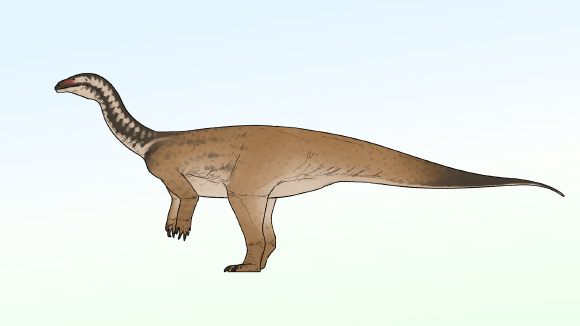
Chine Jurassique inférieur Jurassique Dinosauria Massopoda nouvelle espèce partiel squelette
Un nouveau genre et une nouvelle espèce de sauropodomorphe massopodan qui vivaient au début du Jurassique ont été identifiés à partir d'un squelette partiel découvert dans le sud-ouest de la Chine. L'article Les premiers dinosaures sauropodomorphes découverts en Chine est apparu en premier sur Sci.News : Breaking Science News.
04/05/2026 sci-news ⚙ Traduction automatique
1 2 3 4 5 6