←

Jurassique

Intervalle géologique

117 image(s) · 38 Actualités

Voir la fiche

Galerie d'images

Tongnanlong is a large mamenchisaurid sauropod dinosaur that lived in the Late Jurassic period of what is now China. Typical of mamenchisaurids, it had an extremely long neck, even by sauropod standards. Tongnanlong grew to approximately 25 m in length and weighed 20-30 t, making it one of the largest mamenchisaurids.
Taxons Tongnanlong

Tongnanlong is a large mamenchisaurid sauropod dinosaur that lived in the Late Jurassic period of what is now China. Typical of mamenchisaurids, it had an extremely long neck, even by sauropod standards. Tongnanlong grew to approximately 25 m in length and weighed 20-30 t, making it one of the largest mamenchisaurids.

Chine Jurassique Jurassique supérieur Dinosauria +2
Restoration of Analong chuanjieensis, a sauropod dinosaur from the Middle Jurassic of China
Taxons Analong

Restoration of Analong chuanjieensis, a sauropod dinosaur from the Middle Jurassic of China

Chine Jurassique Jurassique moyen Analong +1
Dinosaur National Monument is a United States National Monument located on the southeast flank of the Uinta Mountains on the border between Colorado and Utah at the confluence of the Green and Yampa Rivers. Although most of the monument area is in Moffat County, Colorado, the Dinosaur Quarry is located in Utah just to the north of the town of Jensen, Utah.
The nearest communities are Jensen, Utah, and Dinosaur, Colorado. The park contains over 800 paleontological sites and has fossils of dinosaurs including Allosaurus, Deinonychus, Abydosaurus (a nearly complete skull, lower jaws and first four neck vertebrae of the specimen DINO 16488 found here at the base of the Mussentuchit Member of the Cedar Mountain Formation is the holotype for the description) and various long-neck, long-tail sauropods. It was declared a National Monument on October 4, 1915.
The rock layer enclosing the fossils is a sandstone and conglomerate bed of alluvial or river bed origin known as the Morrison Formation from the Jurassic Period some 150 million years old. The dinosaurs and other ancient animals were carried by the river system which eventually entombed their remains in Utah.
The pile of sediments were later buried and lithified into solid rock. The layers of rock were later uplifted and tilted to their present angle by the mountain building forces that formed the Uintas during the Laramide orogeny. The relentless forces of erosion exposed the layers at the surface to be found by paleontologists.
The dinosaur fossil beds (bone beds) were discovered in 1909 by Earl Douglass, a paleontologist working and collecting for the Carnegie Museum of Natural History. He and his crews excavated thousands of fossils and shipped them back to the museum in Pittsburgh, Pennsylvania for study and display. President Woodrow Wilson proclaimed the dinosaur beds as Dinosaur National Monument in 1915. The monument boundaries were expanded in 1938 from the original 80-acre (320,000 m2) tract surrounding the dinosaur quarry in Utah, to its present extent of over 200,000 acres (800 km²) in Utah and Colorado, encompassing the spectacular river canyons of the Green and Yampa.
Though lesser-known than the fossil beds, the petroglyphs in Dinosaur National Monument are another treasure the monument holds. Due to problems with vandals, many of the sites are not listed on area maps.
The "Wall of Bones" located within the Dinosaur Quarry building in the park consists of a steeply tilted (67° from horizontal) rock layer which contains hundreds of dinosaur fossils. The enclosing rock has been chipped away to reveal the fossil bones intact for public viewing. In July 2006, the Quarry Visitor Center was closed due to structural problems that since 1957 had plagued the building because it was built on unstable clay. The decision was made to build a new facility elsewhere in the monument to house the visitor center and administrative functions, making it easier to resolve the structural problems of the quarry building while still retaining a portion of the historic Mission 66 era exhibit hall. It was announced in April 2009 that Dinosaur National Monument would receive $13.1 million to refurbish and reopen the gallery as part of the Obama administration's $750 billion stimulus plan. The Park Service successfully rebuilt the Quarry Exhibit Hall, supporting its weight on 70-foot steel micropile columns that extend to the bedrock below the unstable clay. The Dinosaur Quarry was reopened in Fall 2011.
en.wikipedia.org/wiki/Dinosaur_National_Monument

en.wikipedia.org/wiki/Wikipedia:Text_of_Creative_Commons_...
Taxons Abydosaurus

Dinosaur National Monument is a United States National Monument located on the southeast flank of the Uinta Mountains on the border between Colorado and Utah at the confluence of the Green and Yampa Rivers. Although most of the monument area is in Moffat County, Colorado, the Dinosaur Quarry is located in Utah just to the north of the town of Jensen, Utah. The nearest communities are Jensen, Utah, and Dinosaur, Colorado. The park contains over 800 paleontological sites and has fossils of dinosaurs including Allosaurus, Deinonychus, Abydosaurus (a nearly complete skull, lower jaws and first four neck vertebrae of the specimen DINO 16488 found here at the base of the Mussentuchit Member of the Cedar Mountain Formation is the holotype for the description) and various long-neck, long-tail sauropods. It was declared a National Monument on October 4, 1915. The rock layer enclosing the fossils is a sandstone and conglomerate bed of alluvial or river bed origin known as the Morrison Formation from the Jurassic Period some 150 million years old. The dinosaurs and other ancient animals were carried by the river system which eventually entombed their remains in Utah. The pile of sediments were later buried and lithified into solid rock. The layers of rock were later uplifted and tilted to their present angle by the mountain building forces that formed the Uintas during the Laramide orogeny. The relentless forces of erosion exposed the layers at the surface to be found by paleontologists. The dinosaur fossil beds (bone beds) were discovered in 1909 by Earl Douglass, a paleontologist working and collecting for the Carnegie Museum of Natural History. He and his crews excavated thousands of fossils and shipped them back to the museum in Pittsburgh, Pennsylvania for study and display. President Woodrow Wilson proclaimed the dinosaur beds as Dinosaur National Monument in 1915. The monument boundaries were expanded in 1938 from the original 80-acre (320,000 m2) tract surrounding the dinosaur quarry in Utah, to its present extent of over 200,000 acres (800 km²) in Utah and Colorado, encompassing the spectacular river canyons of the Green and Yampa. Though lesser-known than the fossil beds, the petroglyphs in Dinosaur National Monument are another treasure the monument holds. Due to problems with vandals, many of the sites are not listed on area maps. The "Wall of Bones" located within the Dinosaur Quarry building in the park consists of a steeply tilted (67° from horizontal) rock layer which contains hundreds of dinosaur fossils. The enclosing rock has been chipped away to reveal the fossil bones intact for public viewing. In July 2006, the Quarry Visitor Center was closed due to structural problems that since 1957 had plagued the building because it was built on unstable clay. The decision was made to build a new facility elsewhere in the monument to house the visitor center and administrative functions, making it easier to resolve the structural problems of the quarry building while still retaining a portion of the historic Mission 66 era exhibit hall. It was announced in April 2009 that Dinosaur National Monument would receive $13.1 million to refurbish and reopen the gallery as part of the Obama administration's $750 billion stimulus plan. The Park Service successfully rebuilt the Quarry Exhibit Hall, supporting its weight on 70-foot steel micropile columns that extend to the bedrock below the unstable clay. The Dinosaur Quarry was reopened in Fall 2011. en.wikipedia.org/wiki/Dinosaur_National_Monument en.wikipedia.org/wiki/Wikipedia:Text_of_Creative_Commons_...

os description musée États-Unis +13
Life restoration of the Triassic ichthyosaur Callawayia neoscapularis. Three specimens of this ichthyosaur are known, the holotype, ROM 41993, and two referred specimens, TMP 94.380.11 and 94.382.2. The skull is primarily based on ROM 41993, cross-checked against TMP 94.380.11 and TMP 94.382.2. The vertebral column is based primarily on TMP 94.382.2 as it is the most complete of these specimens, while the ribs were based on ROM 41993. The forelimbs were mainly based on those of ROM 41993, with TMP 94.380.11 used to determine their breadth. The hindlimbs were based on TMP 94.380.11, especially the more complete right hindlimb.
ROM 41993 was cross-scaled with TMP 94.380.11 by the dimensions of the forelimb epipodials, which produced similar vertebral dimensions. The two TMP specimens were cross-scaled based on femoral length, also producing similar vertebral dimensions. Nicholls & Manabe (2001) stated that no wedge-shaped caudal centra supporting a tailbend were found and that there was no evidence of a bend being present, though considered that they might have existed in the gap in the preserved caudals. Since various other Triassic ichthyosaurs have since been found to have tail bends, one was illustrated here. A modest downturn of roughly 15° was illustrated, comparable to that in Guanlingsaurus, and the location of the bend within the gap in the preserved vertebrae matches well with the location of the bend in Guizhouichthyosaurus.

References
McGowan, C. (1994). "A new species of Shastasaurus (Reptilia: Ichthyosauria) from the Triassic of British Columbia: The most complete exemplar of the genus". Journal of Vertebrate Paleontology 14 (2): 168–179. DOI:10.1080/02724634.1994.10011550.
Nicholls, E. L.; Manabe, M. (2001). "A new genus of ichthyosaur from the Late Triassic Pardonet Formation of British Columbia: Bridging the Triassic-Jurassic gap". Canadian Journal of Earth Sciences 38 (6): 983–1002.
Ji, C.; Jiang, D.Y.; Hao, W.; Sun, Y. (2011). "True tailbend occurred in the Late Triassic: Evidence from ichthyosaur skeletons of South China". Acta Scientiarum Naturalium Universitatis Pekinensis 47 (2): 309–314.
Shang, Q. H.; Li, C. (2009). "On the occurrence of the ichthyosaur Shastasaurus in the Guanling biota (Late Triassic), Guizhou, China". Vertebrata PalAsiatica 47 (3): 178–193.
Taxons Guanlingsaurus

Life restoration of the Triassic ichthyosaur Callawayia neoscapularis. Three specimens of this ichthyosaur are known, the holotype, ROM 41993, and two referred specimens, TMP 94.380.11 and 94.382.2. The skull is primarily based on ROM 41993, cross-checked against TMP 94.380.11 and TMP 94.382.2. The vertebral column is based primarily on TMP 94.382.2 as it is the most complete of these specimens, while the ribs were based on ROM 41993. The forelimbs were mainly based on those of ROM 41993, with TMP 94.380.11 used to determine their breadth. The hindlimbs were based on TMP 94.380.11, especially the more complete right hindlimb. ROM 41993 was cross-scaled with TMP 94.380.11 by the dimensions of the forelimb epipodials, which produced similar vertebral dimensions. The two TMP specimens were cross-scaled based on femoral length, also producing similar vertebral dimensions. Nicholls & Manabe (2001) stated that no wedge-shaped caudal centra supporting a tailbend were found and that there was no evidence of a bend being present, though considered that they might have existed in the gap in the preserved caudals. Since various other Triassic ichthyosaurs have since been found to have tail bends, one was illustrated here. A modest downturn of roughly 15° was illustrated, comparable to that in Guanlingsaurus, and the location of the bend within the gap in the preserved vertebrae matches well with the location of the bend in Guizhouichthyosaurus. References McGowan, C. (1994). "A new species of Shastasaurus (Reptilia: Ichthyosauria) from the Triassic of British Columbia: The most complete exemplar of the genus". Journal of Vertebrate Paleontology 14 (2): 168–179. DOI:10.1080/02724634.1994.10011550. Nicholls, E. L.; Manabe, M. (2001). "A new genus of ichthyosaur from the Late Triassic Pardonet Formation of British Columbia: Bridging the Triassic-Jurassic gap". Canadian Journal of Earth Sciences 38 (6): 983–1002. Ji, C.; Jiang, D.Y.; Hao, W.; Sun, Y. (2011). "True tailbend occurred in the Late Triassic: Evidence from ichthyosaur skeletons of South China". Acta Scientiarum Naturalium Universitatis Pekinensis 47 (2): 309–314. Shang, Q. H.; Li, C. (2009). "On the occurrence of the ichthyosaur Shastasaurus in the Guanling biota (Late Triassic), Guizhou, China". Vertebrata PalAsiatica 47 (3): 178–193.

Chine Jurassique Trias supérieur Trias +12
The excavation site of NHMUK PV R36730 ("Sophie" the Stegosaurus) at Red Canyon Ranch near Shell, Bighorn County, Wyoming, July 2004. Morrison Formation, Upper Jurassic. Photographed at the beginning of the dig.

The excavation site of NHMUK PV R36730 ("Sophie" the Stegosaurus) at Red Canyon Ranch near Shell, Bighorn County, Wyoming, July 2004. Morrison Formation, Upper Jurassic. Photographed at the beginning of the dig.

Morrison Jurassique Stegosauria fouille +1
Raiyoli Dinosaur Fossil Park Gujarat - Jurassic Park and Dinasoure Museum in Raiyoli-Balsinor India

Raiyoli Dinosaur Fossil Park Gujarat - Jurassic Park and Dinasoure Museum in Raiyoli-Balsinor India

musée Inde Jurassique fossile +2
Oxfordian (Upper Jurassic) cyclic sediments at Péry-Reuchenette, near Tavannes, kanton Bern, Switzerland. Alternating layers are limestone (light, more competent) and marl/clay; dominant cycle is the 200.000 year-cycle.
Formations Reuchenette

Oxfordian (Upper Jurassic) cyclic sediments at Péry-Reuchenette, near Tavannes, kanton Bern, Switzerland. Alternating layers are limestone (light, more competent) and marl/clay; dominant cycle is the 200.000 year-cycle.

Suisse Reuchenette Jurassique Oxfordian
Campananeyen is a rebbachisaurid sauropod that lived approximately 100 million years ago in the Late Cretaceous of what is now Argentina. Rebbachisaurids are the main group of diplodocoidea to have lived past the Jurassic, and had a more horizontal posture than contemporary sauropods, mainly the titanosaurs. They are unique among sauropods for having batteries of teeth used for chewing, rather than the typical peglike teeth sauropods used to strip leaves off branches.
Taxons Campananeyen

Campananeyen is a rebbachisaurid sauropod that lived approximately 100 million years ago in the Late Cretaceous of what is now Argentina. Rebbachisaurids are the main group of diplodocoidea to have lived past the Jurassic, and had a more horizontal posture than contemporary sauropods, mainly the titanosaurs. They are unique among sauropods for having batteries of teeth used for chewing, rather than the typical peglike teeth sauropods used to strip leaves off branches.

Argentine Crétacé Jurassique Crétacé supérieur +4
Huashanosaurus is a basal sauropod dinosaur that lived from the Early to Middle Jurassic periods of what is now China. It was a long-necked herbivore which still exhibited many basal traits of the earlier sauropodomorphs, while transitioning to obligate quardupedality. Huashanosaurus grew to approximately 12 m in length, and weighed around 10 t.
Taxons Huashanosaurus

Huashanosaurus is a basal sauropod dinosaur that lived from the Early to Middle Jurassic periods of what is now China. It was a long-necked herbivore which still exhibited many basal traits of the earlier sauropodomorphs, while transitioning to obligate quardupedality. Huashanosaurus grew to approximately 12 m in length, and weighed around 10 t.

Chine Jurassique Jurassique moyen Dinosauria +1
Fujianvenator is an anchiornithid avialan from the Late Jurassic of China, whose discovery gave important insight to the evolution of birds. It had proportionately long legs, with the tibia twice the length of the femur. This suggests it may have been a strong runner, and possibly had a terrestrial or wading lifestyle. Fujianvenator was a small dinosaur, weighing about 640 g. As an avialan, it was almost certainly covered in feathers, though it does not seem likely to have been capable of flight.
Taxons Fujianvenator

Fujianvenator is an anchiornithid avialan from the Late Jurassic of China, whose discovery gave important insight to the evolution of birds. It had proportionately long legs, with the tibia twice the length of the femur. This suggests it may have been a strong runner, and possibly had a terrestrial or wading lifestyle. Fujianvenator was a small dinosaur, weighing about 640 g. As an avialan, it was almost certainly covered in feathers, though it does not seem likely to have been capable of flight.

plume vol Chine Jurassique +7
Life restoration of the small German Jurassic ichthyosaur Hauffiopteryx typicus.
References
Maxwell, E. E.; Cortés, D. (2020). "A revision of the Early Jurassic ichthyosaur Hauffiopteryx (Reptilia: Ichthyosauria), and description of a new species from Southwestern Germany". Palaeontologia Electronica 23: 1–43. Archived from the original on 2022-07-06. Retrieved on 2022-03-15.
Note: This image is currently uncolored
Taxons Hauffiopteryx

Life restoration of the small German Jurassic ichthyosaur Hauffiopteryx typicus. References Maxwell, E. E.; Cortés, D. (2020). "A revision of the Early Jurassic ichthyosaur Hauffiopteryx (Reptilia: Ichthyosauria), and description of a new species from Southwestern Germany". Palaeontologia Electronica 23: 1–43. Archived from the original on 2022-07-06. Retrieved on 2022-03-15. Note: This image is currently uncolored

description Allemagne Jurassique inférieur Jurassique +3
Oxford Clay (Jurassic) exposed near Weymouth, England.
Formations Oxford Clay

Oxford Clay (Jurassic) exposed near Weymouth, England.

Oxford Clay Jurassique
Bituminous claystone, Lower Jurassic, Hesselberg, Middle Franconia.
Sedimentary rock of very thin laminated layers (particles less than 0,0002 mm).

Rock formation is known for its rich fossil findings, ex. Ichthyosaur.
Formations Posidonia Shale

Bituminous claystone, Lower Jurassic, Hesselberg, Middle Franconia. Sedimentary rock of very thin laminated layers (particles less than 0,0002 mm). Rock formation is known for its rich fossil findings, ex. Ichthyosaur.

Jurassique fossile Ichthyosauria formation
Coelurus fragilis, a coelurosaur from the Late Jurassic of North America, pencil drawing, digital coloring
Taxons Coeluridae

Coelurus fragilis, a coelurosaur from the Late Jurassic of North America, pencil drawing, digital coloring

dessin Jurassique Jurassique supérieur Coeluria +3
Coelurus fragilis, a coelurosaur from the Late Jurassic of North America, pencil drawing, digital coloring
Taxons Coeluridae

Coelurus fragilis, a coelurosaur from the Late Jurassic of North America, pencil drawing, digital coloring

dessin Jurassique Jurassique supérieur Coeluria +3
Life restoration of the German Jurassic ichthyosaur Suevoleviathan disinteger. The dorsal and caudal fins are loosely based on those of Stenopterygius.
References
Maisch, M.W. (2020). "The best-preserved skeleton of Suevoleviathan integer (Bronn, 1844)(Reptilia: Ichthyosauria) from the lower Jurassic of south-western Germany, with a discussion of the genus". Neues Jahrbuch für Geologie und Paläontologie, Abhandlungen 297 (2): 153–172.
Maisch, M.W. (1998). "A new ichthyosaur genus from the Posidonia Shale (Lower Toarcian, Jurassic) of Holzmaden, SW-Germany with comments on the phylogeny of post-Triassic ichthyosaurs". Neues Jahrbuch für Geologie und Paläontologie-Abhandlungen 209 (1): 47–78.
Taxons Suevoleviathan

Life restoration of the German Jurassic ichthyosaur Suevoleviathan disinteger. The dorsal and caudal fins are loosely based on those of Stenopterygius. References Maisch, M.W. (2020). "The best-preserved skeleton of Suevoleviathan integer (Bronn, 1844)(Reptilia: Ichthyosauria) from the lower Jurassic of south-western Germany, with a discussion of the genus". Neues Jahrbuch für Geologie und Paläontologie, Abhandlungen 297 (2): 153–172. Maisch, M.W. (1998). "A new ichthyosaur genus from the Posidonia Shale (Lower Toarcian, Jurassic) of Holzmaden, SW-Germany with comments on the phylogeny of post-Triassic ichthyosaurs". Neues Jahrbuch für Geologie und Paläontologie-Abhandlungen 209 (1): 47–78.

Allemagne Posidonia Shale Jurassique Toarcien +6
1 2 3 4 5 6 7 8

Actualités

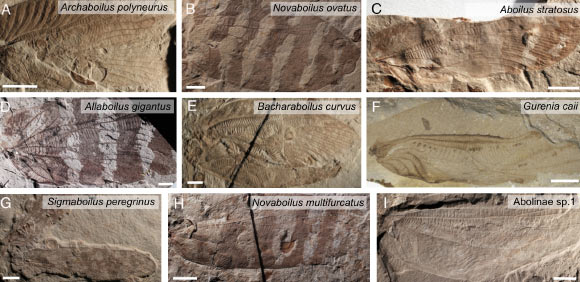
Scientists Reconstruct Sound of Jurassic Insects
Des scientifiques reconstituent le bruit des insectes du Jurassique
Chine Jurassique insecte
À l’aide de lasers, de modèles informatiques et de l’IA, les chercheurs ont reconstitué les cris de grillons et de katydidés modernes, vieux de 165 millions d’années, à partir de fragments d’ailes fossilisés trouvés en Chine. L'article Des scientifiques reconstruisent le son des insectes jurassiques est apparu en premier sur Sci.News : Breaking Science News.
25/08/2026 sci-news ⚙ Traduction automatique
Un fossile remarquable révèle le régime alimentaire d'un ichtyosaure du Jurassique supérieur
Allemagne Jurassique Jurassique supérieur fossile spécimen Aegirosaurus Ichthyosauria Jabalisaurus squelette
Les scientifiques étudiant l’ichtyosaure Jabalisaurus tethyensis, récemment décrit, ont acquis un aperçu remarquable de son régime alimentaire. Un fossile magnifiquement conservé du sud de l'Allemagne contient des preuves des derniers repas de l'animal. De plus, le spécimen préserve des détails importants du squelette et des contours du corps. Le fossile, numéro de spécimen JME-SOS-08369, était auparavant attribué à Aegirosaurus. Cependant, les chercheurs
24/08/2026 everythingdinosaur ⚙ Traduction automatique
Un nouvel ichtyosaure du Jurassique supérieur des gisements allemands de Plattenkalk
Allemagne Jurassique Jurassique supérieur Tithonien fossile Aegirosaurus Ichthyosauria Jabalisaurus nouvelle espèce
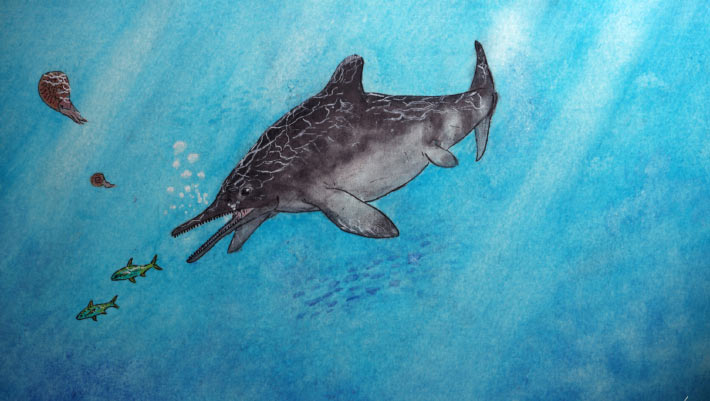
Les scientifiques ont décrit une nouvelle espèce d’ichtyosaure jurassique du sud de l’Allemagne. La nouvelle espèce nommée Jabalisaurus tethyensis vivait il y a environ 149 millions d’années au Jurassique supérieur (stade faunique Tithonien). Remarquablement, certains fossiles attribués à Jabalisaurus tethyensis avaient déjà été classés comme Aegirosaurus. La recherche met en évidence la diversité cachée des ichtyosaures dans la célèbre
17/08/2026 everythingdinosaur ⚙ Traduction automatique
Germany’s Famous Fossil Beds Yield New Species of Jurassic Ichthyosaur
Les célèbres gisements de fossiles d’Allemagne donnent naissance à de nouvelles espèces d’ichtyosaures jurassiques
musée Allemagne Jurassique fossile Ichthyosauria Ichthyosaurus Jabalisaurus nouvelle espèce
Le Dr Erin Maxwell du Staatliches Museum für Naturkunde Stuttgart et ses collègues ont identifié une deuxième espèce dans les gisements calcaires allemands de Plattenkalk : Jabalisaurus tethyensis. L’article Les célèbres gisements de fossiles d’Allemagne produisent de nouvelles espèces d’ichtyosaures jurassiques est apparu en premier sur Sci.News : Breaking Science News.
11/08/2026 sci-news ⚙ Traduction automatique
Jurassic Pliosaur Liopleurodon Was Big, but Not as Big as Once Feared
Le pliosaure jurassique Liopleurodon était gros, mais pas aussi gros qu'on le craignait autrefois
France Jurassique Liopleurodon Pliosaurus
Liopleurodon ferox est un reptile marin au cou court qui patrouillait dans les mers de ce qui est aujourd'hui l'Angleterre et la France il y a environ 163 millions d'années. L'article Jurassic Pliosaur Liopleurodon était grand, mais pas aussi gros qu'on le craignait autrefois, apparu en premier sur Sci.News : Breaking Science News.
22/07/2026 sci-news ⚙ Traduction automatique
1 2 3 4 5 6 7 8