Dinosauria

Taxon

412 image(s) · 210 Actualités

Voir la fiche

Galerie d'images

Blue Dinosaur Royal Ontario Museum
Taxons Lognkosauria

Blue Dinosaur Royal Ontario Museum

musée États-Unis Dinosauria Lognkosauria
Dinosaur skeleton.
Taxons Deinocheiridae

Dinosaur skeleton.

Deinocheiridae Dinosauria squelette
Dinosaur skeleton.
Taxons Deinocheirus

Dinosaur skeleton.

Deinocheiridae Dinosauria squelette
A restoration of Rinconsaurus compared to a human ,

•  Based proportionally on fossil elements and skeletal reconstruction featured in the Rinconsaurus description,[1] with missing parts based on other titanosaur reconstructions. The remains of Rinconsaurus represent two adults and a juvenile all of which are incomplete; some of the proportions shown here, such as the neck, limb lengths, and skull shape are not certain.
•  Osteroderms are not yet known in Rinconsaurus.  The osteoderms shown here are based loosely on Mendozasaurus.[2] Osteoderms are known from at least 10 titanosaur genera spread across the family tree but it's not clear if all titanosaurs had them.[3] Titanosaur osteoderms are rare and their layout and position on the body are not certain. [4]
•  The colours and patterns, as with the majority of reconstructions of prehistoric creatures, are speculative.
•  Human silhouette approximately 180 cm tall.

NOTE: I often update my images. If you want to have any of my images on a website, please (if possible) don’t host/save it to the website server. I’d prefer it if the image's Wikimedia URL is used. This means that if I update an image, it will be updated on the site as well.  Thanks.   


References


↑ Coria, Jorge; B.J.G. Riga (2003). "Rinconsaurus caudamirus gen. et sp nov., a new titanosaurid (Dinosauria, Sauropoda) from the Late Cretaceous of Patagonia, Argentina". Revista Geologica de Chile 30 (2): 333–353. ISSN 0716-0208. Retrieved on 2007-05-21.

↑   González Riga B (2003) A new titanosaur (Dinosauria, Sauropoda) from the Upper Cretaceous of Mendoza, Argentina. Ameghiniana 40 (2) 

↑  Carrano, M.T. and D’Emic, M.D.  2015 'Osteoderms of the titanosaur sauropod dinosaur Alamosaurus sanjuanensis Gilmore, 1922'. Journal of Vertebrate Paleontology.

↑    Vidal D, Ortega F, Sanz JL (2014) Titanosaur Osteoderms from the Upper Cretaceous of Lo Hueco (Spain) and Their Implications on the Armor of Laurasian Titanosaurs. PLoS ONE 9(8): e102488. doi:10.1371/journal.pone.0102488
Taxons Rinconsauria

A restoration of Rinconsaurus compared to a human , • Based proportionally on fossil elements and skeletal reconstruction featured in the Rinconsaurus description,[1] with missing parts based on other titanosaur reconstructions. The remains of Rinconsaurus represent two adults and a juvenile all of which are incomplete; some of the proportions shown here, such as the neck, limb lengths, and skull shape are not certain. • Osteroderms are not yet known in Rinconsaurus. The osteoderms shown here are based loosely on Mendozasaurus.[2] Osteoderms are known from at least 10 titanosaur genera spread across the family tree but it's not clear if all titanosaurs had them.[3] Titanosaur osteoderms are rare and their layout and position on the body are not certain. [4] • The colours and patterns, as with the majority of reconstructions of prehistoric creatures, are speculative. • Human silhouette approximately 180 cm tall. NOTE: I often update my images. If you want to have any of my images on a website, please (if possible) don’t host/save it to the website server. I’d prefer it if the image's Wikimedia URL is used. This means that if I update an image, it will be updated on the site as well. Thanks. References ↑ Coria, Jorge; B.J.G. Riga (2003). "Rinconsaurus caudamirus gen. et sp nov., a new titanosaurid (Dinosauria, Sauropoda) from the Late Cretaceous of Patagonia, Argentina". Revista Geologica de Chile 30 (2): 333–353. ISSN 0716-0208. Retrieved on 2007-05-21. ↑ González Riga B (2003) A new titanosaur (Dinosauria, Sauropoda) from the Upper Cretaceous of Mendoza, Argentina. Ameghiniana 40 (2) ↑ Carrano, M.T. and D’Emic, M.D. 2015 'Osteoderms of the titanosaur sauropod dinosaur Alamosaurus sanjuanensis Gilmore, 1922'. Journal of Vertebrate Paleontology. ↑ Vidal D, Ortega F, Sanz JL (2014) Titanosaur Osteoderms from the Upper Cretaceous of Lo Hueco (Spain) and Their Implications on the Armor of Laurasian Titanosaurs. PLoS ONE 9(8): e102488. doi:10.1371/journal.pone.0102488

armure membre description Argentine +14
A restoration of Rinconsaurus compared to a human ,

•  Based proportionally on fossil elements and skeletal reconstruction featured in the Rinconsaurus description,[1] with missing parts based on other titanosaur reconstructions. The remains of Rinconsaurus represent two adults and a juvenile all of which are incomplete; some of the proportions shown here, such as the neck, limb lengths, and skull shape are not certain.
•  Osteroderms are not yet known in Rinconsaurus.  The osteoderms shown here are based loosely on Mendozasaurus.[2] Osteoderms are known from at least 10 titanosaur genera spread across the family tree but it's not clear if all titanosaurs had them.[3] Titanosaur osteoderms are rare and their layout and position on the body are not certain. [4]
•  The colours and patterns, as with the majority of reconstructions of prehistoric creatures, are speculative.
•  Human silhouette approximately 180 cm tall.

NOTE: I often update my images. If you want to have any of my images on a website, please (if possible) don’t host/save it to the website server. I’d prefer it if the image's Wikimedia URL is used. This means that if I update an image, it will be updated on the site as well.  Thanks.   


References


↑ Coria, Jorge; B.J.G. Riga (2003). "Rinconsaurus caudamirus gen. et sp nov., a new titanosaurid (Dinosauria, Sauropoda) from the Late Cretaceous of Patagonia, Argentina". Revista Geologica de Chile 30 (2): 333–353. ISSN 0716-0208. Retrieved on 2007-05-21.

↑   González Riga B (2003) A new titanosaur (Dinosauria, Sauropoda) from the Upper Cretaceous of Mendoza, Argentina. Ameghiniana 40 (2) 

↑  Carrano, M.T. and D’Emic, M.D.  2015 'Osteoderms of the titanosaur sauropod dinosaur Alamosaurus sanjuanensis Gilmore, 1922'. Journal of Vertebrate Paleontology.

↑    Vidal D, Ortega F, Sanz JL (2014) Titanosaur Osteoderms from the Upper Cretaceous of Lo Hueco (Spain) and Their Implications on the Armor of Laurasian Titanosaurs. PLoS ONE 9(8): e102488. doi:10.1371/journal.pone.0102488
Taxons Rinconsaurus

A restoration of Rinconsaurus compared to a human , • Based proportionally on fossil elements and skeletal reconstruction featured in the Rinconsaurus description,[1] with missing parts based on other titanosaur reconstructions. The remains of Rinconsaurus represent two adults and a juvenile all of which are incomplete; some of the proportions shown here, such as the neck, limb lengths, and skull shape are not certain. • Osteroderms are not yet known in Rinconsaurus. The osteoderms shown here are based loosely on Mendozasaurus.[2] Osteoderms are known from at least 10 titanosaur genera spread across the family tree but it's not clear if all titanosaurs had them.[3] Titanosaur osteoderms are rare and their layout and position on the body are not certain. [4] • The colours and patterns, as with the majority of reconstructions of prehistoric creatures, are speculative. • Human silhouette approximately 180 cm tall. NOTE: I often update my images. If you want to have any of my images on a website, please (if possible) don’t host/save it to the website server. I’d prefer it if the image's Wikimedia URL is used. This means that if I update an image, it will be updated on the site as well. Thanks. References ↑ Coria, Jorge; B.J.G. Riga (2003). "Rinconsaurus caudamirus gen. et sp nov., a new titanosaurid (Dinosauria, Sauropoda) from the Late Cretaceous of Patagonia, Argentina". Revista Geologica de Chile 30 (2): 333–353. ISSN 0716-0208. Retrieved on 2007-05-21. ↑ González Riga B (2003) A new titanosaur (Dinosauria, Sauropoda) from the Upper Cretaceous of Mendoza, Argentina. Ameghiniana 40 (2) ↑ Carrano, M.T. and D’Emic, M.D. 2015 'Osteoderms of the titanosaur sauropod dinosaur Alamosaurus sanjuanensis Gilmore, 1922'. Journal of Vertebrate Paleontology. ↑ Vidal D, Ortega F, Sanz JL (2014) Titanosaur Osteoderms from the Upper Cretaceous of Lo Hueco (Spain) and Their Implications on the Armor of Laurasian Titanosaurs. PLoS ONE 9(8): e102488. doi:10.1371/journal.pone.0102488

armure membre description Argentine +14
ROM Dinosaurs 019
Taxons Pteranodontidae

ROM Dinosaurs 019

Canada Dinosauria Pteranodontidae
Mounted replica of a composite skeleton of Edmontosaurus annectens on display at the University of Oxford Museum, Oxford, England. The original skeleton is compiled from disarticulated fossil bones from a bonebed of the Hell Creek Formation, exposed in the Ruth Mason Quarry in Harding County, South Dakota. It is 8.5 m (28 ft.) long and the skull is almost 1 m (39 in.) in length.[1][2]


↑ Dinosaurs in the Museum. Oxford University Museum of Natural History (brochure, PDF), p. 7

↑ BHI Fossil Replica Catalog 2012. Black Hills Institute of Geological Research, Inc., Hill City, SD, 2012 (PDF), p. 22
Taxons Saurolophinae

Mounted replica of a composite skeleton of Edmontosaurus annectens on display at the University of Oxford Museum, Oxford, England. The original skeleton is compiled from disarticulated fossil bones from a bonebed of the Hell Creek Formation, exposed in the Ruth Mason Quarry in Harding County, South Dakota. It is 8.5 m (28 ft.) long and the skull is almost 1 m (39 in.) in length.[1][2] ↑ Dinosaurs in the Museum. Oxford University Museum of Natural History (brochure, PDF), p. 7 ↑ BHI Fossil Replica Catalog 2012. Black Hills Institute of Geological Research, Inc., Hill City, SD, 2012 (PDF), p. 22

os musée Hell Creek fossile +6
Jian is a microraptorine dromaeosaur, and the only non-avian dinosaur so far discovered from the Xiagou Formation of what is now China. Typical of microraptorinae, Jian had long pennaceous feathers growing from its arms as well as its legs, and was small in size, growing to approximately 1 m in total body length.

Jian is a microraptorine dromaeosaur, and the only non-avian dinosaur so far discovered from the Xiagou Formation of what is now China. Typical of microraptorinae, Jian had long pennaceous feathers growing from its arms as well as its legs, and was small in size, growing to approximately 1 m in total body length.

plume Chine Dinosauria Dromaeosauria +3
Central Museum of Mongolian Dinosaurs, Ulaanbaatar. Complete indexed photo collection at WorldHistoryPics.com.
Taxons Dictyoolithus

Central Museum of Mongolian Dinosaurs, Ulaanbaatar. Complete indexed photo collection at WorldHistoryPics.com.

musée Dictyoolithus Dinosauria
Brontotholus is a relatively large pachycephalosaurian dinosaur. Like all pachycephalosaurs, it was bipedal and sported the characteristic bony dome on top of its skull. Brontotholus grew to nearly 4 m in length, making it one of the largest known pachycephalosaurs, and the largest from the Campanian age.
Taxons Brontotholus

Brontotholus is a relatively large pachycephalosaurian dinosaur. Like all pachycephalosaurs, it was bipedal and sported the characteristic bony dome on top of its skull. Brontotholus grew to nearly 4 m in length, making it one of the largest known pachycephalosaurs, and the largest from the Campanian age.

Campanien Brontotholus Dinosauria Pachycephalosauria +1
Restoration of the skeleton, Age of Dinosaur Museum, Winton, Australia
Taxons Australovenator

Restoration of the skeleton, Age of Dinosaur Museum, Winton, Australia

musée Australie Winton Australovenator +2
Material of the dinosaur Bahariasaurus ingens (1-4, 7-18, 24-26) and indeterminate theropods (5-6, 19-23) from the Bahariya Formation of Egypt.
Taxons Bahariasaurus

Material of the dinosaur Bahariasaurus ingens (1-4, 7-18, 24-26) and indeterminate theropods (5-6, 19-23) from the Bahariya Formation of Egypt.

Égypte Bahariasaurus Dinosauria formation
A cast of BYU 9025, the holotype fossil of the sauropod dinosaur Supersaurus, a giant scapulocoracoid measuring 2.4m long.
• The source photo was taken at the Dinosaur Journey Musuem.
• Notes regarding the file; This image was edited and extracted from the original seen here. [1] The Photoshop CC lens correction profile and a 'perspective warp' correction were applied.
Taxons Supersaurus

A cast of BYU 9025, the holotype fossil of the sauropod dinosaur Supersaurus, a giant scapulocoracoid measuring 2.4m long. • The source photo was taken at the Dinosaur Journey Musuem. • Notes regarding the file; This image was edited and extracted from the original seen here. [1] The Photoshop CC lens correction profile and a 'perspective warp' correction were applied.

moulage fossile holotype Dinosauria +1
Digital illustration of the Sauropod Dinosaur Isisaurus colberti from the Late Cretaceous (Maastrichtian) of India (72.2-66 MYA). References include Jain & Bandyopadhyay (1997), several papers from Wilson et al. and skeletal reconstruction by Scott Hartman.
Illustrated by Ansh Saxena.
About Isisaurus–

Isisaurus colberti (=Titanosaurus colberti) was a species of Titanosaurian Sauropod Dinosaur from the Late Cretaceous (Maastrichtian) age in the Indian Subcontinent. Isisaurus lived sympatrically with another Titanosaurian Sauropod Jainosaurus. It also lived alongside Theropods like Rajasaurus, Rahiolisaurus, Indosuchus etc. Remains of Isisaurus come from the Lameta formation of Central India.
Taxons Isisaurus

Digital illustration of the Sauropod Dinosaur Isisaurus colberti from the Late Cretaceous (Maastrichtian) of India (72.2-66 MYA). References include Jain & Bandyopadhyay (1997), several papers from Wilson et al. and skeletal reconstruction by Scott Hartman. Illustrated by Ansh Saxena. About Isisaurus– Isisaurus colberti (=Titanosaurus colberti) was a species of Titanosaurian Sauropod Dinosaur from the Late Cretaceous (Maastrichtian) age in the Indian Subcontinent. Isisaurus lived sympatrically with another Titanosaurian Sauropod Jainosaurus. It also lived alongside Theropods like Rajasaurus, Rahiolisaurus, Indosuchus etc. Remains of Isisaurus come from the Lameta formation of Central India.

Inde Lameta Crétacé Crétacé supérieur +9
Saurexallopus, a four toed dinosaur or bird trace fossil (jr syn Exallopus
Taxons Saurexallopus

Saurexallopus, a four toed dinosaur or bird trace fossil (jr syn Exallopus

fossile Dinosauria Exallopus Saurexallopus +1
Fossil samples – e.g. ‘primitive’ bony fish (1, 2), a skull of a temnospondyl ‘amphibian’ (probably a metoposauroid) in dorsal view (3), a skull of an archosaur of the crocodile lineage (probably a phytosaur) in palatal view (4), holotype of the “gliding reptile” Icarosaurus siefkeri [1] (5) and Atreipus-Grallator-type dinosaur tracks (bottom right) – from the Newark Supergroup, i.e. a series of mainly Late Triassic to Early Jurassic sedimentary rocks of eastern North America


↑ Edwin H. Colbert: A gliding reptile from the Triassic of New Jersey. American Museum Novitates, 2230. American Museum of Natural History, New York 1966, digitallibrary.amnh.org, cf. fig. 3 therein.
Taxons Atreipus

Fossil samples – e.g. ‘primitive’ bony fish (1, 2), a skull of a temnospondyl ‘amphibian’ (probably a metoposauroid) in dorsal view (3), a skull of an archosaur of the crocodile lineage (probably a phytosaur) in palatal view (4), holotype of the “gliding reptile” Icarosaurus siefkeri [1] (5) and Atreipus-Grallator-type dinosaur tracks (bottom right) – from the Newark Supergroup, i.e. a series of mainly Late Triassic to Early Jurassic sedimentary rocks of eastern North America ↑ Edwin H. Colbert: A gliding reptile from the Triassic of New Jersey. American Museum Novitates, 2230. American Museum of Natural History, New York 1966, digitallibrary.amnh.org, cf. fig. 3 therein.

musée Jurassique inférieur Jurassique Trias supérieur +9
1 2 3 4 5 6 7 8 9 10 11 12 13 14 15 16 17 18 19 20 21 22 23 24 25 26

Actualités

Ces empreintes géantes découvertes en Mongolie forcent les chercheurs à revoir l’histoire des dinosaures dans cette région
Mongolie empreintes Dinosauria découverte
Pendant plus de 70 ans, ce site paléontologique semblait avoir disparu. Signalé au milieu du XXe siècle dans une région reculée du nord de la Mongolie, son emplacement exact avait fini par se perdre dans l’immensité des steppes. Sa redécouverte vient pourtant bouleverser ce que les scientifiques...
22/05/2026 futura-terre
Nouveau Cameron articulé le tyrannosaure rex
écaille Dinosauria Tyrannosaurus
La nouveauté pour 2026, a articulé le PNSO Cameron, la figurine Tyrannosaurus rex devrait arriver sous peu.  Nous sommes impatients de recevoir la première figurine de dinosaure articulée de PNSO.  Le modèle mesure trente-six centimètres de long et mesure plus de onze centimètres de haut.  Nous pensons qu'il s'agit d'une figurine à l'échelle 1:35. Le nouveau PNSO articulé T.
22/05/2026 everythingdinosaur ⚙ Traduction automatique
Model Collector propose un examen exclusif des bêtes de l'Allosaure mésozoïque à l'échelle 1:35
écaille Mésozoïque Allosauria Dinosauria
Nos remerciements au collectionneur dévoué de modèles de dinosaures qui a envoyé à Everything Dinosaur une revue des bêtes du Mésozoïque, Allosaurus fragilis.  L'Allosaure est l'un de nos dinosaures préférés et nous sommes également de grands fans de la gamme de modèles Les Bêtes du Mésozoïque.  C'est génial d'avoir les Bêtes du Mésozoïque
21/05/2026 everythingdinosaur ⚙ Traduction automatique
Une nouvelle étude résout le mystère des minuscules bras de dinosaures théropodes
membre Dinosauria Tyrannosaurus étude
Pourquoi le T. rex avait-il des bras minuscules ?  C’est une question qu’on nous pose souvent chez Everything Dinosaur.  Ironiquement, plusieurs lignées de théropodes non étroitement apparentées présentent une réduction des membres antérieurs. Le Tyrannosaure rex possédait des armes légères, tout comme de nombreux autres grands dinosaures carnivores. Une nouvelle étude suggère que les petits bras de certains théropodes
20/05/2026 everythingdinosaur ⚙ Traduction automatique
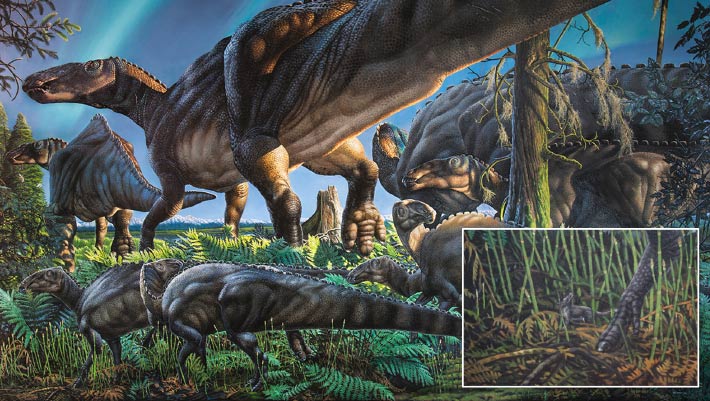
Before Dinosaur Extinction, Rodent-Like Mammals were Already Flourishing in Ancient Arctic
Avant l’extinction des dinosaures, les mammifères ressemblant à des rongeurs prospéraient déjà dans l’Arctique antique
Dinosauria extinction mammifères
Les paléontologues ont décrit trois espèces jusqu'alors inconnues de mammifères multituberculés – nommés Camurodon borealis, Qayaqgruk peregrinus et Kaniqsiqcosmodon polaris – qui vivaient dans les forêts polaires il y a environ 73 millions d'années. L'article Avant l'extinction des dinosaures, les mammifères ressemblant à des rongeurs prospéraient déjà dans l'Arctique antique est apparu en premier sur Sci.News : Breaking Science News.
20/05/2026 sci-news ⚙ Traduction automatique
1 2 3 4 5 6 7 8 9 10 11 12 13 14 15 16 17 18 19 20 21 22 23 24 25 26 27 28 29 30 31 32 33 34 35 36 37 38 39 40 41 42