←

musée

Type de contenu

415 image(s) · 34 Actualités

Galerie d'images

Skull of Augustasaurus hagdorni in the Field Museum of Natural History.
Taxons Augustasaurus

Skull of Augustasaurus hagdorni in the Field Museum of Natural History.

musée Augustasaurus crâne
Holotype of the polycotylid[1] plesiosaur Edgarosaurus muddi DRUCKENMILLER, 2002, (MOR 751) comprising the skull, the neck, and the left front flipper, on display in the Museum of the Rockies in Bozeman, Montana. The specimen was collected in Edgar, Carbon County, Montana, from the Shell Creek member of the Thermopolis Shale Formation, Upper Albian, uppermost Lower Cretaceous.[2]
Taxons Edgarosaurus

Holotype of the polycotylid[1] plesiosaur Edgarosaurus muddi DRUCKENMILLER, 2002, (MOR 751) comprising the skull, the neck, and the left front flipper, on display in the Museum of the Rockies in Bozeman, Montana. The specimen was collected in Edgar, Carbon County, Montana, from the Shell Creek member of the Thermopolis Shale Formation, Upper Albian, uppermost Lower Cretaceous.[2]

musée États-Unis Albien Crétacé +7
Mount of Futalognkosaurus at Royal Ontario Museum
Taxons Futalognkosaurus

Mount of Futalognkosaurus at Royal Ontario Museum

musée Futalognkosaurus
The National history museum in Milan, Italy. Fossil of a juvenile individual of Scipionyx samniticus. The fossil (to date the first of this species ever) preserves in an exceptional way clear traces of soft tissues - a rather rare event. Picture by Giovanni Dall'Orto, April 22 2007.
Taxons Scipionyx

The National history museum in Milan, Italy. Fossil of a juvenile individual of Scipionyx samniticus. The fossil (to date the first of this species ever) preserves in an exceptional way clear traces of soft tissues - a rather rare event. Picture by Giovanni Dall'Orto, April 22 2007.

tissus musée Italie fossile +2
Amphidromus lepidus (A. Gould, 1856); family Camaenidae; syntype
Taxons Lepidus

Amphidromus lepidus (A. Gould, 1856); family Camaenidae; syntype

musée Lepidus
Huaxiagnathus orientalis fossil displayed in Hong Kong Science Museum
Taxons Huaxiagnathus

Huaxiagnathus orientalis fossil displayed in Hong Kong Science Museum

musée fossile Huaxiagnathus
Olorotitan at the Museum voor Natuurwetenschappen in Brussels, Belgium
Taxons Olorotitan

Olorotitan at the Museum voor Natuurwetenschappen in Brussels, Belgium

musée Belgique Olorotitan
Nichollssaura at the Royal Tyrrell Museum.
Taxons Nichollssaura

Nichollssaura at the Royal Tyrrell Museum.

musée Allemagne Nichollssaura
Dinosaur National Monument is a United States National Monument located on the southeast flank of the Uinta Mountains on the border between Colorado and Utah at the confluence of the Green and Yampa Rivers. Although most of the monument area is in Moffat County, Colorado, the Dinosaur Quarry is located in Utah just to the north of the town of Jensen, Utah.
The nearest communities are Jensen, Utah, and Dinosaur, Colorado. The park contains over 800 paleontological sites and has fossils of dinosaurs including Allosaurus, Deinonychus, Abydosaurus (a nearly complete skull, lower jaws and first four neck vertebrae of the specimen DINO 16488 found here at the base of the Mussentuchit Member of the Cedar Mountain Formation is the holotype for the description) and various long-neck, long-tail sauropods. It was declared a National Monument on October 4, 1915.
The rock layer enclosing the fossils is a sandstone and conglomerate bed of alluvial or river bed origin known as the Morrison Formation from the Jurassic Period some 150 million years old. The dinosaurs and other ancient animals were carried by the river system which eventually entombed their remains in Utah.
The pile of sediments were later buried and lithified into solid rock. The layers of rock were later uplifted and tilted to their present angle by the mountain building forces that formed the Uintas during the Laramide orogeny. The relentless forces of erosion exposed the layers at the surface to be found by paleontologists.
The dinosaur fossil beds (bone beds) were discovered in 1909 by Earl Douglass, a paleontologist working and collecting for the Carnegie Museum of Natural History. He and his crews excavated thousands of fossils and shipped them back to the museum in Pittsburgh, Pennsylvania for study and display. President Woodrow Wilson proclaimed the dinosaur beds as Dinosaur National Monument in 1915. The monument boundaries were expanded in 1938 from the original 80-acre (320,000 m2) tract surrounding the dinosaur quarry in Utah, to its present extent of over 200,000 acres (800 km²) in Utah and Colorado, encompassing the spectacular river canyons of the Green and Yampa.
Though lesser-known than the fossil beds, the petroglyphs in Dinosaur National Monument are another treasure the monument holds. Due to problems with vandals, many of the sites are not listed on area maps.
The "Wall of Bones" located within the Dinosaur Quarry building in the park consists of a steeply tilted (67° from horizontal) rock layer which contains hundreds of dinosaur fossils. The enclosing rock has been chipped away to reveal the fossil bones intact for public viewing. In July 2006, the Quarry Visitor Center was closed due to structural problems that since 1957 had plagued the building because it was built on unstable clay. The decision was made to build a new facility elsewhere in the monument to house the visitor center and administrative functions, making it easier to resolve the structural problems of the quarry building while still retaining a portion of the historic Mission 66 era exhibit hall. It was announced in April 2009 that Dinosaur National Monument would receive $13.1 million to refurbish and reopen the gallery as part of the Obama administration's $750 billion stimulus plan. The Park Service successfully rebuilt the Quarry Exhibit Hall, supporting its weight on 70-foot steel micropile columns that extend to the bedrock below the unstable clay. The Dinosaur Quarry was reopened in Fall 2011.
en.wikipedia.org/wiki/Dinosaur_National_Monument

en.wikipedia.org/wiki/Wikipedia:Text_of_Creative_Commons_...
Taxons Abydosaurus

Dinosaur National Monument is a United States National Monument located on the southeast flank of the Uinta Mountains on the border between Colorado and Utah at the confluence of the Green and Yampa Rivers. Although most of the monument area is in Moffat County, Colorado, the Dinosaur Quarry is located in Utah just to the north of the town of Jensen, Utah. The nearest communities are Jensen, Utah, and Dinosaur, Colorado. The park contains over 800 paleontological sites and has fossils of dinosaurs including Allosaurus, Deinonychus, Abydosaurus (a nearly complete skull, lower jaws and first four neck vertebrae of the specimen DINO 16488 found here at the base of the Mussentuchit Member of the Cedar Mountain Formation is the holotype for the description) and various long-neck, long-tail sauropods. It was declared a National Monument on October 4, 1915. The rock layer enclosing the fossils is a sandstone and conglomerate bed of alluvial or river bed origin known as the Morrison Formation from the Jurassic Period some 150 million years old. The dinosaurs and other ancient animals were carried by the river system which eventually entombed their remains in Utah. The pile of sediments were later buried and lithified into solid rock. The layers of rock were later uplifted and tilted to their present angle by the mountain building forces that formed the Uintas during the Laramide orogeny. The relentless forces of erosion exposed the layers at the surface to be found by paleontologists. The dinosaur fossil beds (bone beds) were discovered in 1909 by Earl Douglass, a paleontologist working and collecting for the Carnegie Museum of Natural History. He and his crews excavated thousands of fossils and shipped them back to the museum in Pittsburgh, Pennsylvania for study and display. President Woodrow Wilson proclaimed the dinosaur beds as Dinosaur National Monument in 1915. The monument boundaries were expanded in 1938 from the original 80-acre (320,000 m2) tract surrounding the dinosaur quarry in Utah, to its present extent of over 200,000 acres (800 km²) in Utah and Colorado, encompassing the spectacular river canyons of the Green and Yampa. Though lesser-known than the fossil beds, the petroglyphs in Dinosaur National Monument are another treasure the monument holds. Due to problems with vandals, many of the sites are not listed on area maps. The "Wall of Bones" located within the Dinosaur Quarry building in the park consists of a steeply tilted (67° from horizontal) rock layer which contains hundreds of dinosaur fossils. The enclosing rock has been chipped away to reveal the fossil bones intact for public viewing. In July 2006, the Quarry Visitor Center was closed due to structural problems that since 1957 had plagued the building because it was built on unstable clay. The decision was made to build a new facility elsewhere in the monument to house the visitor center and administrative functions, making it easier to resolve the structural problems of the quarry building while still retaining a portion of the historic Mission 66 era exhibit hall. It was announced in April 2009 that Dinosaur National Monument would receive $13.1 million to refurbish and reopen the gallery as part of the Obama administration's $750 billion stimulus plan. The Park Service successfully rebuilt the Quarry Exhibit Hall, supporting its weight on 70-foot steel micropile columns that extend to the bedrock below the unstable clay. The Dinosaur Quarry was reopened in Fall 2011. en.wikipedia.org/wiki/Dinosaur_National_Monument en.wikipedia.org/wiki/Wikipedia:Text_of_Creative_Commons_...

os description musée États-Unis +13
Liaoningotitan sinensis, mount, Liaoning Palaeontological Museum
Taxons Liaoningotitan

Liaoningotitan sinensis, mount, Liaoning Palaeontological Museum

musée Liaoningotitan
fossil Europasaurus, Aathal Dinosaur Museum.
Taxons Europasaurus

fossil Europasaurus, Aathal Dinosaur Museum.

musée fossile Dinosauria Europasaurus
Saltopus elginensis holotype elements PV R 3915. Part and counterpart of skeleton in small slab, and associated fragments. Moulds and casts of part and counterpart.
Taxons Saltopus

Saltopus elginensis holotype elements PV R 3915. Part and counterpart of skeleton in small slab, and associated fragments. Moulds and casts of part and counterpart.

musée moulage holotype Saltopus +1
Fossil of Sthenarosaurus, an extinct reptile - Took the picture at Museum of Paleontology, Tuebingen
Taxons Sthenarosaurus

Fossil of Sthenarosaurus, an extinct reptile - Took the picture at Museum of Paleontology, Tuebingen

musée fossile Sthenarosaurus
Photo: mounted skeleton of Qantassaurus intrepidus at the Australian Museum, Sydney.
Taxons Qantassaurus

Photo: mounted skeleton of Qantassaurus intrepidus at the Australian Museum, Sydney.

musée Qantassaurus squelette
Cardiocorax mukulu hind limb on display at the Smithsonian's National Museum of Natural History.
Taxons Cardiocorax

Cardiocorax mukulu hind limb on display at the Smithsonian's National Museum of Natural History.

membre musée Cardiocorax
Dinosaur's Museum in Savannakhet, Laos
Taxons Tangvayosaurus

Dinosaur's Museum in Savannakhet, Laos

musée Laos Dinosauria Tangvayosaurus
1 2 3 4 5 6 7 8 9 10 11 12 13 14 15 16 17 18 19 20 21 22 23 24 25 26

Actualités

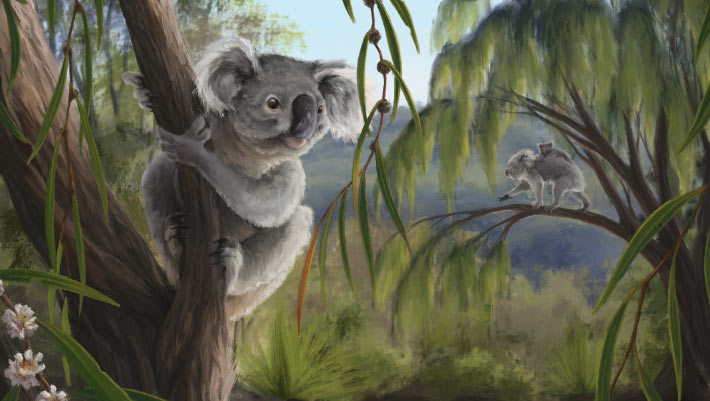
New Species of Fossil Koala Found in Museum Drawer
Une nouvelle espèce de koala fossile découverte dans un tiroir du musée
musée fossile découverte nouvelle espèce
Des fossiles longtemps négligés dans la collection du Western Australian Museum ont été identifiés comme une nouvelle espèce de koala. L'article Nouvelle espèce de koala fossile trouvé dans un tiroir de musée apparaît en premier sur Sci.News : Breaking Science News.
06/05/2026 sci-news ⚙ Traduction automatique
Magnifique squelette fossile d'Eryops exposé
prédateur musée Permien fossile squelette
Quand j'étais enfant, l'un de mes animaux préhistoriques préférés était le géant temnospondyl Eryops.  Cela me fait toujours plaisir de tomber sur des fossiles de ce prédateur du Permien inférieur.  En effet, le simple fait de voir un squelette reconstruit me fait sourire.  Quand je suis au Musée d'Histoire Naturelle de Londres, j'essaie de prendre le temps d'observer l'Eryops megacephalus.
06/05/2026 everythingdinosaur ⚙ Traduction automatique
La plus ancienne feuille de cannabis ? Un musée fait une étonnante découverte
musée découverte
Le Musée d'histoire naturelle de Berlin a daté ce qui semble être l'empreinte d'une plante du genre Cannabis dans de la boue séchée.
22/04/2026 sciencesetavenir
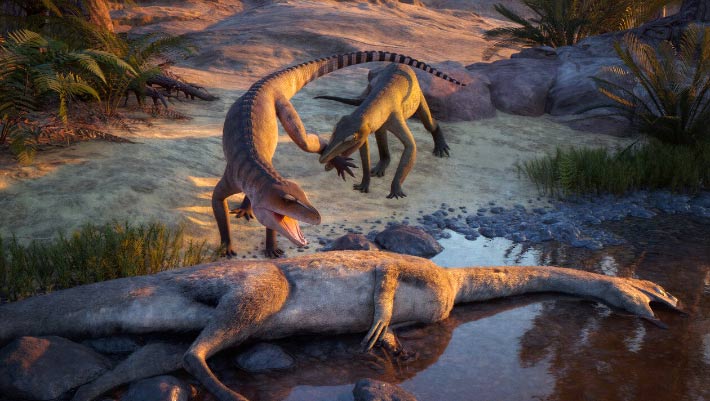
Museum Fossil Reveals Triassic Crocodile Cousin with Powerful Jaws
Un fossile de musée révèle un cousin crocodile du Trias doté de mâchoires puissantes
mâchoire musée Trias supérieur Trias fossile spécimen tomographie nouvelle espèce
Les tomodensitogrammes d'un spécimen vieux de plusieurs décennies du Musée d'histoire naturelle de Yale Peabody montrent une nouvelle espèce de crocodylomorphe au museau court et aux mâchoires inhabituellement fortes, offrant un instantané rare de la spécialisation écologique à l'époque du Trias supérieur. Le post Museum Fossil révèle un cousin crocodile du Trias doté de mâchoires puissantes est apparu en premier sur Sci.News: Breaking Science News.
20/04/2026 sci-news ⚙ Traduction automatique
Épisode 174 : Une histoire des dinosaures en 50 fossiles
musée fossile spécimen Dinosauria
Le professeur Paul Barrett du Natural History Museum de Londres a récemment écrit A History of Dinosaurs in 50 Fossils. Nous en avons profité pour avoir un aperçu de ce que nous savons réellement sur les dinosaures et comment il est même possible de raconter leur histoire avec seulement 50 spécimens. Dans cet épisode, Paul discute de l'histoire [&hellip
15/04/2026 palaeocast ⚙ Traduction automatique
1 2 3 4 5 6 7