←

museum

Content type

415 image(s) · 34 News

Image gallery

Holotype of Fona herzogae NCSM 33548 at the w:North Carolina Museum of Natural Sciences
Taxa Fona

Holotype of Fona herzogae NCSM 33548 at the w:North Carolina Museum of Natural Sciences

museum holotype Fona
Yangtzepus yipingensis holotype (IVPP V2473) at the Paleozoological Museum of China.
Taxa Yangtzepus

Yangtzepus yipingensis holotype (IVPP V2473) at the Paleozoological Museum of China.

museum China holotype Yangtzepus
Muttaburrasaurus
The plants, animals and climate of the Australian continent have changed dramatically over long periods of time. Imagine this giant creature roaming the luxuriant wet forests that covered parts of the continent in the Cretaceous period, about 100-110 million years ago. The Muttaburrasaurus ambled along on all four legs or stood on its hind legs. Its large teeth were well adapted to eat tough vegetation such as the leathery foliage of the evergreen forests of Araucaria trees, ancient relatives of the bunya pine of south-eastern Queensland.
In 1963, grazier Doug Langdon discovered the fossilised bones of a dinosaur on his property near Muttaburra in central-west Queensland. It was one of the most complete dinosaur skeletons found in Australia. The bones belonged to a new species of ornithopod and palaeontologists named it Muttaburrasaurus langdoni.

Cast of Muttaburresaurus langdoni 1987 made by Queensland Museum, Brisbane National Museum of Australia
Taxa Muttaburrasaurus

Muttaburrasaurus The plants, animals and climate of the Australian continent have changed dramatically over long periods of time. Imagine this giant creature roaming the luxuriant wet forests that covered parts of the continent in the Cretaceous period, about 100-110 million years ago. The Muttaburrasaurus ambled along on all four legs or stood on its hind legs. Its large teeth were well adapted to eat tough vegetation such as the leathery foliage of the evergreen forests of Araucaria trees, ancient relatives of the bunya pine of south-eastern Queensland. In 1963, grazier Doug Langdon discovered the fossilised bones of a dinosaur on his property near Muttaburra in central-west Queensland. It was one of the most complete dinosaur skeletons found in Australia. The bones belonged to a new species of ornithopod and palaeontologists named it Muttaburrasaurus langdoni. Cast of Muttaburresaurus langdoni 1987 made by Queensland Museum, Brisbane National Museum of Australia

bone museum Australia Cretaceous +5
Montanoceratops cerorhynchus (Brown & Schlaikjer, 1942) - fossil ceratopsian dinosaur skeleton from the Cretaceous of Montana, USA. (MOR 542, Museum of the Rockies, Bozeman, Montana, USA)
The species name is sometimes incorrectly spelled "cerorhynchos".  The original publication spells it "cerorhynchus".  The genus name is sometimes incorrectly spelled "Montanaceratops".
Ceratopsians are the "horned dinosaurs".  They were large, quadrupedal, herbivorous dinosaurs having a beaked skull and a frill - an extension of bone behind the skull that partially covered the neck.  Ceratopsian dinosaurs are known from the Jurassic and Cretaceous.  The last members of the group died out at the Cretaceous-Tertiary boundary, 65 million years ago.
This is a partial skeleton of a juvenile Montanoceratops, a ceratopsian from the near-latest Cretaceous of western North America.  This type of ceratopsian lacked facial horns.


From exhibit signage:
Sixty-eight million years ago, when the horned dinosaurs Triceratops and Torosaurus inhabited the coastal plain near the inland ocean, primitive "horned" dinosaurs named Montanoceratops lived in uplands near the young Rocky Mountains.  These little protoceratopsians fed on plants with slicing teeth and narrow beaks similar to their giant three-horned relatives.


Classification: Animalia, Chordata, Vertebrata, Reptilia, Archosauria, Dinosauria, Ornithischia, Marginocephalia, Ceratopsia, Leptoceratopsidae
Stratigraphy: St. Mary River Formation, Maastrichtian Stage, Upper Cretaceous
Locality: Little Rocky Coulee, north of the town of Cut Bank, eastern Glacier County, northwestern Montana, USA


Info. at:

en.wikipedia.org/wiki/Montanoceratops
Taxa Montanoceratops

Montanoceratops cerorhynchus (Brown & Schlaikjer, 1942) - fossil ceratopsian dinosaur skeleton from the Cretaceous of Montana, USA. (MOR 542, Museum of the Rockies, Bozeman, Montana, USA) The species name is sometimes incorrectly spelled "cerorhynchos". The original publication spells it "cerorhynchus". The genus name is sometimes incorrectly spelled "Montanaceratops". Ceratopsians are the "horned dinosaurs". They were large, quadrupedal, herbivorous dinosaurs having a beaked skull and a frill - an extension of bone behind the skull that partially covered the neck. Ceratopsian dinosaurs are known from the Jurassic and Cretaceous. The last members of the group died out at the Cretaceous-Tertiary boundary, 65 million years ago. This is a partial skeleton of a juvenile Montanoceratops, a ceratopsian from the near-latest Cretaceous of western North America. This type of ceratopsian lacked facial horns. From exhibit signage: Sixty-eight million years ago, when the horned dinosaurs Triceratops and Torosaurus inhabited the coastal plain near the inland ocean, primitive "horned" dinosaurs named Montanoceratops lived in uplands near the young Rocky Mountains. These little protoceratopsians fed on plants with slicing teeth and narrow beaks similar to their giant three-horned relatives. Classification: Animalia, Chordata, Vertebrata, Reptilia, Archosauria, Dinosauria, Ornithischia, Marginocephalia, Ceratopsia, Leptoceratopsidae Stratigraphy: St. Mary River Formation, Maastrichtian Stage, Upper Cretaceous Locality: Little Rocky Coulee, north of the town of Cut Bank, eastern Glacier County, northwestern Montana, USA Info. at: en.wikipedia.org/wiki/Montanoceratops

bone museum United States Cretaceous +17
Teratophoneus curriei, adult (left) and juvenile (right), on display at the Natural History Museum of Utah, Salt Lake City.
Taxa Teratophoneus

Teratophoneus curriei, adult (left) and juvenile (right), on display at the Natural History Museum of Utah, Salt Lake City.

museum juvenile Teratophoneus
Nigersaurus - 01 (possibly National Museum of Nature and Science, Tokyo)
Taxa Nigersaurus

Nigersaurus - 01 (possibly National Museum of Nature and Science, Tokyo)

museum Nigersaurus
Mounted specimen of Archaeornithomimus asiaticus on display at the Paleozoological Museum of China.
Taxa Archaeornithomimus

Mounted specimen of Archaeornithomimus asiaticus on display at the Paleozoological Museum of China.

museum China specimen Archaeornithomimus
Holotype scapula of Tienshanosaurus chitaiensis on display at the Paleozoological Museum of China.
Taxa Tienshanosaurus

Holotype scapula of Tienshanosaurus chitaiensis on display at the Paleozoological Museum of China.

museum China holotype Tienshanosaurus
Skeleton identified as Nemegtomaia by Greg Funston.[1] Central Museum of Mongolian Dinosaurs, Ulaanbaatar. Complete indexed photo collection at WorldHistoryPics.com.
Taxa Nemegtomaia

Skeleton identified as Nemegtomaia by Greg Funston.[1] Central Museum of Mongolian Dinosaurs, Ulaanbaatar. Complete indexed photo collection at WorldHistoryPics.com.

museum Dinosauria Nemegtomaia skeleton
Yangchuanosaurus shangyouensis skeleton displayed in Hong Kong Science Museum
Taxa Yangchuanosaurus

Yangchuanosaurus shangyouensis skeleton displayed in Hong Kong Science Museum

museum Yangchuanosaurus skeleton
Leaellynasaura amicagraphica, dinosaur, skull. Holotype. [P 185991]
Taxa Leaellynasaura

Leaellynasaura amicagraphica, dinosaur, skull. Holotype. [P 185991]

museum holotype Dinosauria Leaellynasaura +1
Skeleton of Sinovenator on display at the Tianjin Natural History Museum.
Taxa Sinovenator

Skeleton of Sinovenator on display at the Tianjin Natural History Museum.

museum Sinovenator skeleton
Lower jaw, arm bone, and leg bone (LACM 128258 and LACM 120478) of Fruitadens haagarorum on display at the Natural History Museum of Los Angeles County.
Taxa Fruitadens

Lower jaw, arm bone, and leg bone (LACM 128258 and LACM 120478) of Fruitadens haagarorum on display at the Natural History Museum of Los Angeles County.

bone museum Fruitadens
Yunguisaurus liae, Zhejiang Museum of Natural History (Hangzhou)
Taxa Yunguisaurus

Yunguisaurus liae, Zhejiang Museum of Natural History (Hangzhou)

museum Yunguisaurus
Skeleton of Chungkingosaurus jiangbeiensis displayed in Hong Kong Science Museum
Taxa Chungkingosaurus

Skeleton of Chungkingosaurus jiangbeiensis displayed in Hong Kong Science Museum

museum Chungkingosaurus skeleton
Scolosaurus thronus - Royal Tyrrell Museum
Taxa Scolosaurus

Scolosaurus thronus - Royal Tyrrell Museum

museum Scolosaurus
1 2 3 4 5 6 7 8 9 10 11 12 13 14 15 16 17 18 19 20 21 22 23 24 25 26

News

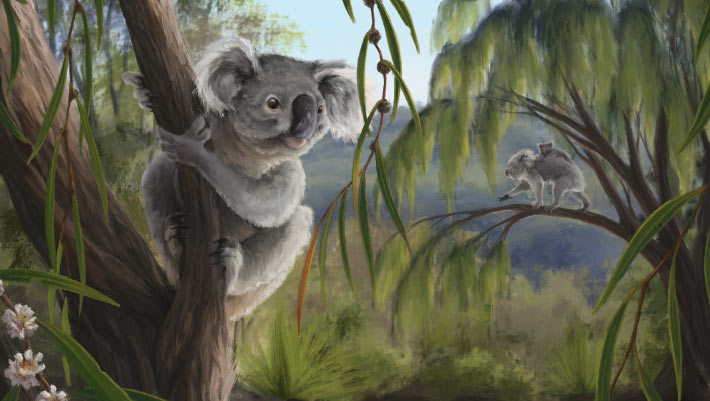
New Species of Fossil Koala Found in Museum Drawer
museum fossil discovery new species
Long-overlooked fossils in the Western Australian Museum collection have been identified as a new species of koala. The post New Species of Fossil Koala Found in Museum Drawer appeared first on Sci.News: Breaking Science News.
06/05/2026 sci-news
Beautiful Eryops Fossil Skeleton on Display
predator museum Permian fossil skeleton
As a child, one of my favourite prehistoric animals was the giant temnospondyl Eryops.  It always brings me pleasure when I come across fossils of this Early Permian predator.  Indeed, just viewing a reconstructed skeleton makes me smile.  When at the London Natural History Museum, I try to make time to see the Eryops megacephalus
06/05/2026 everythingdinosaur
La plus ancienne feuille de cannabis ? Un musée fait une étonnante découverte
The oldest cannabis leaf? A museum makes an astonishing discovery
museum discovery
The Berlin Natural History Museum has dated what appears to be the footprint of a Cannabis genus plant in dried mud.
22/04/2026 sciencesetavenir ⚙ Auto-translated
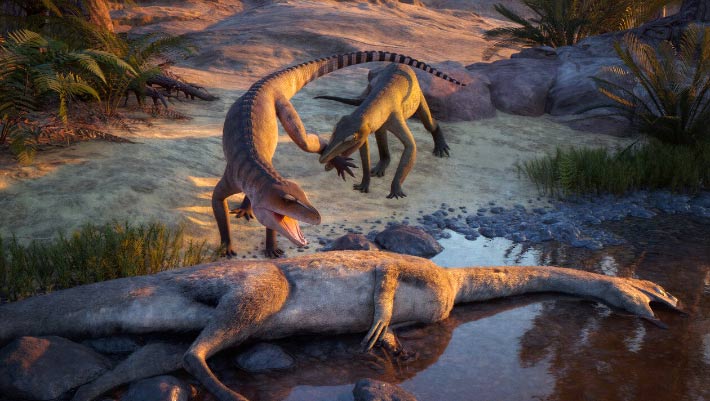
Museum Fossil Reveals Triassic Crocodile Cousin with Powerful Jaws
jaw museum Late Triassic Triassic fossil specimen CT-scan new species
CT scans of a decades-old specimen from the Yale Peabody Museum of Natural History show a new species of short-snouted crocodylomorph with unusually strong jaws, offering a rare snapshot of ecological specialization in the Late Triassic epoch. The post Museum Fossil Reveals Triassic Crocodile Cousin with Powerful Jaws appeared first on Sci.News: Breaking Science News.
20/04/2026 sci-news
Episode 174: A History of Dinosaurs in 50 Fossils
museum fossil specimen Dinosauria
Prof. Paul Barrett of the Natural History Museum, London, recently authored A History of Dinosaurs in 50 Fossils. We took this as an opportunity to get an overview of what we really know about dinosaurs and how it’s even possible to tell their story with just 50 specimens. In this episode, Paul discusses the history [&hellip
15/04/2026 palaeocast
1 2 3 4 5 6 7