←

fossile

Nature du spécimen

239 image(s) · 241 Actualités

Galerie d'images

Palaeogeography of the Earth in Aptian, with location of Acrocanthosaurus fossils as green dots
Intervalles Aptian

Palaeogeography of the Earth in Aptian, with location of Acrocanthosaurus fossils as green dots

Aptien fossile Acrocanthosaurus
Map of Cretaceous-aged dinosaur fossil localities of Mongolia.
Gobihadros mongoliensis was collected from Bayshin Tsav in Area C. Open squares indicate Late Cretaceous sites, solid squares represent Early Cretaceous localities. Abbreviations: A, Localities of Western Gobi Desert in Mongolia, mainly group of localities of Nemegtian age (early Maastrichtian), Late Cretaceous; B, Localities of Central Gobi Desert in Mongolia, mainly Djadokhtian age (Campanian), Late Cretaceous; C & D- Localities of Eastern Gobi Desert in Mongolia, mainly Baynshirenian age (Cenomanian-Santonian), Late Cretaceous. Figure has been modified from Tsogtbaatar et al. 2014, Figure 1 [24].

Map of Cretaceous-aged dinosaur fossil localities of Mongolia. Gobihadros mongoliensis was collected from Bayshin Tsav in Area C. Open squares indicate Late Cretaceous sites, solid squares represent Early Cretaceous localities. Abbreviations: A, Localities of Western Gobi Desert in Mongolia, mainly group of localities of Nemegtian age (early Maastrichtian), Late Cretaceous; B, Localities of Central Gobi Desert in Mongolia, mainly Djadokhtian age (Campanian), Late Cretaceous; C & D- Localities of Eastern Gobi Desert in Mongolia, mainly Baynshirenian age (Cenomanian-Santonian), Late Cretaceous. Figure has been modified from Tsogtbaatar et al. 2014, Figure 1 [24].

Mongolie Campanien Cénomanien Crétacé +8
Figure 2: Fossil vertebrate locality of Eric the Red West.
Shore platform looking west, showing undulating erosive boundary (solid white line) between the top of the Anchor Sandstone (AS) and the base of the ETRW Sandstone (ES). White dashed lines indicate selected bedding surfaces. White scale in mid-ground (indicated by arrow) equals 1 m.

Figure 2: Fossil vertebrate locality of Eric the Red West. Shore platform looking west, showing undulating erosive boundary (solid white line) between the top of the Anchor Sandstone (AS) and the base of the ETRW Sandstone (ES). White dashed lines indicate selected bedding surfaces. White scale in mid-ground (indicated by arrow) equals 1 m.

écaille fossile
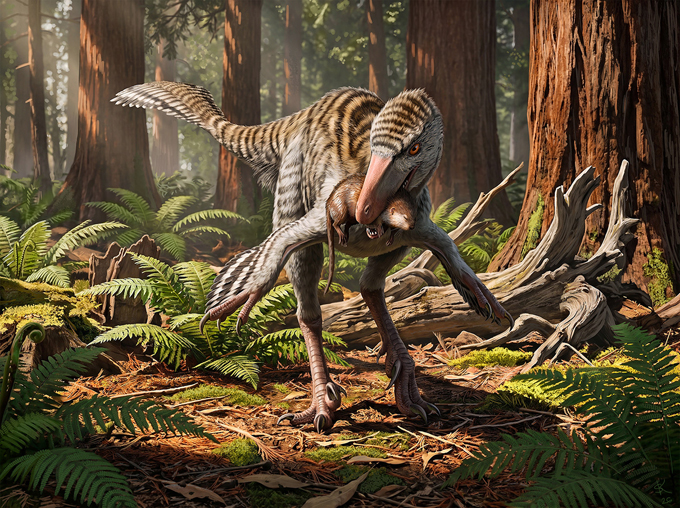
Représentation du dinosaure Dinevenator robustus, récemment découvert. Ce troodontidé a été identifié en 2026 à partir d'un fossile collecté dans le comté de San Juan.
Taxons Dinevenator

Représentation du dinosaure Dinevenator robustus, récemment découvert. Ce troodontidé a été identifié en 2026 à partir d'un fossile collecté dans le comté de San Juan.

fossile Dinevenator Troodontidae
A broken concretion with fossils inside; Late Cretaceous Pierre shale, near Ekalaka, Montana.

A broken concretion with fossils inside; Late Cretaceous Pierre shale, near Ekalaka, Montana.

Pierre Shale Crétacé Crétacé supérieur fossile
The distictive banding of the Morrison Formation, a group of rock layers that occur throughout Dinosaur National Monument.  The formation originated as muds and sands laid down by ancient rivers, and some of its outcrops have been found to contain 150-million-year-old dinosaur fossils like those found at the monument's Dinosaur Quarry.

The distictive banding of the Morrison Formation, a group of rock layers that occur throughout Dinosaur National Monument. The formation originated as muds and sands laid down by ancient rivers, and some of its outcrops have been found to contain 150-million-year-old dinosaur fossils like those found at the monument's Dinosaur Quarry.

Morrison fossile Dinosauria formation
Bituminous claystone, Lower Jurassic, Hesselberg, Middle Franconia.
Sedimentary rock of very thin laminated layers (particles less than 0,0002 mm).

Rock formation is known for its rich fossil findings, ex. Ichthyosaur.

Bituminous claystone, Lower Jurassic, Hesselberg, Middle Franconia. Sedimentary rock of very thin laminated layers (particles less than 0,0002 mm). Rock formation is known for its rich fossil findings, ex. Ichthyosaur.

Jurassique fossile Ichthyosauria formation
Khaan fossil holotype IGM 100/1127.
Taxons Khaan

Khaan fossil holotype IGM 100/1127.

États-Unis fossile holotype Khaan
The Natural Science Museum at El Chocón, in the northwestern Argentine Patagonia (the Comahue region). Fossil of dinosaur
Taxons Skorpiovenator

The Natural Science Museum at El Chocón, in the northwestern Argentine Patagonia (the Comahue region). Fossil of dinosaur

musée Argentine fossile Dinosauria +1
Nyasasaurus is a basal dinosauromorph that may be the earliest known dinosaur. It was a small bipedal animal at about 2-3 m in length. Nyasasaurus is difficult to classify due to inconclusive fossil evidence, but if it is a true dinosaur, it pushes the dinosaur lineage back about 12 million years to the Middle Triassic.
Taxons Nyasasaurus

Nyasasaurus is a basal dinosauromorph that may be the earliest known dinosaur. It was a small bipedal animal at about 2-3 m in length. Nyasasaurus is difficult to classify due to inconclusive fossil evidence, but if it is a true dinosaur, it pushes the dinosaur lineage back about 12 million years to the Middle Triassic.

Trias moyen Trias fossile Dinosauria +1
Fossil at the Museo Argentino de Ciencias Naturales in Caballito, Buenos Aires, Argentina.
Taxons Pterodaustro

Fossil at the Museo Argentino de Ciencias Naturales in Caballito, Buenos Aires, Argentina.

Argentine fossile Pterodaustro
Sidersaura is a rebbachisaurid sauropod dinosaur from the Late Cretaceous of Argentina. Rebbachisaurids are the last known dipldocoids, and lived alongside the titanosaurs until fairly late in the Cretaceous before disappearing from the fossil record, presumably going extinct. They have long tails and relatively short necks, by sauropod standards. Sidersaura one of the most recent rebbachisaurids yet found, living in the Cenomanian–Turonian ages of the Late Cretaceous. It was large for a rebbachisaurid, growing to about 20 m in length.

Sidersaura is a rebbachisaurid sauropod dinosaur from the Late Cretaceous of Argentina. Rebbachisaurids are the last known dipldocoids, and lived alongside the titanosaurs until fairly late in the Cretaceous before disappearing from the fossil record, presumably going extinct. They have long tails and relatively short necks, by sauropod standards. Sidersaura one of the most recent rebbachisaurids yet found, living in the Cenomanian–Turonian ages of the Late Cretaceous. It was large for a rebbachisaurid, growing to about 20 m in length.

Argentine Cénomanien Crétacé Crétacé supérieur +6
Fossil of Mei long (holotype), on temporary display at the Shanghai Natural History Museum as part of the exhibition "China's Dinosaur World". Shot on July 22, 2025.
Taxons Mei

Fossil of Mei long (holotype), on temporary display at the Shanghai Natural History Museum as part of the exhibition "China's Dinosaur World". Shot on July 22, 2025.

musée Chine fossile holotype +1
Fossil specimen (IVPP V17903) of Corpulentapus lilasia on display at the Paleozoological Museum of China.
Taxons Corpulentapus

Fossil specimen (IVPP V17903) of Corpulentapus lilasia on display at the Paleozoological Museum of China.

musée Chine fossile spécimen +1
Known fossil pieces after Aviatyrannis jurassica (Dinosauria, Theropoda, Coelurosauria, Tyrannosauroidea).[1]
Sources

↑ Rauhut O.W.M. (2003), "A tyrannosaurid dinosaur from the Upper Jurassic of Portugal", Paleontology 46(5): p. 903-910.
Taxons Aviatyrannis

Known fossil pieces after Aviatyrannis jurassica (Dinosauria, Theropoda, Coelurosauria, Tyrannosauroidea).[1] Sources ↑ Rauhut O.W.M. (2003), "A tyrannosaurid dinosaur from the Upper Jurassic of Portugal", Paleontology 46(5): p. 903-910.

Portugal Jurassique fossile Aviatyrannis +5
Datousaurus. Fossil in Shanghai Science & Technology Museum
Taxons Datousaurus

Datousaurus. Fossil in Shanghai Science & Technology Museum

musée fossile Datousaurus
1 2 3 4 5 6 7 8 9 10 11 12 13 14 15

Actualités

Ce « crocodile terroriste » de la taille d’un autobus scolaire a mangé des dinosaures. Maintenant c'est de retour
musée fossile Dinosauria Géorgie squelette
Un crocodile massif capable d'attaquer les dinosaures a été ramené à la vie en tant que premier squelette monté scientifiquement précis de Deinosuchus schwimmeri. La réplique de 31 pieds du Tellus Science Museum de Géorgie a été construite à partir d’analyses détaillées de fossiles et de plus de 40 ans de recherches menées par le paléontologue Dr David Schwimmer, en l’honneur duquel l’espèce doit son nom.
05/08/2026 sciencedaily ⚙ Traduction automatique
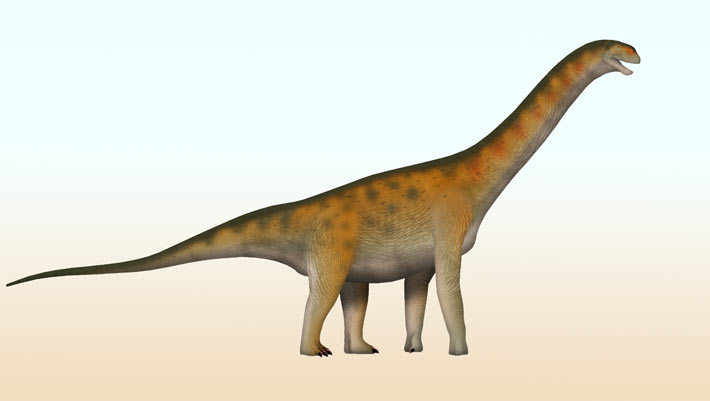
Fossil Find in China Reveals Dinosaur Family Never Before Seen in East Asia
Une découverte de fossiles en Chine révèle une famille de dinosaures jamais vue auparavant en Asie de l'Est
Chine fossile Dinosauria découverte nouvelle espèce
Des paléontologues travaillant dans le sud de la Chine ont identifié une nouvelle espèce de dinosaure sauropode qui semble appartenir à un groupe jamais documenté auparavant en Asie de l'Est. L'article Une découverte de fossiles en Chine révèle une famille de dinosaures jamais vue auparavant en Asie de l'Est est apparu en premier sur Sci.News : Breaking Science News.
04/08/2026 sci-news ⚙ Traduction automatique
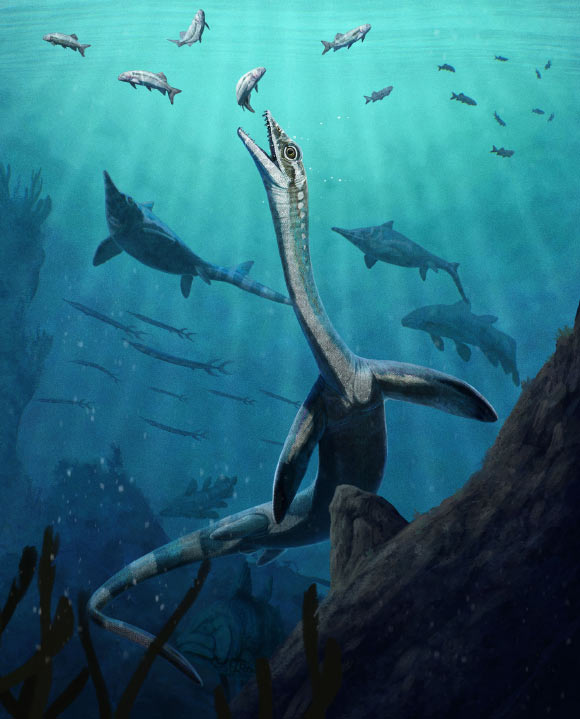
244-Million-Year-Old Fossil Preserves Earliest Reptilian Digestive System
Un fossile vieux de 244 millions d’années préserve le premier système digestif reptilien
Chine Trias fossile spécimen
Un spécimen superbement conservé d'Austronaga minuta, un petit reptile marin au long cou du Trias chinois, contient un estomac, un foie et des intestins fossilisés, offrant aux paléontologues leur plus ancien aperçu détaillé de la façon dont les premiers reptiles digéraient la nourriture. L'article Un fossile vieux de 244 millions d'années préserve le premier système digestif reptilien est apparu en premier sur Sci.News : Breaking Science News.
04/08/2026 sci-news ⚙ Traduction automatique
Une créature vieille de 518 millions d'années révèle les origines des crocs d'araignée
membre tissus fossile
Une minuscule créature marine vieille de 518 millions d’années a révélé les premières preuves connues des structures qui sont finalement devenues des crocs d’araignées. Cachés à l’intérieur du fossile se trouvaient des membres en forme de pinces et des tissus mous préservés qui aident à expliquer comment les ancêtres des araignées et des scorpions sont devenus de redoutables chasseurs.
04/08/2026 sciencedaily-paleo ⚙ Traduction automatique
Les fossiles remarquables d'Eoceras shaanxiense réécrivent l'évolution des céphalopodes
Chine Cambrien Étage 3 du Cambrien fossile évolution formation
Les chercheurs ont identifié de minuscules fossiles de la formation Shuijingtuo (stade cambrien 3) du sud de la Chine qui pourraient transformer notre compréhension de l'évolution des céphalopodes. L'espèce nouvellement décrite, Eoceras shaanxiense, fournit la plus ancienne preuve connue d'un siphoncle primordial, une caractéristique anatomique cruciale qui a permis aux céphalopodes de réguler la flottabilité et de devenir finalement certains des océans.
03/08/2026 everythingdinosaur ⚙ Traduction automatique
1 2 3 4 5 6 7 8 9 10 11 12 13 14 15 16 17 18 19 20 21 22 23 24 25 26 27 28 29 30 31 32 33 34 35 36 37 38 39 40 41 42 43 44 45 46 47 48 49