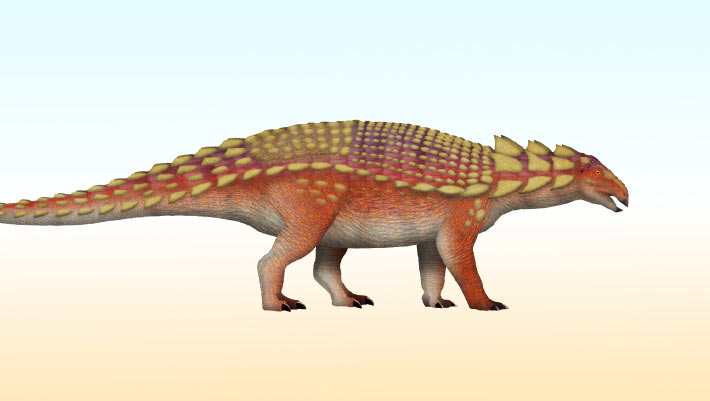
fossile

Nature du spécimen

183 image(s) · 103 Actualités

Galerie d'images

Figure 1. Evolution of macroecological traits in Dinosauria. Large scale event in dinosaur evolution (a); the origin of dinosaurs (star), hyperthermals (volcano), the earliest fossil Avialae (bird), the earliest fossil angiosperm (flower), the Cretaceous/Palaeogene mass extinction (asteroid). Phylogeny of dinosaurs (b) redrawn from Sereno and adapted to the current consensus and upon which an ancestral state reconstruction of temperature niche (mean annual temperature) after Chiarenza et al. is plotted; Mesozoic palaeogeographies (c) for Triassic (T), Jurassic (J) and Cretaceous (K). Silhouette colours symbolize body mass for each of the taxa represented; information on dietary habits are plotted after Barrett and Zanno & Makovicky; numbers represent clades discussed through this study: 1, Ornithischia; 2, Thyreophora; 3, Ornithopoda; 4, Hadrosauroidea; 5, Marginocephalia; 6, Ceratopsia; 7, Saurischia; 8, Sauropodomorpha; 9, Sauropoda; 10, Theropoda; 11, Ceratosauria; 12, Tetanurae; 13, Coelurosauria; 14, Maniraptoriformes; 15, Maniraptora; 16, Deinonychosauria; 17, Avialae; 18, Ornithothoraces. Palaeogeographies modified from original plots via R package ‘mapast’ using plate models by Scotese.

Figure 1. Evolution of macroecological traits in Dinosauria. Large scale event in dinosaur evolution (a); the origin of dinosaurs (star), hyperthermals (volcano), the earliest fossil Avialae (bird), the earliest fossil angiosperm (flower), the Cretaceous/Palaeogene mass extinction (asteroid). Phylogeny of dinosaurs (b) redrawn from Sereno and adapted to the current consensus and upon which an ancestral state reconstruction of temperature niche (mean annual temperature) after Chiarenza et al. is plotted; Mesozoic palaeogeographies (c) for Triassic (T), Jurassic (J) and Cretaceous (K). Silhouette colours symbolize body mass for each of the taxa represented; information on dietary habits are plotted after Barrett and Zanno & Makovicky; numbers represent clades discussed through this study: 1, Ornithischia; 2, Thyreophora; 3, Ornithopoda; 4, Hadrosauroidea; 5, Marginocephalia; 6, Ceratopsia; 7, Saurischia; 8, Sauropodomorpha; 9, Sauropoda; 10, Theropoda; 11, Ceratosauria; 12, Tetanurae; 13, Coelurosauria; 14, Maniraptoriformes; 15, Maniraptora; 16, Deinonychosauria; 17, Avialae; 18, Ornithothoraces. Palaeogeographies modified from original plots via R package ‘mapast’ using plate models by Scotese.

écaille Crétacé Jurassique Mésozoïque +23
Simplified cladogram of Dinosauria with the distribution of feathers according to the fossil record. Despite its more ancient origin, it
was only in maniraptoriformes that modern-type feathers (pennaceous feathers) have arisen (Based in Xu & Guo, 2009; Clarke,

2013; Godefroit et al., 2013; Han et al., 2014; Koshchowitz et al., 2014).

Simplified cladogram of Dinosauria with the distribution of feathers according to the fossil record. Despite its more ancient origin, it was only in maniraptoriformes that modern-type feathers (pennaceous feathers) have arisen (Based in Xu & Guo, 2009; Clarke, 2013; Godefroit et al., 2013; Han et al., 2014; Koshchowitz et al., 2014).

plume fossile Dinosauria Maniraptoriformes +1
Photographer: User:Ballista

Edited in Adobe PhotoShop: User:Firsfron
Photographed object is in fact a cast of a real fossil. It's part of a hands-on exhibit of the NHM in London.

Photographer: User:Ballista Edited in Adobe PhotoShop: User:Firsfron Photographed object is in fact a cast of a real fossil. It's part of a hands-on exhibit of the NHM in London.

moulage fossile Neotheropoda
The Chicago specimen of Archaeopteryx (PA 830), a well-preserved fossil highlighting the transitional features between non-avian dinosaurs and birds, housed at the Field Museum of Natural History.

The Chicago specimen of Archaeopteryx (PA 830), a well-preserved fossil highlighting the transitional features between non-avian dinosaurs and birds, housed at the Field Museum of Natural History.

musée fossile spécimen Archaeopteryx +2
Fossil of Anhanguera, an extinct reptile-- Took the photo at Natural History Museum, London

Fossil of Anhanguera, an extinct reptile-- Took the photo at Natural History Museum, London

musée fossile Anhanguera
Fossil of Balaur, an extinct theropod- Took the photo at Fossil Show, Munich
Taxons Balaur

Fossil of Balaur, an extinct theropod- Took the photo at Fossil Show, Munich

fossile Balaur
The Canadian Fossil Discovery Centre in Morden boasts the largest collection of marine invertebrate fossils in Canada. Visitors to the museum not only get to see this collection, but can join a dig in search for more fossils at a 109-acre escarpment property.

Photo credit: Robyn Hanson

The Canadian Fossil Discovery Centre in Morden boasts the largest collection of marine invertebrate fossils in Canada. Visitors to the museum not only get to see this collection, but can join a dig in search for more fossils at a 109-acre escarpment property. Photo credit: Robyn Hanson

musée Canada fossile Tylosaurus +1
Fossil of Pinacosaurus, an ankylosaurian  dinosaur
Took the photo at Musee d'Histoire Naturelle, Brussels
Taxons Eopinacosaurus

Fossil of Pinacosaurus, an ankylosaurian dinosaur Took the photo at Musee d'Histoire Naturelle, Brussels

fossile Ankylosauria Dinosauria Eopinacosaurus +1
Duria Antiquior, célèbre aquarelle du géologue Henry de la Beche représentant la vie dans l'ancien Dorset d'après des fossiles trouvés par Mary Anning.

Duria Antiquior, célèbre aquarelle du géologue Henry de la Beche représentant la vie dans l'ancien Dorset d'après des fossiles trouvés par Mary Anning.

old school fossile Ichthyosaurus Plesiosaurus +1
Geographic and geologic map showing the location and involved strata of the studied fossil sites in the Xinhe Formation. (A, B) location of the fossiliferous localities in the Gansu Province. (C) Geological map of the involved strata of the studied fossil site (from State Bureau of Surveying and Mapping, GS (2016)2884). White star=Jinchuanloong niedu. Black star=plesiosaur fossils. (D) Stratigraphic chart of the Jurassic at the localities.

Geographic and geologic map showing the location and involved strata of the studied fossil sites in the Xinhe Formation. (A, B) location of the fossiliferous localities in the Gansu Province. (C) Geological map of the involved strata of the studied fossil site (from State Bureau of Surveying and Mapping, GS (2016)2884). White star=Jinchuanloong niedu. Black star=plesiosaur fossils. (D) Stratigraphic chart of the Jurassic at the localities.

Jurassique fossile Jinchuanloong Plesiosauria +1
Jinchuanloong is a relatively basal sauropod that measured an estimated 10 m in length. Sauropod skulls typically don't preserve well in the fossil record, but Jinchuanloong is known mainly from the skull, and parts of the neck and tail. Like all sauropods, Jinchuanloong was a quadrupedal herbivore that used its long neck to reach the vegetation that it fed on.

Jinchuanloong is a relatively basal sauropod that measured an estimated 10 m in length. Sauropod skulls typically don't preserve well in the fossil record, but Jinchuanloong is known mainly from the skull, and parts of the neck and tail. Like all sauropods, Jinchuanloong was a quadrupedal herbivore that used its long neck to reach the vegetation that it fed on.

fossile Jinchuanloong crâne
Fossil of Quetzalcoatlus, an extinct pterosaur- Took the photo at Senckenberg Museum of Frankfurt
Taxons Quetzalcoatlus

Fossil of Quetzalcoatlus, an extinct pterosaur- Took the photo at Senckenberg Museum of Frankfurt

musée fossile Pterosauria Quetzalcoatlus
Artists’ reconstruction of the living Sarabosaurus dahli swimming with ammonites and fish in southern Utah, 94 million years ago. Artwork by Andrey Atuchin. On June 23, 2023, the following link will go live for more information, www.blm.gov/press-release/94-million-year-old-fossil-prov...

Artists’ reconstruction of the living Sarabosaurus dahli swimming with ammonites and fish in southern Utah, 94 million years ago. Artwork by Andrey Atuchin. On June 23, 2023, the following link will go live for more information, www.blm.gov/press-release/94-million-year-old-fossil-prov...

fossile Sarabosaurus Selmasaurini
Various fossils pertaining to the holotype of the Triassic ichthyosaur Toretocnemus (originally Leptocheirus, also Merriamia) zitteli. This image is derived from plate 23 in Merriam (1903), done by an uncredited artist. The arrangement of the individual figures has been modified from the original (most notably, figures 3 and 4 were swapped to minimize confusion).
Original description:
Leptocheirus zitteli n. gen. and sp.
Figures reproduced natural size from the type specimen.

Fig. 1.— Right side of skull.
Fig. 2. — Cross-section of posterior portion of the lower jaw, taken above the point marked A on the lateral view of the skull.
Fig. 3. — Cross-section of the upper and lower jaws, taken at the break immediately behind the point marked Sp on the lateral view of the skull.
Fig. 4. — Lateral view of an anterior caudal centrum.
Legend (modified from original):

Ar - articular
A - angular
D - dentary
J - jugal
L - lacrimal
Mx - maxilla
Po - postorbital
Sa - surangular
Se - sclerotic ring
Sp - spenial
T - cross-section of tooth
X - doubtful element

Various fossils pertaining to the holotype of the Triassic ichthyosaur Toretocnemus (originally Leptocheirus, also Merriamia) zitteli. This image is derived from plate 23 in Merriam (1903), done by an uncredited artist. The arrangement of the individual figures has been modified from the original (most notably, figures 3 and 4 were swapped to minimize confusion). Original description: Leptocheirus zitteli n. gen. and sp. Figures reproduced natural size from the type specimen. Fig. 1.— Right side of skull. Fig. 2. — Cross-section of posterior portion of the lower jaw, taken above the point marked A on the lateral view of the skull. Fig. 3. — Cross-section of the upper and lower jaws, taken at the break immediately behind the point marked Sp on the lateral view of the skull. Fig. 4. — Lateral view of an anterior caudal centrum. Legend (modified from original): Ar - articular A - angular D - dentary J - jugal L - lacrimal Mx - maxilla Po - postorbital Sa - surangular Se - sclerotic ring Sp - spenial T - cross-section of tooth X - doubtful element

description Trias fossile holotype +7
Various fossils pertaining to the holotype of the Triassic ichthyosaur Toretocnemus californicus. This image is derived from plate 24 in Merriam (1903), done by an uncredited artist. The arrangement of the individual figures has been modified from the original.
Original description:
Toretocnemus californicus n. gen. and sp.
Figures reproduced natural size from the type specimen.

Fig. 1. — Inferior side of right posterior limb. t, tibia.
Fig. 2. — Right anterior limb. r, radius.
Fig. 3.— Pelvic arch.
Fig. 4. — Middle dorsal vertebrae and a rib from the same region.

Various fossils pertaining to the holotype of the Triassic ichthyosaur Toretocnemus californicus. This image is derived from plate 24 in Merriam (1903), done by an uncredited artist. The arrangement of the individual figures has been modified from the original. Original description: Toretocnemus californicus n. gen. and sp. Figures reproduced natural size from the type specimen. Fig. 1. — Inferior side of right posterior limb. t, tibia. Fig. 2. — Right anterior limb. r, radius. Fig. 3.— Pelvic arch. Fig. 4. — Middle dorsal vertebrae and a rib from the same region.

membre description Trias fossile +6
Photograph of a fossil cast of a Tanycolagreus topwilsoni skeleton taken at the North American Museum of Ancient Life.

Photograph of a fossil cast of a Tanycolagreus topwilsoni skeleton taken at the North American Museum of Ancient Life.

musée moulage fossile Coeluridae +2
1 2 3 4 5 6 7 8 9 10 11 12

Actualités

Cet animal ancien fut l'un des premiers à manger des plantes sur terre
dent fossile crâne
Il y a des centaines de millions d’années, les premiers animaux à ramper sur terre étaient de purs mangeurs de viande, alors même que les plantes avaient déjà envahi le paysage. Aujourd’hui, les scientifiques ont découvert un fossile vieux de 307 millions d’années qui réécrit cette histoire : l’un des premiers vertébrés terrestres connus à avoir commencé à manger des plantes. L'animal, nommé Tyrannoroter heberti, était une créature trapue de la taille d'un ballon de football avec un crâne rempli de dents spécialisées conçues pour écraser et broyer la végétation.
11/02/2026 sciencedaily ⚙ Traduction automatique
Ces fossiles vieux de 773 000 ans pourraient révéler notre ancêtre humain commun
fossile évolution Homo sapiens
Les fossiles d'une grotte marocaine ont été datés avec une précision remarquable il y a environ 773 000 ans, grâce à une signature magnétique verrouillée dans les sédiments environnants. Les restes d’hominidés présentent un mélange de caractéristiques anciennes et plus modernes, les plaçant à proximité d’un point de branchement crucial dans l’évolution humaine. Ces individus représentent probablement une population africaine proche du dernier ancêtre commun de l'Homo sapiens, des Néandertaliens et des Dénisoviens.
07/02/2026 sciencedaily ⚙ Traduction automatique
Les bébés dinosaures étaient l'épine dorsale de la chaîne alimentaire jurassique
chasse prédateur proie Jurassique fossile Dinosauria
Bien qu’ils soient devenus les plus gros animaux ayant jamais marché sur terre, les sauropodes ont commencé leur vie petits, exposés et seuls. Les preuves fossiles suggèrent que leurs bébés étaient fréquemment mangés par de multiples prédateurs, ce qui en faisait un élément clé de la chaîne alimentaire jurassique. Cet approvisionnement constant en proies faciles peut expliquer pourquoi les premiers prédateurs ont prospéré sans avoir besoin d’adaptations extrêmes en matière de chasse. Les résultats offrent un rare aperçu du fonctionnement réel des écosystèmes de dinosaures.
02/02/2026 sciencedaily ⚙ Traduction automatique
Cette application d'IA peut déterminer quel dinosaure a laissé une empreinte
fossile empreintes Dinosauria oiseau datation découverte
Les empreintes de dinosaures ont toujours été mystérieuses, mais une nouvelle application d'IA perce leurs secrets. DinoTracker analyse les photos de traces de fossiles et prédit quel dinosaure les a créées, avec une précision rivalisant avec celle des experts humains. En cours de route, il a découvert des empreintes de pas qui ressemblent étonnamment à celles d'un oiseau, remontant à plus de 200 millions d'années. Cette découverte pourrait repousser l’origine des oiseaux bien plus loin dans la préhistoire.
01/02/2026 sciencedaily ⚙ Traduction automatique
Hesperosuchus: Beast of the Week
Hesperosuchus : Bête de la semaine
Mexique États-Unis Trias supérieur Trias fossile squelette
Cette semaine, nous allons découvrir un parent de crocodiliens modernes qui a trompé les scientifiques à plusieurs reprises !  Entrez Hesperosuchus agilis ! Hesperosuchus était un pseudosuchien (lié aux crocodiliens) qui vivait dans ce qui est aujourd'hui l'Arizona et le Nouveau-Mexique, aux États-Unis, à la fin du Trias, il y a environ 210 millions d'années.  Il s'agissait probablement d'un mangeur de viande et, du museau à la queue, le squelette le plus complet mesure environ 1,2 m (4 pieds), mais d'autres fossiles suggèrent qu'il aurait pu devenir plus grand, jusqu'à environ 1,2 m.
01/02/2026 prehistoricbeastoftheweek ⚙ Traduction automatique
1 2 3 4 5 6 7 8 9 10 11 12 13 14 15 16 17 18 19 20 21