fossile

Nature du spécimen

224 image(s) · 140 Actualités

Galerie d'images

Paleogeography and paleoclimate of the Late Jurassic - 150 Ma with dinosaur fossil localities:
A = Tendaguru Formation, Tanzania
C1 =  Shishugou & Kalazha Formations, China
C2 =  Shangshaximiao (Upper Shaximiao) Formation, China
E1 =  Sables de Glos, Argiles d’Octeville, Marnes de Bléville, Kimmeridge Clay, Calcareous Grit, Corallian Oolite, Oxford Clay, Portland Stone, England & France
E2 = Villar del Arzobispo, Alcobaça, Guimarota, Sobral, Amoreira-Porto Novo, Bombarral, Freixial, Lourinhã Formations, Spain & Portugal
M1-6 = Morrison Formation, United States
S1 =  Toquí & Cañadón Calcáreo Formations, Chile & Argentina

Paleogeography and paleoclimate of the Late Jurassic - 150 Ma with dinosaur fossil localities: A = Tendaguru Formation, Tanzania C1 = Shishugou & Kalazha Formations, China C2 = Shangshaximiao (Upper Shaximiao) Formation, China E1 = Sables de Glos, Argiles d’Octeville, Marnes de Bléville, Kimmeridge Clay, Calcareous Grit, Corallian Oolite, Oxford Clay, Portland Stone, England & France E2 = Villar del Arzobispo, Alcobaça, Guimarota, Sobral, Amoreira-Porto Novo, Bombarral, Freixial, Lourinhã Formations, Spain & Portugal M1-6 = Morrison Formation, United States S1 = Toquí & Cañadón Calcáreo Formations, Chile & Argentina

Argentine Chili Chine France +19
A broken concretion with fossils inside; Late Cretaceous Pierre shale, near Ekalaka, Montana.
Formations Pierre Shale

A broken concretion with fossils inside; Late Cretaceous Pierre shale, near Ekalaka, Montana.

Pierre Shale Crétacé Crétacé supérieur fossile
The distictive banding of the Morrison Formation, a group of rock layers that occur throughout Dinosaur National Monument.  The formation originated as muds and sands laid down by ancient rivers, and some of its outcrops have been found to contain 150-million-year-old dinosaur fossils like those found at the monument's Dinosaur Quarry.
Formations Morrison

The distictive banding of the Morrison Formation, a group of rock layers that occur throughout Dinosaur National Monument. The formation originated as muds and sands laid down by ancient rivers, and some of its outcrops have been found to contain 150-million-year-old dinosaur fossils like those found at the monument's Dinosaur Quarry.

Morrison fossile Dinosauria formation
Bituminous claystone, Lower Jurassic, Hesselberg, Middle Franconia.
Sedimentary rock of very thin laminated layers (particles less than 0,0002 mm).

Rock formation is known for its rich fossil findings, ex. Ichthyosaur.
Formations Posidonia Shale

Bituminous claystone, Lower Jurassic, Hesselberg, Middle Franconia. Sedimentary rock of very thin laminated layers (particles less than 0,0002 mm). Rock formation is known for its rich fossil findings, ex. Ichthyosaur.

Jurassique fossile Ichthyosauria formation
Map of Cretaceous-aged dinosaur fossil localities of Mongolia.
Gobihadros mongoliensis was collected from Bayshin Tsav in Area C. Open squares indicate Late Cretaceous sites, solid squares represent Early Cretaceous localities. Abbreviations: A, Localities of Western Gobi Desert in Mongolia, mainly group of localities of Nemegtian age (early Maastrichtian), Late Cretaceous; B, Localities of Central Gobi Desert in Mongolia, mainly Djadokhtian age (Campanian), Late Cretaceous; C & D- Localities of Eastern Gobi Desert in Mongolia, mainly Baynshirenian age (Cenomanian-Santonian), Late Cretaceous. Figure has been modified from Tsogtbaatar et al. 2014, Figure 1 [24].
Formations Baynshire

Map of Cretaceous-aged dinosaur fossil localities of Mongolia. Gobihadros mongoliensis was collected from Bayshin Tsav in Area C. Open squares indicate Late Cretaceous sites, solid squares represent Early Cretaceous localities. Abbreviations: A, Localities of Western Gobi Desert in Mongolia, mainly group of localities of Nemegtian age (early Maastrichtian), Late Cretaceous; B, Localities of Central Gobi Desert in Mongolia, mainly Djadokhtian age (Campanian), Late Cretaceous; C & D- Localities of Eastern Gobi Desert in Mongolia, mainly Baynshirenian age (Cenomanian-Santonian), Late Cretaceous. Figure has been modified from Tsogtbaatar et al. 2014, Figure 1 [24].

Mongolie Campanien Cénomanien Crétacé +8
Fossil hunting at Dinosaur Park
Formations Arundel Clay

Fossil hunting at Dinosaur Park

chasse Dinosaur Park fossile Dinosauria
Figure 2: Fossil vertebrate locality of Eric the Red West.
Shore platform looking west, showing undulating erosive boundary (solid white line) between the top of the Anchor Sandstone (AS) and the base of the ETRW Sandstone (ES). White dashed lines indicate selected bedding surfaces. White scale in mid-ground (indicated by arrow) equals 1 m.
Formations Eumeralla

Figure 2: Fossil vertebrate locality of Eric the Red West. Shore platform looking west, showing undulating erosive boundary (solid white line) between the top of the Anchor Sandstone (AS) and the base of the ETRW Sandstone (ES). White dashed lines indicate selected bedding surfaces. White scale in mid-ground (indicated by arrow) equals 1 m.

écaille fossile
Fossil of Suevoleviathan- Took the picture at Museum am Lowentor, Stuttgart

Fossil of Suevoleviathan- Took the picture at Museum am Lowentor, Stuttgart

musée fossile Suevoleviathan
Fossil of Suevoleviathan- Took the picture at Museum am Lowentor, Stuttgart

Fossil of Suevoleviathan- Took the picture at Museum am Lowentor, Stuttgart

musée fossile Suevoleviathan
Fossil of Suevoleviathan, an extinct reptile- Took the picture at Museum of Paleontology at Tuebingen

Fossil of Suevoleviathan, an extinct reptile- Took the picture at Museum of Paleontology at Tuebingen

musée fossile Suevoleviathan
Fossil of Suevoleviathan, an extinct reptile- Took the picture at Museum of Paleontology at Tuebingen

Fossil of Suevoleviathan, an extinct reptile- Took the picture at Museum of Paleontology at Tuebingen

musée fossile Suevoleviathan
The Naturmuseum Senckenberg in Frankfurt is the second largest museum of natural history in Germany. It is particularly popular with children, who enjoy the extensive collection of dinosaur skeletons: Senckenberg boasts the largest exhibition of large dinosaurs in Europe. One particular treasure is a dinosaur fossil with unique, preserved scaled skin. The museum contains the world's largest and most diverse collection of stuffed birds with about 2000 specimens.

The Naturmuseum Senckenberg in Frankfurt is the second largest museum of natural history in Germany. It is particularly popular with children, who enjoy the extensive collection of dinosaur skeletons: Senckenberg boasts the largest exhibition of large dinosaurs in Europe. One particular treasure is a dinosaur fossil with unique, preserved scaled skin. The museum contains the world's largest and most diverse collection of stuffed birds with about 2000 specimens.

musée Allemagne fossile spécimen +4
Fossil in the Oxford University natural history museum

Fossil in the Oxford University natural history museum

musée Pérou fossile Peloneustes
Identifier: catalogueoffossi02bri (find matches)
Title: Catalogue of the fossil Reptilia and Amphibia in the British Museum (Natural history) ... By Richard Lydekker ..
Year: 1888 (1880s)
Authors:  British Museum (Natural History). Dept. of Geology Lydekker, Richard, 1849-1915
Subjects:  Reptiles, Fossil Amphibians, Fossil
Publisher:  London, Printed by order of the Trustees
Contributing Library:  Smithsonian Libraries
Digitizing Sponsor:  Biodiversity Heritage Library

View Book Page: Book Viewer
About This Book: Catalog Entry
View All Images: All Images From Book
Click here to view book online to see this illustration in context in a browseable online version of this book.

Text Appearing Before Image:
rface smooth; their terminal faces onlyslightly cupped, transversely ellipsoidal, and somewhat angulatod.Dorsals with longer centra, having nearly flat terminal faces, andforward overhang of upper part. Pectoral girdle of the general typeof Pliosaurus, with a small triangular omostornum between theventral plates of the scapula) (fig. 48), which have a strong ridge 1 Quart. Journ. Geol. Soc. vol. xlv. p. 49 (1889). 152 SATJKOPTERYGTA. dividing the ventral from the dorsal portion, and are thus more ofthe type of Thaumatosaurus. Pelvis (figs. 53, 54) like that ofPliosaurus, the pubis and ischium uniting to form an obturatorforamen. Relative lengths of humerus and femur unknown.Humerus articulating distally with only the radius and ulna, whichare relatively short, and separated only by a small interval (fig. 52) ;ulna and fibula subreniform, the former being considerably thelarger of the two. This genus may have been directly derived from the Longiros-trine group of Plesiosaurus. Fig. 49.
Text Appearing After Image:
Peloneustes philarchus.—Dorsal aspect of the coracoids; from the Oxford Clay of Bedford. Reduced, gl, glenoid cavity. (This and the preceding figure from the Quart. Joum. Geol. Soc.) Peloneustes sequalis (Phillips1). Syn. Pliosaurus cequalis, Phillips2.Pliosaurus sterrodirus, Seeley3. Imperfectly known. Cervical vertebrae with the neural canal•sunk into the centrum, and the pectorals with distinctly concaveterminal faces. Larger than typical examples of the next species. This species was founded upon a femur (fig. 50) from the Kime-ridge Clay of Oxfordshire, which so closely resembles the corre-sponding bone of P.jihilarchus as to indicate its generic identity; the 1 Geology of Oxford, p. 365 (1871).—Plesiosaurus. 2 Loc. cit. 3 Index to Ayes &c. in Cambridge Museum, p. 98 (1869).—No description. PLESI0SATJKIDJE, 153 length of this specimen is 0,572 (23 inches). The undermentionedvertebrae agree in relative size with this femur, and in genericcharacters with those of the ty

Note About Images

Please note that these images are extracted from scanned page images that may have been digitally enhanced for readability - coloration and appearance of these illustrations may not perfectly resemble the original work.

Identifier: catalogueoffossi02bri (find matches) Title: Catalogue of the fossil Reptilia and Amphibia in the British Museum (Natural history) ... By Richard Lydekker .. Year: 1888 (1880s) Authors: British Museum (Natural History). Dept. of Geology Lydekker, Richard, 1849-1915 Subjects: Reptiles, Fossil Amphibians, Fossil Publisher: London, Printed by order of the Trustees Contributing Library: Smithsonian Libraries Digitizing Sponsor: Biodiversity Heritage Library View Book Page: Book Viewer About This Book: Catalog Entry View All Images: All Images From Book Click here to view book online to see this illustration in context in a browseable online version of this book. Text Appearing Before Image: rface smooth; their terminal faces onlyslightly cupped, transversely ellipsoidal, and somewhat angulatod.Dorsals with longer centra, having nearly flat terminal faces, andforward overhang of upper part. Pectoral girdle of the general typeof Pliosaurus, with a small triangular omostornum between theventral plates of the scapula) (fig. 48), which have a strong ridge 1 Quart. Journ. Geol. Soc. vol. xlv. p. 49 (1889). 152 SATJKOPTERYGTA. dividing the ventral from the dorsal portion, and are thus more ofthe type of Thaumatosaurus. Pelvis (figs. 53, 54) like that ofPliosaurus, the pubis and ischium uniting to form an obturatorforamen. Relative lengths of humerus and femur unknown.Humerus articulating distally with only the radius and ulna, whichare relatively short, and separated only by a small interval (fig. 52) ;ulna and fibula subreniform, the former being considerably thelarger of the two. This genus may have been directly derived from the Longiros-trine group of Plesiosaurus. Fig. 49. Text Appearing After Image: Peloneustes philarchus.—Dorsal aspect of the coracoids; from the Oxford Clay of Bedford. Reduced, gl, glenoid cavity. (This and the preceding figure from the Quart. Joum. Geol. Soc.) Peloneustes sequalis (Phillips1). Syn. Pliosaurus cequalis, Phillips2.Pliosaurus sterrodirus, Seeley3. Imperfectly known. Cervical vertebrae with the neural canal•sunk into the centrum, and the pectorals with distinctly concaveterminal faces. Larger than typical examples of the next species. This species was founded upon a femur (fig. 50) from the Kime-ridge Clay of Oxfordshire, which so closely resembles the corre-sponding bone of P.jihilarchus as to indicate its generic identity; the 1 Geology of Oxford, p. 365 (1871).—Plesiosaurus. 2 Loc. cit. 3 Index to Ayes &c. in Cambridge Museum, p. 98 (1869).—No description. PLESI0SATJKIDJE, 153 length of this specimen is 0,572 (23 inches). The undermentionedvertebrae agree in relative size with this femur, and in genericcharacters with those of the ty Note About Images Please note that these images are extracted from scanned page images that may have been digitally enhanced for readability - coloration and appearance of these illustrations may not perfectly resemble the original work.

musée fossile Peloneustes Pliosaurus +1
Identifier: catalogueoffossi02bri (find matches)
Title: Catalogue of the fossil Reptilia and Amphibia in the British Museum (Natural history) ... By Richard Lydekker ..
Year: 1888 (1880s)
Authors:  British Museum (Natural History). Dept. of Geology Lydekker, Richard, 1849-1915
Subjects:  Reptiles, Fossil Amphibians, Fossil
Publisher:  London, Printed by order of the Trustees
Contributing Library:  Smithsonian Libraries
Digitizing Sponsor:  Biodiversity Heritage Library

View Book Page: Book Viewer
About This Book: Catalog Entry
View All Images: All Images From Book
Click here to view book online to see this illustration in context in a browseable online version of this book.

Text Appearing Before Image:
pterygian; from theKimeridge Clay of Ely. \. a, proximal, b, distal epiphysis ; c, shaft. 46792. Two still smaller specimens; from the Kimeridge Clay ofDevizes, Wiltshire. Cunnington Collection. R. 400. Two phalangeals; from the Oxford Clay of Weymouth,Dorsetshire. Presented by C. Westendarp, Esq., 1884. 150 SAUEOPTERIGIA. R. 1381. One longitudinal half of the humerus or femur of a me- (Ficj.) dium-sized form, with the inner surface cut and polished; from the Kimeridge Clay of Ely. This specimen is figured in the woodcut on the preceding page, and shows the two epiphyses almost meeting in the middle of the shaft. No history. R. 1381 a. The proximal half of a larger humerus or femur, longitu-dinally bisected; from the Kimeridge Clay of Ely. Thecontour of the proximal epiphysis is well displayed. No history. 46912. The proximal portion of a still larger humerus or femur,longitudinally bisected; from Shotover. The whole ofthe proximal epiphysis is displayed, of which the terminal Kg. 47.
Text Appearing After Image:
Sauropterygian mandibles.—A. Peloneustesphilarchus; from the Oxford Clay.\. B. Thaitmatosaurus indicus; from the Upper Jurassic of India. ).0. Pksiosaimcs dolichodirus; from the Lower Lias. f. (From the Kec.Geol. Surv. Ind.) PLESI0SAURID2E. 151 extremity appears to have been separated by a small va-cuity from that of the distal epiphysis. No history. 42097. One lateral half of a humerus or femur, with the inner sur- face cut; from the Neocomian bone-bed of Potton, Bed-fordshire. The extremity of one epiphysis is entire anddetached from the shaft, while a section is shown of thatat the opposite end. Purchased, 1870. 42098. A small imperfect femur, with the proximal epiphysis de- tached and lying loose in the cup of the shaft; fromPotton. Purchased, 1870. Genus PELONEUSTES, Lydekker \ Skull and teeth of the general type of Pliosaurus, but the mandible(fig. 47, A) with a longer symphysis, which includes more than adozen teeth. Neck short, with the anterior vertebras relativelyshort. Ve

Note About Images

Please note that these images are extracted from scanned page images that may have been digitally enhanced for readability - coloration and appearance of these illustrations may not perfectly resemble the original work.

Identifier: catalogueoffossi02bri (find matches) Title: Catalogue of the fossil Reptilia and Amphibia in the British Museum (Natural history) ... By Richard Lydekker .. Year: 1888 (1880s) Authors: British Museum (Natural History). Dept. of Geology Lydekker, Richard, 1849-1915 Subjects: Reptiles, Fossil Amphibians, Fossil Publisher: London, Printed by order of the Trustees Contributing Library: Smithsonian Libraries Digitizing Sponsor: Biodiversity Heritage Library View Book Page: Book Viewer About This Book: Catalog Entry View All Images: All Images From Book Click here to view book online to see this illustration in context in a browseable online version of this book. Text Appearing Before Image: pterygian; from theKimeridge Clay of Ely. \. a, proximal, b, distal epiphysis ; c, shaft. 46792. Two still smaller specimens; from the Kimeridge Clay ofDevizes, Wiltshire. Cunnington Collection. R. 400. Two phalangeals; from the Oxford Clay of Weymouth,Dorsetshire. Presented by C. Westendarp, Esq., 1884. 150 SAUEOPTERIGIA. R. 1381. One longitudinal half of the humerus or femur of a me- (Ficj.) dium-sized form, with the inner surface cut and polished; from the Kimeridge Clay of Ely. This specimen is figured in the woodcut on the preceding page, and shows the two epiphyses almost meeting in the middle of the shaft. No history. R. 1381 a. The proximal half of a larger humerus or femur, longitu-dinally bisected; from the Kimeridge Clay of Ely. Thecontour of the proximal epiphysis is well displayed. No history. 46912. The proximal portion of a still larger humerus or femur,longitudinally bisected; from Shotover. The whole ofthe proximal epiphysis is displayed, of which the terminal Kg. 47. Text Appearing After Image: Sauropterygian mandibles.—A. Peloneustesphilarchus; from the Oxford Clay.\. B. Thaitmatosaurus indicus; from the Upper Jurassic of India. ).0. Pksiosaimcs dolichodirus; from the Lower Lias. f. (From the Kec.Geol. Surv. Ind.) PLESI0SAURID2E. 151 extremity appears to have been separated by a small va-cuity from that of the distal epiphysis. No history. 42097. One lateral half of a humerus or femur, with the inner sur- face cut; from the Neocomian bone-bed of Potton, Bed-fordshire. The extremity of one epiphysis is entire anddetached from the shaft, while a section is shown of thatat the opposite end. Purchased, 1870. 42098. A small imperfect femur, with the proximal epiphysis de- tached and lying loose in the cup of the shaft; fromPotton. Purchased, 1870. Genus PELONEUSTES, Lydekker \ Skull and teeth of the general type of Pliosaurus, but the mandible(fig. 47, A) with a longer symphysis, which includes more than adozen teeth. Neck short, with the anterior vertebras relativelyshort. Ve Note About Images Please note that these images are extracted from scanned page images that may have been digitally enhanced for readability - coloration and appearance of these illustrations may not perfectly resemble the original work.

musée Oxford Clay fossile spécimen +2
Title: A descriptive catalogue of the marine reptiles of the Oxford clay. Based on the Leeds Collection in the British Museum (Natural History), London ..
Identifier: descriptivecatal02brit (find matches)
Year: 1910 (1910s)
Authors: British Museum (Natural History). Dept. of Geology; Andrews, Charles William, 1866-1924
Subjects: Reptiles, Fossil
Publisher: London, Printed by order of the Trustees
Contributing Library: Smithsonian Libraries
Digitizing Sponsor: Biodiversity Heritage Library

View Book Page: Book Viewer
About This Book: Catalog Entry
View All Images: All Images From Book
Click here to view book online to see this illustration in context in a browseable online version of this book.

Text Appearing Before Image: 
78 MAEINE EEPTILES OF THE OXEOED CLAT. Test-fig. 30.
Text Appearing After Image: 
aa. Coracoids of Peloneustes evansi: A, from front; B, from above. (E. 3897, 1 nat. size.)  glenoid facet; p.e.a., postero-esternal angle; sc.f., facet for scapula; sym., symphysial surface.

Note About Images

Please note that these images are extracted from scanned page images that may have been digitally enhanced for readability - coloration and appearance of these illustrations may not perfectly resemble the original work.

Title: A descriptive catalogue of the marine reptiles of the Oxford clay. Based on the Leeds Collection in the British Museum (Natural History), London .. Identifier: descriptivecatal02brit (find matches) Year: 1910 (1910s) Authors: British Museum (Natural History). Dept. of Geology; Andrews, Charles William, 1866-1924 Subjects: Reptiles, Fossil Publisher: London, Printed by order of the Trustees Contributing Library: Smithsonian Libraries Digitizing Sponsor: Biodiversity Heritage Library View Book Page: Book Viewer About This Book: Catalog Entry View All Images: All Images From Book Click here to view book online to see this illustration in context in a browseable online version of this book. Text Appearing Before Image: 78 MAEINE EEPTILES OF THE OXEOED CLAT. Test-fig. 30. Text Appearing After Image: aa. Coracoids of Peloneustes evansi: A, from front; B, from above. (E. 3897, 1 nat. size.) glenoid facet; p.e.a., postero-esternal angle; sc.f., facet for scapula; sym., symphysial surface. Note About Images Please note that these images are extracted from scanned page images that may have been digitally enhanced for readability - coloration and appearance of these illustrations may not perfectly resemble the original work.

musée Oxford Clay fossile Peloneustes +1
1 2 3 4 5 6 7 8 9 10 11 12 13 14

Actualités

Un fossile vieux de 75 millions d'années révèle un secret choquant de tyrannosaure
os prédateur fossile Tyrannosaurus comportement
Les tyrannosaures sont peut-être réputés pour être de redoutables prédateurs, mais de nouvelles recherches révèlent un côté plus opportuniste – et légèrement sombre – de leur comportement. À l’aide de scans 3D haute résolution, un chercheur a identifié des marques de morsure précises sur un énorme os du pied d’un tyrannosaure, montrant qu’un tyrannosaure plus petit s’était nourri des restes d’un parent beaucoup plus grand il y a plus de 75 millions d’années.
05/05/2026 sciencedaily ⚙ Traduction automatique
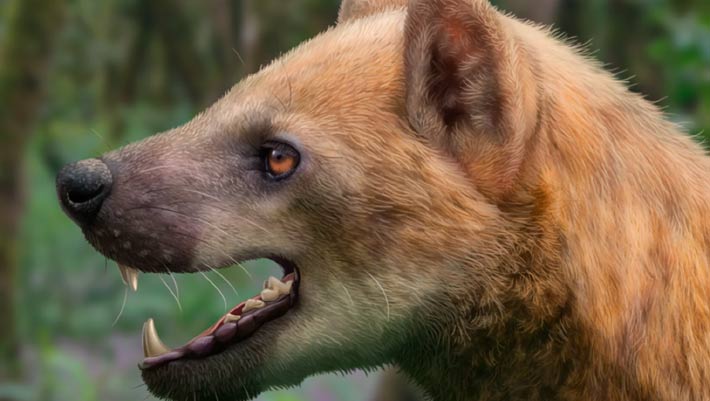
Le modèle d'ammonite s'avère inestimable lors d'une promenade guidée aux fossiles
Jurassique fossile
Lyme Regis est célèbre pour ses fossiles.  En effet, des milliers de touristes affluent dans cette partie de la « Côte Jurassique » à la recherche de fossiles. Il est judicieux de réserver une promenade aux fossiles avec un guide expérimenté. Notre ami Brandon Lennon a emmené les gars de la chaîne YouTube "All the Gear" pour un fossile guidé
04/05/2026 everythingdinosaur ⚙ Traduction automatique
Cet animal vieux de 275 millions d'années avait une mâchoire tordue comme aucun animal vivant aujourd'hui
mâchoire Brésil fossile datation
Au fond d'un lit de rivière asséché au Brésil, des scientifiques ont découvert un étrange mystère préhistorique : les mâchoires tordues d'un étrange animal perdu depuis longtemps, comme on n'en avait jamais vu auparavant. Datant de 275 millions d'années, cette créature, nommée Tanyka amnicola, appartenait à une lignée ancienne qui aurait déjà dû disparaître, ce qui en fait une sorte de « fossile vivant » de son époque.
01/05/2026 sciencedaily ⚙ Traduction automatique
Omnivorous, Rodent-Like Mammal Lived in Dinosaurs’ Shadow on Pacific Coast
Un mammifère omnivore ressemblant à un rongeur vivait dans l’ombre des dinosaures sur la côte du Pacifique
Mexique fossile Dinosauria mammifères nouvelle espèce
Les paléontologues ont décrit une nouvelle espèce du genre de mammifères multituberculés Cimolodon sur la base d'un fossile trouvé en Basse-Californie, au Mexique. L'article Un mammifère omnivore ressemblant à un rongeur vivait dans l'ombre des dinosaures sur la côte du Pacifique est apparu en premier sur Sci.News : Breaking Science News.
29/04/2026 sci-news ⚙ Traduction automatique
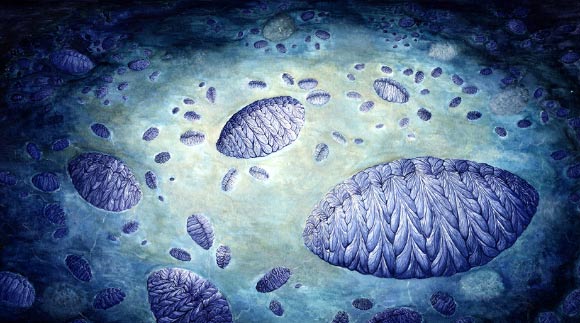
Early Platypuses Had Strong Teeth and Powerful Jaws, Fossils Show
Les premiers ornithorynques avaient des dents solides et des mâchoires puissantes, selon des fossiles
mâchoire dent Australie fossile formation
De nouveaux fossiles de la Formation de Namba, en Australie méridionale, révèlent qu'il y a 25 millions d'années, Obdurodon insignis prospérait dans les lacs intérieurs luxuriants aux côtés de dauphins d'eau douce et d'autres espèces aujourd'hui disparues. L'article Les premiers ornithorynques avaient des dents solides et des mâchoires puissantes, Fossils Show est apparu en premier sur Sci.News : Breaking Science News.
28/04/2026 sci-news ⚙ Traduction automatique
1 2 3 4 5 6 7 8 9 10 11 12 13 14 15 16 17 18 19 20 21 22 23 24 25 26 27 28