←

Crétacé

Intervalle géologique

163 image(s) · 58 Actualités

Voir la fiche

Galerie d'images

Saltasaurus (which means "lizard from Salta") was a sauropod dinosaur of the Late Cretaceous Period. Relatively small among sauropods, though still massive by human standards, it was characterized by a diplodocid-like head
Taxons Saltasaurini

Saltasaurus (which means "lizard from Salta") was a sauropod dinosaur of the Late Cretaceous Period. Relatively small among sauropods, though still massive by human standards, it was characterized by a diplodocid-like head

Crétacé Crétacé supérieur Balochisauridae Dinosauria +7
Globidens aegyptiacus Zdansky, 1934 - Ouled Abdoun, Khouribgha Province, Chaouia-Ouardigha Region, Morocco - Maastrichtian, Cretaceous (≈ -70,6 MA ± ≈ 0,6 MA)

Globidens aegyptiacus Zdansky, 1934 - Ouled Abdoun, Khouribgha Province, Chaouia-Ouardigha Region, Morocco - Maastrichtian, Cretaceous (≈ -70,6 MA ± ≈ 0,6 MA)

Maroc Crétacé Maastrichtien Globidens +1
Globidens aegyptiacus Zdansky, 1934 - Ouled Abdoun, Khouribgha Province, Chaouia-Ouardigha Region, Morocco - Maastrichtian, Cretaceous (≈ -70,6 MA ± ≈ 0,6 MA)

Globidens aegyptiacus Zdansky, 1934 - Ouled Abdoun, Khouribgha Province, Chaouia-Ouardigha Region, Morocco - Maastrichtian, Cretaceous (≈ -70,6 MA ± ≈ 0,6 MA)

Maroc Crétacé Maastrichtien Globidens +1
The Maastrichtian, Transylvanian giant azhdarchid pterosaur Hatzegopteryx sp. preys on the rhabdodontid iguanodontian Zalmoxes. Because large predatory theropods are unknown on Late Cretaceous Haţeg Island, giant azhdarchids may have played a key role as terrestrial predators in this community.

The Maastrichtian, Transylvanian giant azhdarchid pterosaur Hatzegopteryx sp. preys on the rhabdodontid iguanodontian Zalmoxes. Because large predatory theropods are unknown on Late Cretaceous Haţeg Island, giant azhdarchids may have played a key role as terrestrial predators in this community.

prédateur proie Crétacé Crétacé supérieur +8
Reconstruction of Mochlodon suessi from the Late Cretaceous of Austria. Based on Zalmoxes by Scott Hartman
Taxons Mochlodon

Reconstruction of Mochlodon suessi from the Late Cretaceous of Austria. Based on Zalmoxes by Scott Hartman

Autriche Crétacé Crétacé supérieur Mochlodon +1
Palaeogeographic distribution of late Early and early Late Cretaceous pterosaur assemblages. Taxonomic composition of assemblages shown on Fig. 1. Palaeogeography based on Smith et al. 1994. Abbreviations: 1. Cambridge Greensand, England: 2. Lower Chalk, England: 3. Züümbayan Svita, Khuren-Dukh, Mongolia: 4. Lysaya Gora, Saratov, Russia: 5. Kem Kem red beds, Morocco: 6. Paw Paw Formation, Texas, USA: 7. Lagarcito Formation, San Luis, Argentina: 8. Santana and Crato Formations, Ceara, Brazil: 9. Toolebuc Formation, Queensland, Australia.

Palaeogeographic distribution of late Early and early Late Cretaceous pterosaur assemblages. Taxonomic composition of assemblages shown on Fig. 1. Palaeogeography based on Smith et al. 1994. Abbreviations: 1. Cambridge Greensand, England: 2. Lower Chalk, England: 3. Züümbayan Svita, Khuren-Dukh, Mongolia: 4. Lysaya Gora, Saratov, Russia: 5. Kem Kem red beds, Morocco: 6. Paw Paw Formation, Texas, USA: 7. Lagarcito Formation, San Luis, Argentina: 8. Santana and Crato Formations, Ceara, Brazil: 9. Toolebuc Formation, Queensland, Australia.

Argentine Australie Brésil Mongolie +8
Locality map: Grand Staircase-Escalante National Monument, southern Utah.
Map showing the Nipple Butte area (indicated by yellow star) of Grand Staircase-Escalante National Monument (GSENM). GSENM is bounded by the red rectangle and silhouetted in dark gray on the inset of Utah and surrounding states (modified from [1]).

The original map has been modified to show the Nipple Butte area instead of the Machairoceratops fossil locality as in the original source. New location based on map in A New Macrovertebrate Assemblage from the Late Cretaceous (Campanian) of Southern Utah, page 601.

Locality map: Grand Staircase-Escalante National Monument, southern Utah. Map showing the Nipple Butte area (indicated by yellow star) of Grand Staircase-Escalante National Monument (GSENM). GSENM is bounded by the red rectangle and silhouetted in dark gray on the inset of Utah and surrounding states (modified from [1]). The original map has been modified to show the Nipple Butte area instead of the Machairoceratops fossil locality as in the original source. New location based on map in A New Macrovertebrate Assemblage from the Late Cretaceous (Campanian) of Southern Utah, page 601.

Campanien Crétacé Crétacé supérieur fossile +1
Kaiparowits Formation (Campanian; Upper Cretaceous) at The Blues, near Powell Point (peak to the left) composed of the Claron Formation.

Kaiparowits Formation (Campanian; Upper Cretaceous) at The Blues, near Powell Point (peak to the left) composed of the Claron Formation.

Kaiparowits Campanien Crétacé formation
Natural-colour satellite image of part of the Kaiparowits Basin (a central portion of Grand Staircase-Escalante). The branch-like shapes are networks of canyons carved by rivers that dried up millions of years ago. The ridge running roughly north-south through the scene is the Cockscomb, which is surrounded by distinct rock formations deposited at different times in the geologic past. West of the Cockscomb is the Navajo Sandstone, dating from the Triassic. East of the Cockscomb are two formations from the Cretaceous: the light-toned Wahweap and darker Kaiparowits.

Natural-colour satellite image of part of the Kaiparowits Basin (a central portion of Grand Staircase-Escalante). The branch-like shapes are networks of canyons carved by rivers that dried up millions of years ago. The ridge running roughly north-south through the scene is the Cockscomb, which is surrounded by distinct rock formations deposited at different times in the geologic past. West of the Cockscomb is the Navajo Sandstone, dating from the Triassic. East of the Cockscomb are two formations from the Cretaceous: the light-toned Wahweap and darker Kaiparowits.

Allen Kaiparowits Navajo Sandstone Crétacé +3
Map of Grand Staircase-Escalante National Monument (GSENM), southern Utah (A), and generalized stratigraphic section of the upper Campanian Kaiprowits Formation (B). The approximate stratigraphic position of Akainacephalus johnsoni is located near the base of the middle unit within the Kaiparowits Formation. The map highlights the GSENM boundary (dashed line), showing the geological distribution and outcrops of the Cretaceous Kaiparowits, Wahweap, and Straight Cliffs formations. The red star indicates the Horse Mountain area, from which Akainacephalus johnsoni was recorded. Map and stratigraphic column modified from Roberts (2005). Radioisotopic dates used from Roberts, Deino & Chan (2005) and Roberts et al. (2013), respectively.
Formations Kaiparowits

Map of Grand Staircase-Escalante National Monument (GSENM), southern Utah (A), and generalized stratigraphic section of the upper Campanian Kaiprowits Formation (B). The approximate stratigraphic position of Akainacephalus johnsoni is located near the base of the middle unit within the Kaiparowits Formation. The map highlights the GSENM boundary (dashed line), showing the geological distribution and outcrops of the Cretaceous Kaiparowits, Wahweap, and Straight Cliffs formations. The red star indicates the Horse Mountain area, from which Akainacephalus johnsoni was recorded. Map and stratigraphic column modified from Roberts (2005). Radioisotopic dates used from Roberts, Deino & Chan (2005) and Roberts et al. (2013), respectively.

Kaiparowits Campanien Crétacé Akainacephalus +1
Psittacosaurus skeletal mount (Early Cretaceous, Jiufotang Formation) and unidentified Late Cretaceous dinosaur egg from Xixia, Hennan, on display in the Li Siguang Memorial Museum in Huangzhou.
Formations Jiufotang

Psittacosaurus skeletal mount (Early Cretaceous, Jiufotang Formation) and unidentified Late Cretaceous dinosaur egg from Xixia, Hennan, on display in the Li Siguang Memorial Museum in Huangzhou.

musée Jiufotang Crétacé Crétacé inférieur +4
Paleontological locality Shestakovo 3 (Ilek Formation, Lower Cretaceous), July 2022.
Formations Ilek

Paleontological locality Shestakovo 3 (Ilek Formation, Lower Cretaceous), July 2022.

Ilek Crétacé formation
Figure 1: Map of Queensland, northeast Australia, showing the distribution of Cretaceous outcrop. From Poropat et al.

Figure 1: Map of Queensland, northeast Australia, showing the distribution of Cretaceous outcrop. From Poropat et al.

Australie Crétacé
(A) Present day map of Australia with the town of Lightning Ridge indicated by the star. (B) Regional map of the Lightning Ridge region showing localities (where known) for specimens described in this text. Sealed (solid black lines) and unsealed roads (dashed lines) are indicated. The ephemeral Coocoran Lake is marked with a dotted blue line. (C) Correlative stratigraphy of the major Cretaceous depositional basins and geological units discussed in this study. The ornithopod icon and arrow indicate the approximate level of the Griman Creek Formation from which the current material pertains. Informal units are in quotation marks. Maps in (A) and (B) redrawn and modified from Bell et al. (2016) and Opal Fields—Lightning Ridge Region map produced by the NSW Department of Mineral Resources, respectively. Stratigraphy based on Toslini, McLoughlin & Drinnan (1999) and Cook, Bryan & Draper (2013). Ornithopod silhouette created by Caleb M. Brown and used under the Creative Commons Attribution-ShareAlike 3.0 Unported license.

(A) Present day map of Australia with the town of Lightning Ridge indicated by the star. (B) Regional map of the Lightning Ridge region showing localities (where known) for specimens described in this text. Sealed (solid black lines) and unsealed roads (dashed lines) are indicated. The ephemeral Coocoran Lake is marked with a dotted blue line. (C) Correlative stratigraphy of the major Cretaceous depositional basins and geological units discussed in this study. The ornithopod icon and arrow indicate the approximate level of the Griman Creek Formation from which the current material pertains. Informal units are in quotation marks. Maps in (A) and (B) redrawn and modified from Bell et al. (2016) and Opal Fields—Lightning Ridge Region map produced by the NSW Department of Mineral Resources, respectively. Stratigraphy based on Toslini, McLoughlin & Drinnan (1999) and Cook, Bryan & Draper (2013). Ornithopod silhouette created by Caleb M. Brown and used under the Creative Commons Attribution-ShareAlike 3.0 Unported license.

Australie Griman Creek Crétacé spécimen +3
(A) Map of Queensland showing the extent of Cretaceous outcrop. (B) Map of the location of Dig Site Three (type locality of Haliskia), and numerous other sites in the area from which pterosaur fossils have been collected.
Formations Griman Creek

(A) Map of Queensland showing the extent of Cretaceous outcrop. (B) Map of the location of Dig Site Three (type locality of Haliskia), and numerous other sites in the area from which pterosaur fossils have been collected.

Crétacé fossile Haliskia Pterosauria
View north across Frenchman River of Upper Cretaceous and Paleocene age strata of the Bearpaw, Whitemud, Battle, Frenchman, and Ravenscrag Formations in the Cypress Hills of southern Saskatchewan. Foreground strata on other side of (tree lined) creek represent a slumped section. Note the bright white zone is the Whitemud Formation. View includes type area of Frenchman and Ravenscrag Formations.

View north across Frenchman River of Upper Cretaceous and Paleocene age strata of the Bearpaw, Whitemud, Battle, Frenchman, and Ravenscrag Formations in the Cypress Hills of southern Saskatchewan. Foreground strata on other side of (tree lined) creek represent a slumped section. Note the bright white zone is the Whitemud Formation. View includes type area of Frenchman and Ravenscrag Formations.

Frenchman Crétacé Paléocène formation
1 2 3 4 5 6 7 8 9 10 11

Actualités

Mexidracon: Beast of the Week
Mexidracon : Bête de la semaine
Mexique Crétacé Crétacé supérieur Dinosauria
 Cette semaine, nous allons nous intéresser à un théropode inhabituel.  Découvrez Mexidracon longimanus !Mexidracon était un dinosaure théropode qui vivait dans ce qui est aujourd'hui Coahuila, au Mexique, à la fin du Crétacé, il y a environ 72 millions d'années.  Du bec à la queue, il mesurait environ 3 mètres de long.  Son nom de genre se traduit par « Dragon mexicain » et son nom d'espèce par « longue main ».  Il se peut qu'il ait mangé des plantes de son vivant ou qu'il ait peut-être mangé un mélange de plantes et de viande.  Reconstruction de la vie du Mexidracon dans
03/05/2026 prehistoricbeastoftheweek ⚙ Traduction automatique
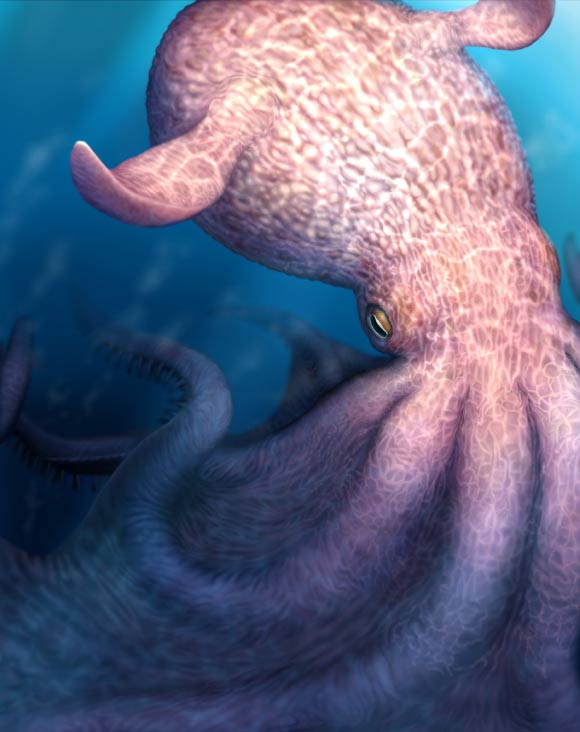
In Cretaceous Oceans, Giant ‘Kraken-Like’ Octopuses May Have Been Top Predators
Dans les océans du Crétacé, les poulpes géants « ressemblant à un Kraken » pourraient avoir été les principaux prédateurs
prédateur Crétacé
D'énormes céphalopodes au corps mou, mesurant jusqu'à 19 m de long, rivalisaient - et peut-être chassaient - avec les reptiles les plus féroces de l'océan au Crétacé, selon une nouvelle recherche menée par des paléontologues de l'Université d'Hokkaido. L'article Dans les océans du Crétacé, les poulpes géants « ressemblant à un Kraken » pourraient avoir été les principaux prédateurs est apparu en premier sur Sci.News : Breaking Science News.
27/04/2026 sci-news ⚙ Traduction automatique
Peloroplites: Beast of the Week
Péloroplites : la bête de la semaine
États-Unis Cedar Mountain Lance Crétacé Dinosauria Peloroplites
 Cette semaine, nous allons découvrir un grand dinosaure tank.  Entrez Peloroplites cedrimontanus ! Le Peloroplites était un dinosaure herbivore qui vivait dans ce qui est aujourd'hui l'Utah, aux États-Unis, pendant la période du Crétacé, il y a entre 98 et 93 millions d'années.  Du museau à la queue, il mesurait environ 6 m de long.  Son nom de genre se traduit par « Hoplite géant » en référence aux hoplites, les anciens soldats grecs qui portaient des lances et de grands boucliers.  Le nom de l'espèce se traduit par « Cedar Mountain ».
19/04/2026 prehistoricbeastoftheweek ⚙ Traduction automatique
Diamantinasaurus: Beast of the Week
Diamantinasaurus : Bête de la semaine
Australie Crétacé Diamantinasauria Dinosauria
Cette semaine, nous allons découvrir une bête qui nous aide grandement à comprendre à quoi ressemblaient et vivaient les dinosaures sauropodes (« à long cou »).  Découvrez Diamantinasaurus matildae ! Le Diamantinasaurus vivait dans ce qui est aujourd'hui le Queensland, en Australie, au cours du Crétacé moyen, il y a entre 95 et 92 millions d'années.  Il est considéré comme de taille moyenne pour un sauropode et aurait mesuré environ 16 m de long du museau à la queue. (Oui. 52 pieds n'est qu'une taille moyenne pour les sauropodes !) Comme tous les sauropodes, il aurait mangé
12/04/2026 prehistoricbeastoftheweek ⚙ Traduction automatique
Elasmosaurus: Beast of the Week
Élasmosaure : la bête de la semaine
États-Unis Crétacé Crétacé supérieur Elasmosaurus
 Cette semaine, nous allons observer une bête marine dont les proportions étaient si scandaleuses qu'elles ont même dérouté les scientifiques ! Découvrez Elasmosaurus platyurus. L'Elasmosaurus était un grand reptile qui vivait dans la mer qui couvrait ce qui est aujourd'hui la partie centrale des États-Unis à la fin du Crétacé, il y a entre 80 et 77 millions d'années.  Du museau à la queue, il aurait mesuré environ 7,1 m et aurait mangé de la viande de son vivant.  Son nom de genre se traduit par « reptile en plaques », en référence à la façon dont
29/03/2026 prehistoricbeastoftheweek ⚙ Traduction automatique
1 2 3 4 5 6 7 8 9 10 11 12