←

Crétacé

Intervalle géologique

163 image(s) · 58 Actualités

Voir la fiche

Galerie d'images

View northeast across Frenchman River of Upper Cretaceous and Paleocene age strata of the Bearpaw, Whitemud, Battle, Frenchman, and Ravenscrag Formations in the Cypress Hills of southern Saskatchewan. Foreground strata on other side of (tree lined) creek represent a slumped section. Note the bright white zone is the Whitemud Formation. View includes type area of Frenchman and Ravenscrag Formations.

View northeast across Frenchman River of Upper Cretaceous and Paleocene age strata of the Bearpaw, Whitemud, Battle, Frenchman, and Ravenscrag Formations in the Cypress Hills of southern Saskatchewan. Foreground strata on other side of (tree lined) creek represent a slumped section. Note the bright white zone is the Whitemud Formation. View includes type area of Frenchman and Ravenscrag Formations.

Frenchman Crétacé Paléocène formation
Geological context of the Lower Cretaceous deposits of southeast England, focussing on the Purbeck Group and Wealden Supergroup.

(A) Schematic geology of the Lower Cretaceous deposits of the Weald Sub-basin (southeast England), highlighting published spinosaurid finds (Charig & Milner, 1997; Salisbury & Naish, 2011; Turmine-Juhel et al., 2019). Based on Austen & Batten (2018: Fig. 2). Note that various additional spinosaurid teeth are known from the region but remain undescribed in detail (Fowler, 2007). (B) Simplified stratigraphic column of the Weald Group in southeast England, based on Batten & Austen (2011: Fig. 3.2). Note that the Grinstead Clay Formation, which subdivides the Tunbridge Wells Sands Formation in Batten & Austen (2011) and from which the “Suchosaurus cultridens” type specimen was discovered (Salisbury & Naish, 2011), is downgraded to a member of the latter formation in other works (Hopson, Wilkinson & Woods, 2008) and has not been included in this column. Spinosaurid silhouette courtesy of Dan Folkes (CC-BY 4.0).
Formations Durlston

Geological context of the Lower Cretaceous deposits of southeast England, focussing on the Purbeck Group and Wealden Supergroup. (A) Schematic geology of the Lower Cretaceous deposits of the Weald Sub-basin (southeast England), highlighting published spinosaurid finds (Charig & Milner, 1997; Salisbury & Naish, 2011; Turmine-Juhel et al., 2019). Based on Austen & Batten (2018: Fig. 2). Note that various additional spinosaurid teeth are known from the region but remain undescribed in detail (Fowler, 2007). (B) Simplified stratigraphic column of the Weald Group in southeast England, based on Batten & Austen (2011: Fig. 3.2). Note that the Grinstead Clay Formation, which subdivides the Tunbridge Wells Sands Formation in Batten & Austen (2011) and from which the “Suchosaurus cultridens” type specimen was discovered (Salisbury & Naish, 2011), is downgraded to a member of the latter formation in other works (Hopson, Wilkinson & Woods, 2008) and has not been included in this column. Spinosaurid silhouette courtesy of Dan Folkes (CC-BY 4.0).

Crétacé spécimen Spinosauridae Suchosaurus +2
This image shows the Cedar Mountain Formation near its type section at Buckhorn Reservoir, Utah. The formation is capped by a very thin bed of Dakota Formation. The Cedar Mountain Formation is a Cretaceous fluvial formation, about 98 million years old, that was deposited in the foreland basin of the Sevier Mountains just before it was flooded by the ocean to form the Western Interior Seaway.

This image shows the Cedar Mountain Formation near its type section at Buckhorn Reservoir, Utah. The formation is capped by a very thin bed of Dakota Formation. The Cedar Mountain Formation is a Cretaceous fluvial formation, about 98 million years old, that was deposited in the foreland basin of the Sevier Mountains just before it was flooded by the ocean to form the Western Interior Seaway.

Cedar Mountain Crétacé formation
Diagram depicting the currently named Dinosauria from the Early Cretaceous Cedar Mountain Formation of Utah. Dinosaur taxa:
Cedarosaurus weiskopfae → Grand County locality.[1] Length = 15 meters.[2]
Cedrorestes crichtoni → Dave's Camp Site locality.[3] Length = 6 meters.[4]
Falcarius utahensis → Crystal Geyser Quarry & Suarez Site/Quarry localities.[5] Length = 5 meters.[5]
Gastonia burgei → Gaston Quarry, Dalton Wells, Doelling's Bowl localities.[6] Length = 5 meters.[2]
Geminiraptor suarezarum → Suarez Site/Quarry locality.[7] Length = 1.5 meters.[4]
Hippodraco scutodens → Andrew's Site locality.[8] Length = 4.5 meters.[8]
Iguanacolossus fortis → Don's Ridge & Doelling's Bowl localities.[8][6] Length = 9 meters.[8]
Martharaptor greenriverensis → Hayden-Corbett Site.[9] Length = Extrapolated after relatives.
Mierasaurus bobyoungi → Doelling’s Bowl locality.[10] Length = ∼9 meters.[10][11]
Moabosaurus utahensis → Dalton Wells locality.[12] Length = 9.75 meters.[12]
Nedcolbertia justinhofmanni → Dalton Wells & Gaston Quarry localities.[13] Length = ∼3 meters.[13]
Utahraptor ostrommaysi → Dalton Wells, Gaston Quarry, Stikes Quarry, Utahraptor Ridge localities.[14][6] Length = 5.5 meters.[2]
Yurgovuchia doellingi → Don’s Place - Doelling’s Bowl locality.[15] Length = 2.5 meters.[15]
References

↑ (1999). "New sauropod from the Lower Cretaceous of Utah, USA". Oryctos 2: 21–37.

↑ a b c (2016)  The Princeton Field Guide to Dinosaurs (2nd ed.), Princeton:  Princeton University Press  ISBN:  9780691167664. 

↑ "A possible new basal hadrosaur from the Lower Cretaceous Cedar Mountain Formation of Eastern Utah" in   (2007)  Horns and Beaks: Ceratopsian and Ornithopod Dinosaurs, Bloomington and Indianapolis:  Indiana University Press, pp. 79–89  DOI:  10.2307/j.ctt1zxz1md.10. ISBN:  0-253-34817-X. 

↑ a b (2007)  Dinosaurs: The Most Complete, Up-to-Date Encyclopedia for Dinosaur Lovers of All Ages, Random House  ISBN:  9780375824197.  Genus List for Holtz 2012  Weight Information

↑ a b (2010). "Osteology of Falcarius utahensis (Dinosauria: Theropoda): characterizing the anatomy of basal therizinosaurs". Zoological Journal of the Linnean Society 158 (1): 196–230. DOI:10.1111/j.1096-3642.2009.00464.x.

↑ a b c (2016). "The Lower Cretaceous in East-Central Utah—The Cedar Mountain Formation and its Bounding Strata". Geology of the Intermoutain West 3: 1-130.

↑  (2010). "A New Troodontid Theropod Dinosaur from the Lower Cretaceous of Utah". PLOS ONE 5 (12): e14329. DOI:10.1371/journal.pone.0014329. PMID 21179513. PMC: 3002269.

↑ a b c d (2010). "New Basal Iguanodonts from the Cedar Mountain Formation of Utah and the Evolution of Thumb-Spiked Dinosaurs". PLOS ONE 5 (11): e14075. DOI:10.1371/journal.pone.0014075. PMID 21124919. PMC: 2989904.

↑ (2012). "Martharaptor greenriverensis, a New Theropod Dinosaur from the Lower Cretaceous of Utah". PLOS ONE 7 (8): e43911. DOI:10.1371/journal.pone.0043911. PMID 22952806. PMC: 3430620.

↑ a b (2017). "Descendants of the Jurassic turiasaurs from Iberia found refuge in the Early Cretaceous of western USA". Scientific Reports 7 (1): 14311. DOI:10.1038/s41598-017-14677-2. PMID 29085006. PMC: 5662694.

↑ (2020)  Dinosaur Facts and Figures: The Sauropods and Other Sauropodomorphs, Princeton:  Princeton University Press  ISBN:  9780691202976. 

↑ a b (2017). "Moabosaurus Utahensis, N. Gen., N. SP., A New Sauropod From The Early Cretaceous (Aptian) of North America". Contributions from the Museum of Paleontology, University of Michigan 32 (11): 189–243.

↑ a b (1998). "A small coelurosaurian theropod from the Yellow Cat Member of the Cedar Mountain Formation (Lower Cretaceous, Barremian) of eastern Utah". New Mexico Museum of Natural History and Science Bulletin 14: 239–248.

↑ (1993). "A large dromaeosaurid (Theropoda) from the Lower Cretaceous of Eastern Utah". Hunteria 2 (10): 1–16.

↑ a b (2012). "New Dromaeosaurids (Dinosauria: Theropoda) from the Lower Cretaceous of Utah, and the Evolution of the Dromaeosaurid Tail". PLOS ONE 7 (5): e36790. DOI:10.1371/journal.pone.0036790. PMID 22615813. PMC: 3352940.
Formations Cedar Mountain

Diagram depicting the currently named Dinosauria from the Early Cretaceous Cedar Mountain Formation of Utah. Dinosaur taxa: Cedarosaurus weiskopfae → Grand County locality.[1] Length = 15 meters.[2] Cedrorestes crichtoni → Dave's Camp Site locality.[3] Length = 6 meters.[4] Falcarius utahensis → Crystal Geyser Quarry & Suarez Site/Quarry localities.[5] Length = 5 meters.[5] Gastonia burgei → Gaston Quarry, Dalton Wells, Doelling's Bowl localities.[6] Length = 5 meters.[2] Geminiraptor suarezarum → Suarez Site/Quarry locality.[7] Length = 1.5 meters.[4] Hippodraco scutodens → Andrew's Site locality.[8] Length = 4.5 meters.[8] Iguanacolossus fortis → Don's Ridge & Doelling's Bowl localities.[8][6] Length = 9 meters.[8] Martharaptor greenriverensis → Hayden-Corbett Site.[9] Length = Extrapolated after relatives. Mierasaurus bobyoungi → Doelling’s Bowl locality.[10] Length = ∼9 meters.[10][11] Moabosaurus utahensis → Dalton Wells locality.[12] Length = 9.75 meters.[12] Nedcolbertia justinhofmanni → Dalton Wells & Gaston Quarry localities.[13] Length = ∼3 meters.[13] Utahraptor ostrommaysi → Dalton Wells, Gaston Quarry, Stikes Quarry, Utahraptor Ridge localities.[14][6] Length = 5.5 meters.[2] Yurgovuchia doellingi → Don’s Place - Doelling’s Bowl locality.[15] Length = 2.5 meters.[15] References ↑ (1999). "New sauropod from the Lower Cretaceous of Utah, USA". Oryctos 2: 21–37. ↑ a b c (2016) The Princeton Field Guide to Dinosaurs (2nd ed.), Princeton: Princeton University Press ISBN: 9780691167664. ↑ "A possible new basal hadrosaur from the Lower Cretaceous Cedar Mountain Formation of Eastern Utah" in (2007) Horns and Beaks: Ceratopsian and Ornithopod Dinosaurs, Bloomington and Indianapolis: Indiana University Press, pp. 79–89 DOI: 10.2307/j.ctt1zxz1md.10. ISBN: 0-253-34817-X. ↑ a b (2007) Dinosaurs: The Most Complete, Up-to-Date Encyclopedia for Dinosaur Lovers of All Ages, Random House ISBN: 9780375824197. Genus List for Holtz 2012 Weight Information ↑ a b (2010). "Osteology of Falcarius utahensis (Dinosauria: Theropoda): characterizing the anatomy of basal therizinosaurs". Zoological Journal of the Linnean Society 158 (1): 196–230. DOI:10.1111/j.1096-3642.2009.00464.x. ↑ a b c (2016). "The Lower Cretaceous in East-Central Utah—The Cedar Mountain Formation and its Bounding Strata". Geology of the Intermoutain West 3: 1-130. ↑ (2010). "A New Troodontid Theropod Dinosaur from the Lower Cretaceous of Utah". PLOS ONE 5 (12): e14329. DOI:10.1371/journal.pone.0014329. PMID 21179513. PMC: 3002269. ↑ a b c d (2010). "New Basal Iguanodonts from the Cedar Mountain Formation of Utah and the Evolution of Thumb-Spiked Dinosaurs". PLOS ONE 5 (11): e14075. DOI:10.1371/journal.pone.0014075. PMID 21124919. PMC: 2989904. ↑ (2012). "Martharaptor greenriverensis, a New Theropod Dinosaur from the Lower Cretaceous of Utah". PLOS ONE 7 (8): e43911. DOI:10.1371/journal.pone.0043911. PMID 22952806. PMC: 3430620. ↑ a b (2017). "Descendants of the Jurassic turiasaurs from Iberia found refuge in the Early Cretaceous of western USA". Scientific Reports 7 (1): 14311. DOI:10.1038/s41598-017-14677-2. PMID 29085006. PMC: 5662694. ↑ (2020) Dinosaur Facts and Figures: The Sauropods and Other Sauropodomorphs, Princeton: Princeton University Press ISBN: 9780691202976. ↑ a b (2017). "Moabosaurus Utahensis, N. Gen., N. SP., A New Sauropod From The Early Cretaceous (Aptian) of North America". Contributions from the Museum of Paleontology, University of Michigan 32 (11): 189–243. ↑ a b (1998). "A small coelurosaurian theropod from the Yellow Cat Member of the Cedar Mountain Formation (Lower Cretaceous, Barremian) of eastern Utah". New Mexico Museum of Natural History and Science Bulletin 14: 239–248. ↑ (1993). "A large dromaeosaurid (Theropoda) from the Lower Cretaceous of Eastern Utah". Hunteria 2 (10): 1–16. ↑ a b (2012). "New Dromaeosaurids (Dinosauria: Theropoda) from the Lower Cretaceous of Utah, and the Evolution of the Dromaeosaurid Tail". PLOS ONE 7 (5): e36790. DOI:10.1371/journal.pone.0036790. PMID 22615813. PMC: 3352940.

Cedar Mountain Crétacé Crétacé inférieur Cedarosaurus +12
Holotype of Khunnuchelys lophorhothon sp. nov. from Baybishe, northeastern Aral Sea region, Kazakhstan, Bostobe Formation, Santonian–early Campanian, Late Cretaceous, ZIN PH 5/55, a partial skull; in dorsal (A), ventral (B), lateral (C), and anterior (D) views. Photographs (A1–D1), explanatory drawings (A2–D2).
Formations Bostobe

Holotype of Khunnuchelys lophorhothon sp. nov. from Baybishe, northeastern Aral Sea region, Kazakhstan, Bostobe Formation, Santonian–early Campanian, Late Cretaceous, ZIN PH 5/55, a partial skull; in dorsal (A), ventral (B), lateral (C), and anterior (D) views. Photographs (A1–D1), explanatory drawings (A2–D2).

dessin Kazakhstan Bostobe Campanien +8
World map showing Late Cretaceous metatherian locales.

Europe

1. Font-de-Benon quarry, Archingeay-Les Nouillers (Cenomanian, Late Cretaceous), Charente-Maritime, southwestern France (Vullo et al. 2009)
2. Valkenburg Member, Maastricht Formation (late Maastrichtian, Late Cretaceous), southern Limburg, The Netherlands (Martin et al. 2005)
Asia

3. Yixian Formation, China (Barremian, Early Cretaceous)
4. Bissekty Formation, Kyzylkum Desert, Uzbekistan (Turonian, Late Cretaceous)
5. Darbasa Formation, southern Kazakhstan (Campanian, Late Cretaceous)
6. Grey Mesa locality (Averianov 1997)
7. Barun Goyot Formation, Umuni Gobi, Mongolia (Campanian, Late Cretaceous)
8. Nemegt Formation, Omnogov, Mongolia (Maastrichtian, Late Cretaceous)
9. Djadokhta Formation, Mongolia (Campanian, Late Cretaceous)

North America
Alaska

9. Prince Creek Formation, Alaska (early Maastrichtian, Late Cretaceous)
Alberta and Saskatchewan, Canada

10. Milk River Formation, southern Alberta, Canada (late Santonian, Late Cretaceous)
11. Oldman Formation, southern Alberta, Canada (Campanian, Late Cretaceous)
12. Dinosaur Park Formation, southern Alberta, Canada (late Campanian, Late Cretaceous)


13. Horseshoe Canyon Formation, southern Alberta, Canada (early Maastrichtian, Late Cretaceous)
14. St. Mary River Formation, Alberta and northwestern Montana (early Maastrichtian, Late Cretaceous)


15. Scollard Formation, Alberta (late Maastrichtian, Late Cretaceous)
16. Frenchman Formation, Saskatchewan (late Maastrichtian, Late Cretaceous)
Montana and North Dakota

17. Judith River Formation (late Campanian, Late Cretaceous)
18. Two Medicine Formation (late Campanian, Late Cretaceous)
19. Hell Creek Formation, Montana and North Dakota (late Maastrichtian, Late Cretaceous)

South Dakota

20. Fox Hills Formation, South Dakota (late Maastrichtian, Late Cretaceous)
21. Hell Creek Formation, South Dakota (late Maastrichtian, Late Cretaceous)
Wyoming

22. “Mesa Verde Formation” (late Campanian, Late Cretaceous)
23. Lance Formation, Wyoming (late Maastrichtian, Late Cretaceous)
24. Ferris Formation, Wyoming (late Maastrichtian, Late Cretaceous)

Utah

25. Cedar Mountain Formation (Albian-Cenomanian)
26. Dakota Formation fauna (late Cenomanian, Late Cretaceous)
27. Smoky Hollow Member, Straight Cliffs Formation (Turonian, Late Cretaceous)
28. John Henry Member, Straight Cliffs Formation (Coniacian-Santonian, Late Cretaceous)
29. Wahweap Formation (early-middle Campanian, Late Cretaceous)
30. Kaiparowits Formation (late Campanian, Late Cretaceous)
31. Iron Springs Formation fauna, southern Utah (Turonian – Santonian, Late Cretaceous)
32. North Horn Formation, Utah (late Maastrichtian, Late Cretaceous)
Colorado

33. Williams Fork Formation, Colorado (late Campanian-early Maastrichtian)


34. Laramie Formation, northeastern Colorado (late Maastrichtian, Late Cretaceous)

Baja California Del Norte, Mexico

35. El Gallo Formation (late Campanian, Late Cretaceous) (Clemens 1980; Lillegraven 1972; Lillegraven 1976)
New Mexico

36. Fruitland and lower Kirtland Formation, San Juan Basin (late Campanian, Late Cretaceous)
37. Naashoibito Member, Kirtland Formation, New Mexico (late Maastrichtian, Late Cretaceous)
Oklahoma

38. Antlers Formation, Texas and Oklahoma (Aptian-Albian, Early Cretaceous)
Texas

39. Aguja Formation, West Texas (late Campanian, Late Cretaceous)
New Jersey

40. Marshalltown Formation, New Jersey (Campanian, Late Cretaceous)
Szalay 1994)
Formations Bissekty

World map showing Late Cretaceous metatherian locales. Europe 1. Font-de-Benon quarry, Archingeay-Les Nouillers (Cenomanian, Late Cretaceous), Charente-Maritime, southwestern France (Vullo et al. 2009) 2. Valkenburg Member, Maastricht Formation (late Maastrichtian, Late Cretaceous), southern Limburg, The Netherlands (Martin et al. 2005) Asia 3. Yixian Formation, China (Barremian, Early Cretaceous) 4. Bissekty Formation, Kyzylkum Desert, Uzbekistan (Turonian, Late Cretaceous) 5. Darbasa Formation, southern Kazakhstan (Campanian, Late Cretaceous) 6. Grey Mesa locality (Averianov 1997) 7. Barun Goyot Formation, Umuni Gobi, Mongolia (Campanian, Late Cretaceous) 8. Nemegt Formation, Omnogov, Mongolia (Maastrichtian, Late Cretaceous) 9. Djadokhta Formation, Mongolia (Campanian, Late Cretaceous) North America Alaska 9. Prince Creek Formation, Alaska (early Maastrichtian, Late Cretaceous) Alberta and Saskatchewan, Canada 10. Milk River Formation, southern Alberta, Canada (late Santonian, Late Cretaceous) 11. Oldman Formation, southern Alberta, Canada (Campanian, Late Cretaceous) 12. Dinosaur Park Formation, southern Alberta, Canada (late Campanian, Late Cretaceous) 13. Horseshoe Canyon Formation, southern Alberta, Canada (early Maastrichtian, Late Cretaceous) 14. St. Mary River Formation, Alberta and northwestern Montana (early Maastrichtian, Late Cretaceous) 15. Scollard Formation, Alberta (late Maastrichtian, Late Cretaceous) 16. Frenchman Formation, Saskatchewan (late Maastrichtian, Late Cretaceous) Montana and North Dakota 17. Judith River Formation (late Campanian, Late Cretaceous) 18. Two Medicine Formation (late Campanian, Late Cretaceous) 19. Hell Creek Formation, Montana and North Dakota (late Maastrichtian, Late Cretaceous) South Dakota 20. Fox Hills Formation, South Dakota (late Maastrichtian, Late Cretaceous) 21. Hell Creek Formation, South Dakota (late Maastrichtian, Late Cretaceous) Wyoming 22. “Mesa Verde Formation” (late Campanian, Late Cretaceous) 23. Lance Formation, Wyoming (late Maastrichtian, Late Cretaceous) 24. Ferris Formation, Wyoming (late Maastrichtian, Late Cretaceous) Utah 25. Cedar Mountain Formation (Albian-Cenomanian) 26. Dakota Formation fauna (late Cenomanian, Late Cretaceous) 27. Smoky Hollow Member, Straight Cliffs Formation (Turonian, Late Cretaceous) 28. John Henry Member, Straight Cliffs Formation (Coniacian-Santonian, Late Cretaceous) 29. Wahweap Formation (early-middle Campanian, Late Cretaceous) 30. Kaiparowits Formation (late Campanian, Late Cretaceous) 31. Iron Springs Formation fauna, southern Utah (Turonian – Santonian, Late Cretaceous) 32. North Horn Formation, Utah (late Maastrichtian, Late Cretaceous) Colorado 33. Williams Fork Formation, Colorado (late Campanian-early Maastrichtian) 34. Laramie Formation, northeastern Colorado (late Maastrichtian, Late Cretaceous) Baja California Del Norte, Mexico 35. El Gallo Formation (late Campanian, Late Cretaceous) (Clemens 1980; Lillegraven 1972; Lillegraven 1976) New Mexico 36. Fruitland and lower Kirtland Formation, San Juan Basin (late Campanian, Late Cretaceous) 37. Naashoibito Member, Kirtland Formation, New Mexico (late Maastrichtian, Late Cretaceous) Oklahoma 38. Antlers Formation, Texas and Oklahoma (Aptian-Albian, Early Cretaceous) Texas 39. Aguja Formation, West Texas (late Campanian, Late Cretaceous) New Jersey 40. Marshalltown Formation, New Jersey (Campanian, Late Cretaceous) Szalay 1994)

Canada Chine France Kazakhstan +18
World map showing Late Cretaceous metatherian locales.

Europe

1. Font-de-Benon quarry, Archingeay-Les Nouillers (Cenomanian, Late Cretaceous), Charente-Maritime, southwestern France (Vullo et al. 2009)
2. Valkenburg Member, Maastricht Formation (late Maastrichtian, Late Cretaceous), southern Limburg, The Netherlands (Martin et al. 2005)
Asia

3. Yixian Formation, China (Barremian, Early Cretaceous)
4. Bissekty Formation, Kyzylkum Desert, Uzbekistan (Turonian, Late Cretaceous)
5. Darbasa Formation, southern Kazakhstan (Campanian, Late Cretaceous)
6. Grey Mesa locality (Averianov 1997)
7. Barun Goyot Formation, Umuni Gobi, Mongolia (Campanian, Late Cretaceous)
8. Nemegt Formation, Omnogov, Mongolia (Maastrichtian, Late Cretaceous)
9. Djadokhta Formation, Mongolia (Campanian, Late Cretaceous)

North America
Alaska

9. Prince Creek Formation, Alaska (early Maastrichtian, Late Cretaceous)
Alberta and Saskatchewan, Canada

10. Milk River Formation, southern Alberta, Canada (late Santonian, Late Cretaceous)
11. Oldman Formation, southern Alberta, Canada (Campanian, Late Cretaceous)
12. Dinosaur Park Formation, southern Alberta, Canada (late Campanian, Late Cretaceous)


13. Horseshoe Canyon Formation, southern Alberta, Canada (early Maastrichtian, Late Cretaceous)
14. St. Mary River Formation, Alberta and northwestern Montana (early Maastrichtian, Late Cretaceous)


15. Scollard Formation, Alberta (late Maastrichtian, Late Cretaceous)
16. Frenchman Formation, Saskatchewan (late Maastrichtian, Late Cretaceous)
Montana and North Dakota

17. Judith River Formation (late Campanian, Late Cretaceous)
18. Two Medicine Formation (late Campanian, Late Cretaceous)
19. Hell Creek Formation, Montana and North Dakota (late Maastrichtian, Late Cretaceous)

South Dakota

20. Fox Hills Formation, South Dakota (late Maastrichtian, Late Cretaceous)
21. Hell Creek Formation, South Dakota (late Maastrichtian, Late Cretaceous)
Wyoming

22. “Mesa Verde Formation” (late Campanian, Late Cretaceous)
23. Lance Formation, Wyoming (late Maastrichtian, Late Cretaceous)
24. Ferris Formation, Wyoming (late Maastrichtian, Late Cretaceous)

Utah

25. Cedar Mountain Formation (Albian-Cenomanian)
26. Dakota Formation fauna (late Cenomanian, Late Cretaceous)
27. Smoky Hollow Member, Straight Cliffs Formation (Turonian, Late Cretaceous)
28. John Henry Member, Straight Cliffs Formation (Coniacian-Santonian, Late Cretaceous)
29. Wahweap Formation (early-middle Campanian, Late Cretaceous)
30. Kaiparowits Formation (late Campanian, Late Cretaceous)
31. Iron Springs Formation fauna, southern Utah (Turonian – Santonian, Late Cretaceous)
32. North Horn Formation, Utah (late Maastrichtian, Late Cretaceous)
Colorado

33. Williams Fork Formation, Colorado (late Campanian-early Maastrichtian)


34. Laramie Formation, northeastern Colorado (late Maastrichtian, Late Cretaceous)

Baja California Del Norte, Mexico

35. El Gallo Formation (late Campanian, Late Cretaceous) (Clemens 1980; Lillegraven 1972; Lillegraven 1976)
New Mexico

36. Fruitland and lower Kirtland Formation, San Juan Basin (late Campanian, Late Cretaceous)
37. Naashoibito Member, Kirtland Formation, New Mexico (late Maastrichtian, Late Cretaceous)
Oklahoma

38. Antlers Formation, Texas and Oklahoma (Aptian-Albian, Early Cretaceous)
Texas

39. Aguja Formation, West Texas (late Campanian, Late Cretaceous)
New Jersey

40. Marshalltown Formation, New Jersey (Campanian, Late Cretaceous)
Szalay 1994)
Formations Frenchman

World map showing Late Cretaceous metatherian locales. Europe 1. Font-de-Benon quarry, Archingeay-Les Nouillers (Cenomanian, Late Cretaceous), Charente-Maritime, southwestern France (Vullo et al. 2009) 2. Valkenburg Member, Maastricht Formation (late Maastrichtian, Late Cretaceous), southern Limburg, The Netherlands (Martin et al. 2005) Asia 3. Yixian Formation, China (Barremian, Early Cretaceous) 4. Bissekty Formation, Kyzylkum Desert, Uzbekistan (Turonian, Late Cretaceous) 5. Darbasa Formation, southern Kazakhstan (Campanian, Late Cretaceous) 6. Grey Mesa locality (Averianov 1997) 7. Barun Goyot Formation, Umuni Gobi, Mongolia (Campanian, Late Cretaceous) 8. Nemegt Formation, Omnogov, Mongolia (Maastrichtian, Late Cretaceous) 9. Djadokhta Formation, Mongolia (Campanian, Late Cretaceous) North America Alaska 9. Prince Creek Formation, Alaska (early Maastrichtian, Late Cretaceous) Alberta and Saskatchewan, Canada 10. Milk River Formation, southern Alberta, Canada (late Santonian, Late Cretaceous) 11. Oldman Formation, southern Alberta, Canada (Campanian, Late Cretaceous) 12. Dinosaur Park Formation, southern Alberta, Canada (late Campanian, Late Cretaceous) 13. Horseshoe Canyon Formation, southern Alberta, Canada (early Maastrichtian, Late Cretaceous) 14. St. Mary River Formation, Alberta and northwestern Montana (early Maastrichtian, Late Cretaceous) 15. Scollard Formation, Alberta (late Maastrichtian, Late Cretaceous) 16. Frenchman Formation, Saskatchewan (late Maastrichtian, Late Cretaceous) Montana and North Dakota 17. Judith River Formation (late Campanian, Late Cretaceous) 18. Two Medicine Formation (late Campanian, Late Cretaceous) 19. Hell Creek Formation, Montana and North Dakota (late Maastrichtian, Late Cretaceous) South Dakota 20. Fox Hills Formation, South Dakota (late Maastrichtian, Late Cretaceous) 21. Hell Creek Formation, South Dakota (late Maastrichtian, Late Cretaceous) Wyoming 22. “Mesa Verde Formation” (late Campanian, Late Cretaceous) 23. Lance Formation, Wyoming (late Maastrichtian, Late Cretaceous) 24. Ferris Formation, Wyoming (late Maastrichtian, Late Cretaceous) Utah 25. Cedar Mountain Formation (Albian-Cenomanian) 26. Dakota Formation fauna (late Cenomanian, Late Cretaceous) 27. Smoky Hollow Member, Straight Cliffs Formation (Turonian, Late Cretaceous) 28. John Henry Member, Straight Cliffs Formation (Coniacian-Santonian, Late Cretaceous) 29. Wahweap Formation (early-middle Campanian, Late Cretaceous) 30. Kaiparowits Formation (late Campanian, Late Cretaceous) 31. Iron Springs Formation fauna, southern Utah (Turonian – Santonian, Late Cretaceous) 32. North Horn Formation, Utah (late Maastrichtian, Late Cretaceous) Colorado 33. Williams Fork Formation, Colorado (late Campanian-early Maastrichtian) 34. Laramie Formation, northeastern Colorado (late Maastrichtian, Late Cretaceous) Baja California Del Norte, Mexico 35. El Gallo Formation (late Campanian, Late Cretaceous) (Clemens 1980; Lillegraven 1972; Lillegraven 1976) New Mexico 36. Fruitland and lower Kirtland Formation, San Juan Basin (late Campanian, Late Cretaceous) 37. Naashoibito Member, Kirtland Formation, New Mexico (late Maastrichtian, Late Cretaceous) Oklahoma 38. Antlers Formation, Texas and Oklahoma (Aptian-Albian, Early Cretaceous) Texas 39. Aguja Formation, West Texas (late Campanian, Late Cretaceous) New Jersey 40. Marshalltown Formation, New Jersey (Campanian, Late Cretaceous) Szalay 1994)

Canada Chine France Kazakhstan +18
Plotosaurus bennisoni is a mosasaur from the Upper Cretaceous (Maastrichtian) North America.

Plotosaurus bennisoni is a mosasaur from the Upper Cretaceous (Maastrichtian) North America.

Crétacé Maastrichtien Plotosaurus
A 1.7cm tall tooth from Liodon anceps.  Cretaceous, Phosphate beds, Kouribga, Morocco.

A 1.7cm tall tooth from Liodon anceps. Cretaceous, Phosphate beds, Kouribga, Morocco.

dent Maroc Crétacé Leiodon +1
Main evolutionary steps proposed for the morphofunctional and postural changes of the sauropod pedes. (A) Sauropod body mass through time (in metric tons) based on the sauropod body mass estimations of (41) (NB: data lacking for the second half of the Upper Cretaceous so illustrated here faded, in continuity with the data recorded in the Cretaceous). Schematic outlines of selected large specimens illustrated in the curve, including (from left to right) P. engelhardti, Vulcanodon karibaensis, R. brownei, G. brancai, Cedarosaurus weiskopfae, and Notocolossus gonzalezparejasi. (B) Projected evolutionary changes occurring in the sauropod pes associated with trend in body mass, including 1, skeletal and functional digitigrade pedal posture among basal non-sauropod sauropodomorphs with an incipient soft tissue pad (ISP) (see figs. S34 and S35); 2 and 3, expansion of a well-developed soft tissue pad beneath the elevated pedal bones (SP), resulting in a functionally plantigrade pes + retention of skeletal posture within a range of digitigrady; 4, retention of a soft tissue pad and yet undetermined trend toward more elevated bones; 5, conservation of the neomorphic soft tissue pad within all lineages. Selected examples of well-preserved non-sauropod sauropodomorph and sauropod pedal tracks illustrated above the trends, including (from left to right) Evazoum siriguii; Pseudotetrasauropus bipedoida, Eosauropus isp., Lavinipes cheminii; Kalosauropus pollex, Liujianpus shunan, Polyonyx gomesi; Parabrontopodus mcintoshi; Brontopodus birdi; Titanopodus mendozensis; and unnamed Asian sauropod track. Source of adapted drawing and notes are listed in table S9 and data S2.
Taxons Evazoum

Main evolutionary steps proposed for the morphofunctional and postural changes of the sauropod pedes. (A) Sauropod body mass through time (in metric tons) based on the sauropod body mass estimations of (41) (NB: data lacking for the second half of the Upper Cretaceous so illustrated here faded, in continuity with the data recorded in the Cretaceous). Schematic outlines of selected large specimens illustrated in the curve, including (from left to right) P. engelhardti, Vulcanodon karibaensis, R. brownei, G. brancai, Cedarosaurus weiskopfae, and Notocolossus gonzalezparejasi. (B) Projected evolutionary changes occurring in the sauropod pes associated with trend in body mass, including 1, skeletal and functional digitigrade pedal posture among basal non-sauropod sauropodomorphs with an incipient soft tissue pad (ISP) (see figs. S34 and S35); 2 and 3, expansion of a well-developed soft tissue pad beneath the elevated pedal bones (SP), resulting in a functionally plantigrade pes + retention of skeletal posture within a range of digitigrady; 4, retention of a soft tissue pad and yet undetermined trend toward more elevated bones; 5, conservation of the neomorphic soft tissue pad within all lineages. Selected examples of well-preserved non-sauropod sauropodomorph and sauropod pedal tracks illustrated above the trends, including (from left to right) Evazoum siriguii; Pseudotetrasauropus bipedoida, Eosauropus isp., Lavinipes cheminii; Kalosauropus pollex, Liujianpus shunan, Polyonyx gomesi; Parabrontopodus mcintoshi; Brontopodus birdi; Titanopodus mendozensis; and unnamed Asian sauropod track. Source of adapted drawing and notes are listed in table S9 and data S2.

os tissus Crétacé spécimen +6
Main evolutionary steps proposed for the morphofunctional and postural changes of the sauropod pedes. (A) Sauropod body mass through time (in metric tons) based on the sauropod body mass estimations of (41) (NB: data lacking for the second half of the Upper Cretaceous so illustrated here faded, in continuity with the data recorded in the Cretaceous). Schematic outlines of selected large specimens illustrated in the curve, including (from left to right) P. engelhardti, Vulcanodon karibaensis, R. brownei, G. brancai, Cedarosaurus weiskopfae, and Notocolossus gonzalezparejasi. (B) Projected evolutionary changes occurring in the sauropod pes associated with trend in body mass, including 1, skeletal and functional digitigrade pedal posture among basal non-sauropod sauropodomorphs with an incipient soft tissue pad (ISP) (see figs. S34 and S35); 2 and 3, expansion of a well-developed soft tissue pad beneath the elevated pedal bones (SP), resulting in a functionally plantigrade pes + retention of skeletal posture within a range of digitigrady; 4, retention of a soft tissue pad and yet undetermined trend toward more elevated bones; 5, conservation of the neomorphic soft tissue pad within all lineages. Selected examples of well-preserved non-sauropod sauropodomorph and sauropod pedal tracks illustrated above the trends, including (from left to right) Evazoum siriguii; Pseudotetrasauropus bipedoida, Eosauropus isp., Lavinipes cheminii; Kalosauropus pollex, Liujianpus shunan, Polyonyx gomesi; Parabrontopodus mcintoshi; Brontopodus birdi; Titanopodus mendozensis; and unnamed Asian sauropod track. Source of adapted drawing and notes are listed in table S9 and data S2.
Taxons Kalosauropus

Main evolutionary steps proposed for the morphofunctional and postural changes of the sauropod pedes. (A) Sauropod body mass through time (in metric tons) based on the sauropod body mass estimations of (41) (NB: data lacking for the second half of the Upper Cretaceous so illustrated here faded, in continuity with the data recorded in the Cretaceous). Schematic outlines of selected large specimens illustrated in the curve, including (from left to right) P. engelhardti, Vulcanodon karibaensis, R. brownei, G. brancai, Cedarosaurus weiskopfae, and Notocolossus gonzalezparejasi. (B) Projected evolutionary changes occurring in the sauropod pes associated with trend in body mass, including 1, skeletal and functional digitigrade pedal posture among basal non-sauropod sauropodomorphs with an incipient soft tissue pad (ISP) (see figs. S34 and S35); 2 and 3, expansion of a well-developed soft tissue pad beneath the elevated pedal bones (SP), resulting in a functionally plantigrade pes + retention of skeletal posture within a range of digitigrady; 4, retention of a soft tissue pad and yet undetermined trend toward more elevated bones; 5, conservation of the neomorphic soft tissue pad within all lineages. Selected examples of well-preserved non-sauropod sauropodomorph and sauropod pedal tracks illustrated above the trends, including (from left to right) Evazoum siriguii; Pseudotetrasauropus bipedoida, Eosauropus isp., Lavinipes cheminii; Kalosauropus pollex, Liujianpus shunan, Polyonyx gomesi; Parabrontopodus mcintoshi; Brontopodus birdi; Titanopodus mendozensis; and unnamed Asian sauropod track. Source of adapted drawing and notes are listed in table S9 and data S2.

os tissus Crétacé spécimen +6
Thescelosaurus neglectus, a hypsilophodont from the Late cretaceous of North America

Thescelosaurus neglectus, a hypsilophodont from the Late cretaceous of North America

Crétacé Crétacé supérieur Hypsilophodontia Spinops +1
Paleoartistic depiction of a Cretaceous forest of what is today the Tanis site, in North Dakota, hours after the K-Pg impact. We observe a burnt carcass of a Thescelosaurus, a impaled nanhsiungchelyid turtle, a small multituberculate mammal and a small ornithuran avialan.

Paleoartistic depiction of a Cretaceous forest of what is today the Tanis site, in North Dakota, hours after the K-Pg impact. We observe a burnt carcass of a Thescelosaurus, a impaled nanhsiungchelyid turtle, a small multituberculate mammal and a small ornithuran avialan.

Crétacé Thescelosaurus
Dorsal vertebra of platecarpus, a cretaceous. Mosasaur from the Niobrara Chalk of Kansas etc.

General Collections
Keywords: prehistoric archaeology; Paleopathology; Moodie, Roy Lee
Taxons Platecarpus

Dorsal vertebra of platecarpus, a cretaceous. Mosasaur from the Niobrara Chalk of Kansas etc. General Collections Keywords: prehistoric archaeology; Paleopathology; Moodie, Roy Lee

vertèbre Niobrara Crétacé Platecarpus
Crâne de mosasaure d'espèce Platecarpus tympaniticus (squamates, mosasaures).
Provenance : Smoky Hill Chalk, Kansas (aux Etats-Unis).
Date : Crétacé supérieur, période du Campanien, 88 millions d'années avant notre ère.
Collections du Muséum national d'histoire naturelle de Paris (France).
Exposé à l'occasion de l'exposition "Un T-Rex à Paris" au Muséum national d'histoire naturelle de Paris (France) du 6 juin au 2 septembre 2018.

Légende du fossile dans cette exposition : "Les mosasaures ne sont pas des dinosaures mais des reptiles marins, très répandus à la fin du Crétacé. Certains genres comme Globidens et Halisaurus sont connus aussi bien aux Etats-Unis qu'au Maroc. Ces animaux étaient d'excellents nageurs, capables de traverser l'Atlantique."

Crâne de mosasaure d'espèce Platecarpus tympaniticus (squamates, mosasaures). Provenance : Smoky Hill Chalk, Kansas (aux Etats-Unis). Date : Crétacé supérieur, période du Campanien, 88 millions d'années avant notre ère. Collections du Muséum national d'histoire naturelle de Paris (France). Exposé à l'occasion de l'exposition "Un T-Rex à Paris" au Muséum national d'histoire naturelle de Paris (France) du 6 juin au 2 septembre 2018. Légende du fossile dans cette exposition : "Les mosasaures ne sont pas des dinosaures mais des reptiles marins, très répandus à la fin du Crétacé. Certains genres comme Globidens et Halisaurus sont connus aussi bien aux Etats-Unis qu'au Maroc. Ces animaux étaient d'excellents nageurs, capables de traverser l'Atlantique."

France Maroc Campanien Crétacé +8
Holotype specimen TMP 2000.29.01 of the ophthalmosaurian ichthyosaur Athabascasaurus bitumineus from the Lower Cretaceous Clearwater Formation of Alberta, in Royal Tyrrell Museum, Drumheller, Alberta, Canada.
Taxons Athabascasaurus

Holotype specimen TMP 2000.29.01 of the ophthalmosaurian ichthyosaur Athabascasaurus bitumineus from the Lower Cretaceous Clearwater Formation of Alberta, in Royal Tyrrell Museum, Drumheller, Alberta, Canada.

musée Canada Crétacé holotype +5
1 2 3 4 5 6 7 8 9 10 11

Actualités

Mexidracon: Beast of the Week
Mexidracon : Bête de la semaine
Mexique Crétacé Crétacé supérieur Dinosauria
 Cette semaine, nous allons nous intéresser à un théropode inhabituel.  Découvrez Mexidracon longimanus !Mexidracon était un dinosaure théropode qui vivait dans ce qui est aujourd'hui Coahuila, au Mexique, à la fin du Crétacé, il y a environ 72 millions d'années.  Du bec à la queue, il mesurait environ 3 mètres de long.  Son nom de genre se traduit par « Dragon mexicain » et son nom d'espèce par « longue main ».  Il se peut qu'il ait mangé des plantes de son vivant ou qu'il ait peut-être mangé un mélange de plantes et de viande.  Reconstruction de la vie du Mexidracon dans
03/05/2026 prehistoricbeastoftheweek ⚙ Traduction automatique
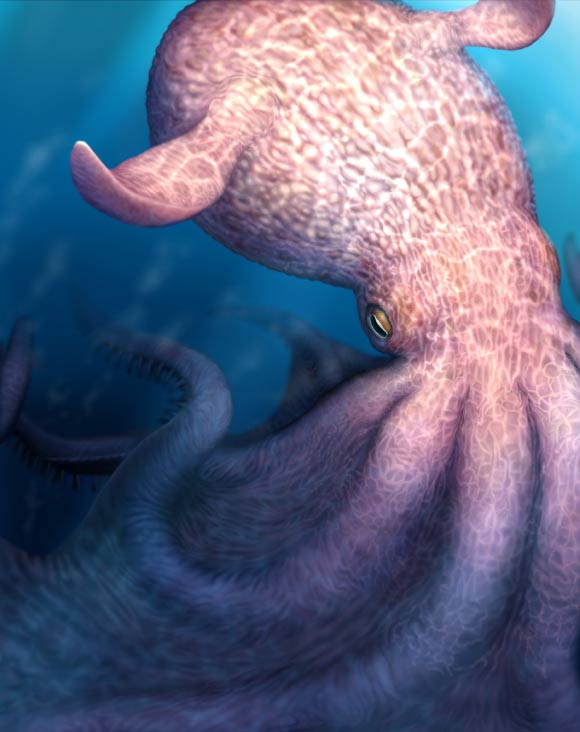
In Cretaceous Oceans, Giant ‘Kraken-Like’ Octopuses May Have Been Top Predators
Dans les océans du Crétacé, les poulpes géants « ressemblant à un Kraken » pourraient avoir été les principaux prédateurs
prédateur Crétacé
D'énormes céphalopodes au corps mou, mesurant jusqu'à 19 m de long, rivalisaient - et peut-être chassaient - avec les reptiles les plus féroces de l'océan au Crétacé, selon une nouvelle recherche menée par des paléontologues de l'Université d'Hokkaido. L'article Dans les océans du Crétacé, les poulpes géants « ressemblant à un Kraken » pourraient avoir été les principaux prédateurs est apparu en premier sur Sci.News : Breaking Science News.
27/04/2026 sci-news ⚙ Traduction automatique
Peloroplites: Beast of the Week
Péloroplites : la bête de la semaine
États-Unis Cedar Mountain Lance Crétacé Dinosauria Peloroplites
 Cette semaine, nous allons découvrir un grand dinosaure tank.  Entrez Peloroplites cedrimontanus ! Le Peloroplites était un dinosaure herbivore qui vivait dans ce qui est aujourd'hui l'Utah, aux États-Unis, pendant la période du Crétacé, il y a entre 98 et 93 millions d'années.  Du museau à la queue, il mesurait environ 6 m de long.  Son nom de genre se traduit par « Hoplite géant » en référence aux hoplites, les anciens soldats grecs qui portaient des lances et de grands boucliers.  Le nom de l'espèce se traduit par « Cedar Mountain ».
19/04/2026 prehistoricbeastoftheweek ⚙ Traduction automatique
Diamantinasaurus: Beast of the Week
Diamantinasaurus : Bête de la semaine
Australie Crétacé Diamantinasauria Dinosauria
Cette semaine, nous allons découvrir une bête qui nous aide grandement à comprendre à quoi ressemblaient et vivaient les dinosaures sauropodes (« à long cou »).  Découvrez Diamantinasaurus matildae ! Le Diamantinasaurus vivait dans ce qui est aujourd'hui le Queensland, en Australie, au cours du Crétacé moyen, il y a entre 95 et 92 millions d'années.  Il est considéré comme de taille moyenne pour un sauropode et aurait mesuré environ 16 m de long du museau à la queue. (Oui. 52 pieds n'est qu'une taille moyenne pour les sauropodes !) Comme tous les sauropodes, il aurait mangé
12/04/2026 prehistoricbeastoftheweek ⚙ Traduction automatique
Elasmosaurus: Beast of the Week
Élasmosaure : la bête de la semaine
États-Unis Crétacé Crétacé supérieur Elasmosaurus
 Cette semaine, nous allons observer une bête marine dont les proportions étaient si scandaleuses qu'elles ont même dérouté les scientifiques ! Découvrez Elasmosaurus platyurus. L'Elasmosaurus était un grand reptile qui vivait dans la mer qui couvrait ce qui est aujourd'hui la partie centrale des États-Unis à la fin du Crétacé, il y a entre 80 et 77 millions d'années.  Du museau à la queue, il aurait mesuré environ 7,1 m et aurait mangé de la viande de son vivant.  Son nom de genre se traduit par « reptile en plaques », en référence à la façon dont
29/03/2026 prehistoricbeastoftheweek ⚙ Traduction automatique
1 2 3 4 5 6 7 8 9 10 11 12