←

dent

Partie anatomique

56 image(s) · 40 Actualités

Galerie d'images

dent de Globidens aegyptiacus. La couronne dentaire montre bien le mode "broyeur" chez ce Mosasaure. A noter la cavité, vide, d'une dent de remplacement.

dent de Globidens aegyptiacus. La couronne dentaire montre bien le mode "broyeur" chez ce Mosasaure. A noter la cavité, vide, d'une dent de remplacement.

dent Globidens Igdamanosaurus Mosasaurus
dent de Globidens aegyptiacus. La couronne dentaire montre bien le mode "broyeur" chez ce Mosasaure.

dent de Globidens aegyptiacus. La couronne dentaire montre bien le mode "broyeur" chez ce Mosasaure.

dent Globidens Igdamanosaurus Mosasaurus
dent de Globidens aegyptiacus et dent de Mosasaurus beaugei montrant les cavités de la dent de remplacement

dent de Globidens aegyptiacus et dent de Mosasaurus beaugei montrant les cavités de la dent de remplacement

dent Globidens Igdamanosaurus Mosasaurus
dent de Globidens aegyptiacus et dent de Mosasaurus beaugei montrant les cavités de la dent de remplacement
Taxons Igdamanosaurus

dent de Globidens aegyptiacus et dent de Mosasaurus beaugei montrant les cavités de la dent de remplacement

dent Globidens Igdamanosaurus Mosasaurus
Representative taxa from the early Campanian Muthmannsdorf fauna from the Grünbach Formation, eastern Austria. A Doratodon carcharidens (Mesoeucrocodylia) mandible (PIUW 2349/57) in dorsal view (photo by Márton Rabi) B Indeterminate azhdarchid (Pterosauria, Azhdarchidae), left humerus (PIUW 2349/102) in anterior view C ‘Megalosaurus pannoniensis’ basal tetanuran (Theropoda, Tetanurae), tooth (PIUW uncatalogued) in lateral view D Mochlodon suessi (Ornithopoda, Rhabdodontidae), right dentary (holotype, PIUW 2349/2) in medial view. Scale bars equal 2 cm in A, B and D and 1 cm in C.

Representative taxa from the early Campanian Muthmannsdorf fauna from the Grünbach Formation, eastern Austria. A Doratodon carcharidens (Mesoeucrocodylia) mandible (PIUW 2349/57) in dorsal view (photo by Márton Rabi) B Indeterminate azhdarchid (Pterosauria, Azhdarchidae), left humerus (PIUW 2349/102) in anterior view C ‘Megalosaurus pannoniensis’ basal tetanuran (Theropoda, Tetanurae), tooth (PIUW uncatalogued) in lateral view D Mochlodon suessi (Ornithopoda, Rhabdodontidae), right dentary (holotype, PIUW 2349/2) in medial view. Scale bars equal 2 cm in A, B and D and 1 cm in C.

humérus écaille dent Autriche +11
Representative taxa from the Santonian Iharkút fauna from the Csehbánya Formation, Bakony Mountains, western Hungary. A Pannoniasaurus inexpectatus (Squamata, Mosasauroidea), dorsal vertebra (MTM uncatalogued) in dorsal view (photo by Réka Kalmár) B Foxemys trabanti (Pleurodira, Bothremydidae), skull (MTM V 2010.215.1.) in dorsal view (photo by Márton Rabi). C Bicuspidon aff. hatzegiensis (Squamata, Borioteiioidea), left dentary (MTM 2006.112.1.) in medial view (photo by László Makádi) D Basal tetanuran (Theropoda, Tetanurae), tooth (MTM V.01.54) in ?lingual view E Indeterminate abelisaurid (Theropoda, Abelisauridae), pedal ungual phalanx (MTM V 2008.43.1.) in lateral view F Pneumatoraptor fodori (Theropoda, Paraves), left scapulocoracoid (holotype, MTM V 2008.38.1.) in lateral view G Mochlodon vorosi (Ornithopoda, Rhabdodontidae), left dentary (holotype, MTM V 2010.105.1) in lateral view H Bakonydraco galaczi (Pterosauria, Azhdarchidae), mandible (holotype, MTM 2007.110.1) in dorsal view I Iharkutosuchus makadii (Eusuchia, Hylaeochampsidae), skull (holotype, MTM 2006.52.1) in dorsal view J Hungarosaurus tormai (Ankylosauria, Nodosauridae), right dentary (MTM 2007.25.2) in lateral view K Bauxitornis mindszentyae (Aves, Enantiornithes), left tarsometatarsus (holotype, MTM V 2009.38.1) in anterior view L Ajkaceratops kozmai (Ceratopsia), fused rostral and premaxillae (holotype, MTM V 2009.192.1) in lateral view. Scale bars: 2 cm in A, V, G, H, I, J; 1 cm in D, E, F, K, L; 1 mm in C.

Representative taxa from the Santonian Iharkút fauna from the Csehbánya Formation, Bakony Mountains, western Hungary. A Pannoniasaurus inexpectatus (Squamata, Mosasauroidea), dorsal vertebra (MTM uncatalogued) in dorsal view (photo by Réka Kalmár) B Foxemys trabanti (Pleurodira, Bothremydidae), skull (MTM V 2010.215.1.) in dorsal view (photo by Márton Rabi). C Bicuspidon aff. hatzegiensis (Squamata, Borioteiioidea), left dentary (MTM 2006.112.1.) in medial view (photo by László Makádi) D Basal tetanuran (Theropoda, Tetanurae), tooth (MTM V.01.54) in ?lingual view E Indeterminate abelisaurid (Theropoda, Abelisauridae), pedal ungual phalanx (MTM V 2008.43.1.) in lateral view F Pneumatoraptor fodori (Theropoda, Paraves), left scapulocoracoid (holotype, MTM V 2008.38.1.) in lateral view G Mochlodon vorosi (Ornithopoda, Rhabdodontidae), left dentary (holotype, MTM V 2010.105.1) in lateral view H Bakonydraco galaczi (Pterosauria, Azhdarchidae), mandible (holotype, MTM 2007.110.1) in dorsal view I Iharkutosuchus makadii (Eusuchia, Hylaeochampsidae), skull (holotype, MTM 2006.52.1) in dorsal view J Hungarosaurus tormai (Ankylosauria, Nodosauridae), right dentary (MTM 2007.25.2) in lateral view K Bauxitornis mindszentyae (Aves, Enantiornithes), left tarsometatarsus (holotype, MTM V 2009.38.1) in anterior view L Ajkaceratops kozmai (Ceratopsia), fused rostral and premaxillae (holotype, MTM V 2009.192.1) in lateral view. Scale bars: 2 cm in A, V, G, H, I, J; 1 cm in D, E, F, K, L; 1 mm in C.

dent vertèbre Hongrie Santonien +15
A 1.7cm tall tooth from Liodon anceps.  Cretaceous, Phosphate beds, Kouribga, Morocco.

A 1.7cm tall tooth from Liodon anceps. Cretaceous, Phosphate beds, Kouribga, Morocco.

dent Maroc Crétacé Leiodon +1
Partial skull of Shastasaurus pacificus (UCMP 9017) from the Late Triassic of California, USA, in (A) lateral, (B) dorsal, and (C) anterolateral view.

Based on this skull, Shastasaurus has repeatedly been reconstructed with a long, tooth-bearing rostrum. However, note the slenderness of the lower jaw (B, C) and the strong anterior taper of the snout (B), both of which are more consistent with the abbreviated and toothless snout of Shastasaurus liangae comb. nov. than with the traditional long-snouted reconstruction of this skull (as, e.g., in references [22] and [23]).
Taxons Shastasaurus

Partial skull of Shastasaurus pacificus (UCMP 9017) from the Late Triassic of California, USA, in (A) lateral, (B) dorsal, and (C) anterolateral view. Based on this skull, Shastasaurus has repeatedly been reconstructed with a long, tooth-bearing rostrum. However, note the slenderness of the lower jaw (B, C) and the strong anterior taper of the snout (B), both of which are more consistent with the abbreviated and toothless snout of Shastasaurus liangae comb. nov. than with the traditional long-snouted reconstruction of this skull (as, e.g., in references [22] and [23]).

dent États-Unis Trias supérieur Trias +5
Partial skull of Shastasaurus pacificus (UCMP 9017) from the Late Triassic of California, USA, in (A) lateral, (B) dorsal, and (C) anterolateral view.

Based on this skull, Shastasaurus has repeatedly been reconstructed with a long, tooth-bearing rostrum. However, note the slenderness of the lower jaw (B, C) and the strong anterior taper of the snout (B), both of which are more consistent with the abbreviated and toothless snout of Shastasaurus liangae comb. nov. than with the traditional long-snouted reconstruction of this skull (as, e.g., in references [22] and [23]).
Taxons Merriamosauria

Partial skull of Shastasaurus pacificus (UCMP 9017) from the Late Triassic of California, USA, in (A) lateral, (B) dorsal, and (C) anterolateral view. Based on this skull, Shastasaurus has repeatedly been reconstructed with a long, tooth-bearing rostrum. However, note the slenderness of the lower jaw (B, C) and the strong anterior taper of the snout (B), both of which are more consistent with the abbreviated and toothless snout of Shastasaurus liangae comb. nov. than with the traditional long-snouted reconstruction of this skull (as, e.g., in references [22] and [23]).

dent États-Unis Trias supérieur Trias +5
Partial skull of Shastasaurus pacificus (UCMP 9017) from the Late Triassic of California, USA, in (A) lateral, (B) dorsal, and (C) anterolateral view.

Based on this skull, Shastasaurus has repeatedly been reconstructed with a long, tooth-bearing rostrum. However, note the slenderness of the lower jaw (B, C) and the strong anterior taper of the snout (B), both of which are more consistent with the abbreviated and toothless snout of Shastasaurus liangae comb. nov. than with the traditional long-snouted reconstruction of this skull (as, e.g., in references [22] and [23]).
Taxons Euichthyosauria

Partial skull of Shastasaurus pacificus (UCMP 9017) from the Late Triassic of California, USA, in (A) lateral, (B) dorsal, and (C) anterolateral view. Based on this skull, Shastasaurus has repeatedly been reconstructed with a long, tooth-bearing rostrum. However, note the slenderness of the lower jaw (B, C) and the strong anterior taper of the snout (B), both of which are more consistent with the abbreviated and toothless snout of Shastasaurus liangae comb. nov. than with the traditional long-snouted reconstruction of this skull (as, e.g., in references [22] and [23]).

dent États-Unis Trias supérieur Trias +5
1 2 3 4

Actualités

Des dents anciennes révèlent que les humains se défonçaient il y a 25 000 ans
dent découverte
Des restes humains anciens de Sulawesi suggèrent que les gens utilisaient habituellement la noix de bétel psychoactive il y a 25 000 ans. Les chercheurs ont découvert à la fois une usure inhabituelle des dents et des traces d’arécoline, le composé altérant l’esprit de la noix, dans les dents de chasseurs-cueilleurs préhistoriques. Cette pratique a peut-être commencé en partie pour soulager la douleur des maux de dents, mais une utilisation prolongée a gravement endommagé leurs dents. Cette découverte pourrait représenter la première preuve connue d’une consommation habituelle de drogues dans le monde.
10/09/2026 sciencedaily-paleo ⚙ Traduction automatique
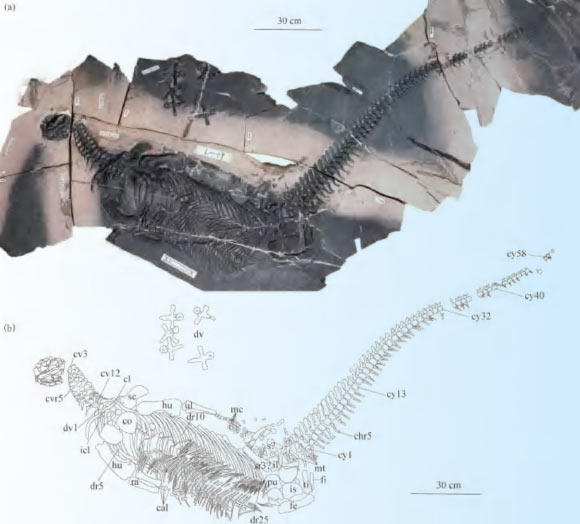
Spoon-Toothed, Short-Headed Marine Reptile Unearthed in China
Un reptile marin à dents de cuillère et à tête courte découvert en Chine
dent Chine Trias Sauropterygia nouvelle espèce autres reptiles squelette
Un nouveau genre et une nouvelle espèce de reptile sauroptérygien ayant vécu pendant la période du Trias, il y a environ 245 millions d'années, ont été identifiés à partir d'un squelette presque complet trouvé en Chine. L'article Un reptile marin à dents de cuillère et à tête courte découvert en Chine est apparu en premier sur Sci.News : Breaking Science News.
20/08/2026 sci-news ⚙ Traduction automatique
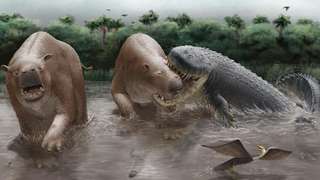
« Il y avait tellement de proies disponibles » : ce crocodilien géant dominait ce monde perdu il y a 10 millions d’années
dent prédateur proie oiseau mammifères étude
Il y a plus de 10 millions d’années, l’Amérique du Sud abritait un écosystème peuplé de prédateurs impressionnants. Mammifères à dents de sabre, anacondas ou encore « oiseaux-terreur » se partageaient le territoire. Mais une nouvelle étude révèle que certains reptiles occupaient une place encore...
18/08/2026 futura-terre
Découvrez les étonnantes dents ptérygoïdes du palais d'un modèle de mosasaure
dent Mosasaurus
Il y a de nombreux détails à admirer dans le nouveau modèle Wild Safari Prehistoric World Mosasaurus. Par exemple, il y a des dents ptérygoïdes sur le toit de la bouche. Les meilleures figures d'animaux préhistoriques présentent des détails anatomiques qui les élèvent au-dessus des autres figures. L'inclusion des remarquables dents ptérygoïdes de Mosasaurus est un signe certain qu'un
09/08/2026 everythingdinosaur ⚙ Traduction automatique
Le T. rex a-t-il laissé ces marques de morsure vieilles de 66 millions d'années ?
os dent alimentation Dinosauria Tyrannosaurus comportement datation
Les os fossilisés de dinosaures du Wyoming offrent un rare aperçu du comportement alimentaire du Tyrannosaurus rex. Les chercheurs ont examiné plus de 3 000 os datant de 72 à 66 millions d’années et n’en ont trouvé que 12 avec d’éventuelles traces de dents, dont quatre avec des motifs qui correspondaient étroitement à la forme et à l’espacement des dents du T. rex.
05/08/2026 sciencedaily ⚙ Traduction automatique
1 2 3 4 5 6 7 8