←

Crétacé

Intervalle géologique

163 image(s) · 59 Actualités

Voir la fiche

Galerie d'images

Holotype of Alcione elainus.
Fig. 6 of:
Longrich, N. R., Martill, D. M., & Andres, B. (2018). Late Maastrichtian pterosaurs from North Africa and mass extinction of Pterosauria at the Cretaceous-Paleogene boundary. PLoS biology, 16(3), e2001663.
---
Original figure legend:
A. elainus FSAC-OB 2, holotype partial skeleton and FSAC-OB 217, metacarpal IV.

(A) Holotype right humerus in anterior view, (B) holotype right ulna and radius in anterior view, respectively, (C) holotype sternum in left lateral view, (D) referred metacarpal IV, (E) holotype, distal end of left metacarpal IV and left scapulocoracoid, and (F) holotype right femur in posterior view. Abbreviations: co, coracoid; cr, cristospine; dc, distal condyle; dpc, deltopectoral crest; ect, ectepicondyle; fh, femoral head; gl, glenoid; gt, greater trochanter; hh, humeral head; hum, humerus; mcIV, metacarpal IV, pc, proximal cotyle; pf, pneumatic foramen; rad, radius; scpr, supracondylar process; ste, sternum; uln, ulna.
Taxons Alcione

Holotype of Alcione elainus. Fig. 6 of: Longrich, N. R., Martill, D. M., & Andres, B. (2018). Late Maastrichtian pterosaurs from North Africa and mass extinction of Pterosauria at the Cretaceous-Paleogene boundary. PLoS biology, 16(3), e2001663. --- Original figure legend: A. elainus FSAC-OB 2, holotype partial skeleton and FSAC-OB 217, metacarpal IV. (A) Holotype right humerus in anterior view, (B) holotype right ulna and radius in anterior view, respectively, (C) holotype sternum in left lateral view, (D) referred metacarpal IV, (E) holotype, distal end of left metacarpal IV and left scapulocoracoid, and (F) holotype right femur in posterior view. Abbreviations: co, coracoid; cr, cristospine; dc, distal condyle; dpc, deltopectoral crest; ect, ectepicondyle; fh, femoral head; gl, glenoid; gt, greater trochanter; hh, humeral head; hum, humerus; mcIV, metacarpal IV, pc, proximal cotyle; pf, pneumatic foramen; rad, radius; scpr, supracondylar process; ste, sternum; uln, ulna.

crête humérus Crétacé Maastrichtien +7
Illustration of a juvenile Tyrannosaurus rex.
Most of this restoration is mostly inspired from the models of 1-year old Tyrannosaurus from the exhibition "T.rex: The Ultimate Predator" at American Museum of Natural History, New York (2019-2021).[1]
[2] and the juvenile Tarbosaurus MPC-D 107/7 (2-3 years old at death).[3]

References

↑ [1]

↑ [2]

↑ Tsuihiji T et.al (2011). "Cranial osteology of a juvenile specimen of Tarbosaurus bataar (Theropoda, Tyrannosauridae) from the Nemegt Formation (Upper Cretaceous) of Bugin Tsav, Mongolia". Journal of Vertebrate Paleontology 31(3): p. 497-517

Illustration of a juvenile Tyrannosaurus rex. Most of this restoration is mostly inspired from the models of 1-year old Tyrannosaurus from the exhibition "T.rex: The Ultimate Predator" at American Museum of Natural History, New York (2019-2021).[1] [2] and the juvenile Tarbosaurus MPC-D 107/7 (2-3 years old at death).[3] References ↑ [1] ↑ [2] ↑ Tsuihiji T et.al (2011). "Cranial osteology of a juvenile specimen of Tarbosaurus bataar (Theropoda, Tyrannosauridae) from the Nemegt Formation (Upper Cretaceous) of Bugin Tsav, Mongolia". Journal of Vertebrate Paleontology 31(3): p. 497-517

prédateur musée Mongolie Crétacé +8
Majungasaurus crenatissimus, an abelisaur from the Late Cretaceous of Madagascar, pencil drawing
Taxons Majungasaurini

Majungasaurus crenatissimus, an abelisaur from the Late Cretaceous of Madagascar, pencil drawing

dessin Madagascar Crétacé Crétacé supérieur +4
Reconstructed skeleton of the indeterminate Moroccan Cretaceous plioplatecarpine (Mosasauridae: Plioplatecarpinae) NMNS005676 F043103, possibly Gavialimimus almaghribensis or an unnamed species (according to Yang, 2022). A collection of the National Museum of Natural Science (Taichung, Taiwan), the specimen was on display in the National Taiwan Museum during a special exhibition.
Taxons Gavialimimus

Reconstructed skeleton of the indeterminate Moroccan Cretaceous plioplatecarpine (Mosasauridae: Plioplatecarpinae) NMNS005676 F043103, possibly Gavialimimus almaghribensis or an unnamed species (according to Yang, 2022). A collection of the National Museum of Natural Science (Taichung, Taiwan), the specimen was on display in the National Taiwan Museum during a special exhibition.

musée Taïwan Crétacé spécimen +6
Amargasaurus lived in the  Cretaceous Period, about 100 million years ago.Photo taken in Museum of Victoria (Melbourne, Victoria, Australia)
Taxons Dicraeosauridae

Amargasaurus lived in the Cretaceous Period, about 100 million years ago.Photo taken in Museum of Victoria (Melbourne, Victoria, Australia)

musée Australie Crétacé Amargasaurus +2
Amargasaurus lived in the  Cretaceous Period, about 100 million years ago.Photo taken in Museum of Victoria (Melbourne, Victoria, Australia)
Taxons Dicraeosaurinae

Amargasaurus lived in the Cretaceous Period, about 100 million years ago.Photo taken in Museum of Victoria (Melbourne, Victoria, Australia)

musée Australie Crétacé Amargasaurus +2
The saltasaurine sauropod Neuquensaurus australis, from the Anacleto Formation (Upper Cretaceous), Patagonia, Argentina. Restoration of the skeleton mounted at the Museo de La Plata, Argentina.
Taxons Saltasauroidea

The saltasaurine sauropod Neuquensaurus australis, from the Anacleto Formation (Upper Cretaceous), Patagonia, Argentina. Restoration of the skeleton mounted at the Museo de La Plata, Argentina.

Argentine Anacleto Crétacé Lohuecosauria +4
The saltasaurine sauropod Neuquensaurus australis, from the Anacleto Formation (Upper Cretaceous), Patagonia, Argentina. Restoration of the skeleton mounted at the Museo de La Plata, Argentina.
Taxons Lohuecosauria

The saltasaurine sauropod Neuquensaurus australis, from the Anacleto Formation (Upper Cretaceous), Patagonia, Argentina. Restoration of the skeleton mounted at the Museo de La Plata, Argentina.

Argentine Anacleto Crétacé Lohuecosauria +4
Chasmosaurus belli ROM 843, Royal Tyrrell Museum of Paleontology. Late Cretaceous 75-74.5 millions years ago. Found at Dinosaur Provincial Park, Alberta, and prepared at the Royal Tyrrell Museum of Paleontology, Drumheller, Alberta.
Taxons Chasmosaurinae

Chasmosaurus belli ROM 843, Royal Tyrrell Museum of Paleontology. Late Cretaceous 75-74.5 millions years ago. Found at Dinosaur Provincial Park, Alberta, and prepared at the Royal Tyrrell Museum of Paleontology, Drumheller, Alberta.

musée Canada Crétacé Crétacé supérieur +5
Chasmosaurus belli ROM 843, Royal Tyrrell Museum of Paleontology. Late Cretaceous 75-74.5 millions years ago. Found at Dinosaur Provincial Park, Alberta, and prepared at the Royal Tyrrell Museum of Paleontology, Drumheller, Alberta.
Taxons Triceratopsini

Chasmosaurus belli ROM 843, Royal Tyrrell Museum of Paleontology. Late Cretaceous 75-74.5 millions years ago. Found at Dinosaur Provincial Park, Alberta, and prepared at the Royal Tyrrell Museum of Paleontology, Drumheller, Alberta.

musée Canada Crétacé Crétacé supérieur +5
Saltasaurus (which means "lizard from Salta") was a sauropod dinosaur of the Late Cretaceous Period. Relatively small among sauropods, though still massive by human standards, it was characterized by a diplodocid-like head
Taxons Saltasaurus

Saltasaurus (which means "lizard from Salta") was a sauropod dinosaur of the Late Cretaceous Period. Relatively small among sauropods, though still massive by human standards, it was characterized by a diplodocid-like head

Crétacé Crétacé supérieur Balochisauridae Dinosauria +7
Saltasaurus (which means "lizard from Salta") was a sauropod dinosaur of the Late Cretaceous Period. Relatively small among sauropods, though still massive by human standards, it was characterized by a diplodocid-like head
Taxons Lithostrotia

Saltasaurus (which means "lizard from Salta") was a sauropod dinosaur of the Late Cretaceous Period. Relatively small among sauropods, though still massive by human standards, it was characterized by a diplodocid-like head

Crétacé Crétacé supérieur Balochisauridae Dinosauria +7
Saltasaurus (which means "lizard from Salta") was a sauropod dinosaur of the Late Cretaceous Period. Relatively small among sauropods, though still massive by human standards, it was characterized by a diplodocid-like head
Taxons Titanosauridae

Saltasaurus (which means "lizard from Salta") was a sauropod dinosaur of the Late Cretaceous Period. Relatively small among sauropods, though still massive by human standards, it was characterized by a diplodocid-like head

Crétacé Crétacé supérieur Balochisauridae Dinosauria +7
Saltasaurus (which means "lizard from Salta") was a sauropod dinosaur of the Late Cretaceous Period. Relatively small among sauropods, though still massive by human standards, it was characterized by a diplodocid-like head
Taxons Saltasauridae

Saltasaurus (which means "lizard from Salta") was a sauropod dinosaur of the Late Cretaceous Period. Relatively small among sauropods, though still massive by human standards, it was characterized by a diplodocid-like head

Crétacé Crétacé supérieur Balochisauridae Dinosauria +7
Saltasaurus (which means "lizard from Salta") was a sauropod dinosaur of the Late Cretaceous Period. Relatively small among sauropods, though still massive by human standards, it was characterized by a diplodocid-like head
Taxons Saltasaurinae

Saltasaurus (which means "lizard from Salta") was a sauropod dinosaur of the Late Cretaceous Period. Relatively small among sauropods, though still massive by human standards, it was characterized by a diplodocid-like head

Crétacé Crétacé supérieur Balochisauridae Dinosauria +7
Saltasaurus (which means "lizard from Salta") was a sauropod dinosaur of the Late Cretaceous Period. Relatively small among sauropods, though still massive by human standards, it was characterized by a diplodocid-like head
Taxons Balochisauridae

Saltasaurus (which means "lizard from Salta") was a sauropod dinosaur of the Late Cretaceous Period. Relatively small among sauropods, though still massive by human standards, it was characterized by a diplodocid-like head

Crétacé Crétacé supérieur Balochisauridae Dinosauria +7
1 2 3 4 5 6 7 8 9 10 11

Actualités

Un nouveau genre de dinosaure troodontidé du Nouveau-Mexique
os Mexique Campanien Crétacé Crétacé supérieur fossile Dinevenator Dinosauria Troodontidae nouvelle espèce crâne
Les paléontologues ont nommé une nouvelle espèce de dinosaure théropode du Nouveau-Mexique. Le dinosaure, Dinevenator Robustus, vivait il y a environ 73 millions d'années (stade faunique campanien du Crétacé supérieur). Les chercheurs ont identifié le dinosaure à partir d’un os fossile du crâne (un frontal) trouvé dans le nord-ouest du Nouveau-Mexique. Il représente un nouveau genre et une nouvelle espèce de troodontidé. Troodontidés
13/08/2026 everythingdinosaur ⚙ Traduction automatique
Un fossile d'ichthyosaure du Queensland fournit la première preuve mondiale de prédation sur un ptérosaure
prédateur proie Australie Toolebuc Crétacé Crétacé inférieur fossile Ichthyosauria Pterosauria formation
Un fossile extraordinaire provenant du Queensland, en Australie, a fourni la preuve d'une chaîne alimentaire préhistorique. Les scientifiques ont identifié la première preuve définitive qu'un ichtyosaure a consommé un ptérosaure. De plus, le reptile marin est devenu plus tard la proie de l’un des plus grands prédateurs de l’ancienne mer d’Eromanga. Le fossile spectaculaire provient de la Formation de Toolebuc du Crétacé inférieur
28/07/2026 everythingdinosaur ⚙ Traduction automatique
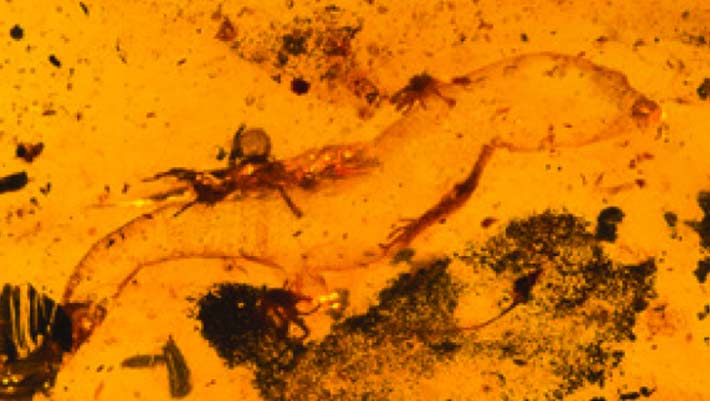
Oldest Known Male Gecko Found Preserved in Kachin Amber
Le plus ancien gecko mâle connu trouvé préservé dans l'ambre Kachin
Myanmar Crétacé nouvelle espèce autres reptiles
Les paléontologues ont décrit un nouveau genre et une nouvelle espèce de gecko ancien trouvés dans deux morceaux d'ambre provenant de gisements d'ambre vieux de 99 millions d'années (Crétacé moyen) dans la province de Kachin, au Myanmar. Le post Le plus ancien gecko mâle connu trouvé conservé dans Kachin Amber est apparu en premier sur Sci.News: Breaking Science News.
20/07/2026 sci-news ⚙ Traduction automatique
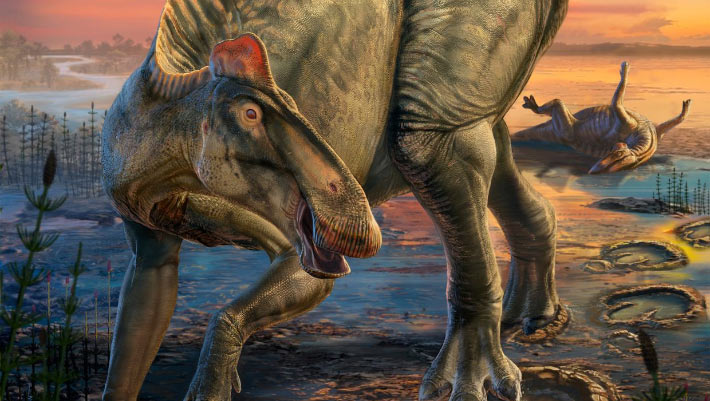
Tyrannosaurus rex Scavenged Duck-Billed Dinosaurs in Ancient Wyoming, Bite Marks Reveal
Des dinosaures à bec de canard récupérés par Tyrannosaurus rex dans l'ancien Wyoming et des marques de morsure révélées
os alimentation chasse États-Unis Crétacé Canardia Dinosauria Edmontosaurus Tyrannosaurus comportement
Des milliers d'os fossilisés provenant d'un gisement d'ossements du Crétacé dans le Wyoming, aux États-Unis, offrent des preuves physiques rares que le Tyrannosaurus rex s'est nourri des carcasses d'une espèce de dinosaure à bec de canard appelée Edmontosaurus annectens. L'article Tyrannosaurus rex a récupéré des dinosaures à bec de canard dans l'ancien Wyoming, les marques de morsure révèlent est apparu en premier sur Sci.News : Breaking Science News.
16/07/2026 sci-news ⚙ Traduction automatique
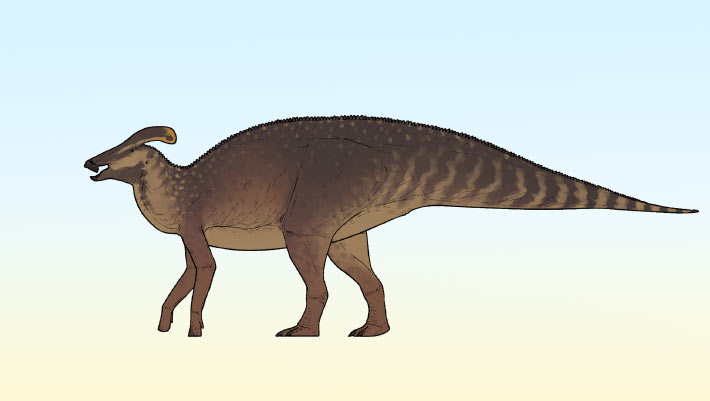
New Crested Dinosaur Species Identified in Canada
De nouvelles espèces de dinosaures à crête identifiées au Canada
crête Canada Campanien Crétacé Dinosauria Hadrosauridae datation nouvelle espèce
Un nouveau genre et une nouvelle espèce de dinosaure hadrosauridé lambéosaurine ont été identifiés dans le sud de l'Alberta, au Canada, remontant à 77 millions d'années, à l'âge campanien du Crétacé. L'article Nouvelles espèces de dinosaures à crête identifiées au Canada apparaît en premier sur Sci.News : Breaking Science News.
14/07/2026 sci-news ⚙ Traduction automatique
1 2 3 4 5 6 7 8 9 10 11 12