Crétacé

Intervalle géologique

185 image(s) · 46 Actualités

Voir la fiche

Galerie d'images

Azhdarchoid pterosaur Kariridraco dianae gen. et sp. nov. holotype (MPSC R 1056) from Lower Cretaceous of Northeastern Brazil. Skull in right lateral view. Photograph (A1), interpretative drawing (A2). Dark grey areas indicate remains of the carbonate matrix still attachaed to the skull.
Taxons Kariridraco

Azhdarchoid pterosaur Kariridraco dianae gen. et sp. nov. holotype (MPSC R 1056) from Lower Cretaceous of Northeastern Brazil. Skull in right lateral view. Photograph (A1), interpretative drawing (A2). Dark grey areas indicate remains of the carbonate matrix still attachaed to the skull.

dessin Brésil Crétacé holotype +3
Abelisaurid theropod Kryptops palaios gen. et sp. nov. MNN GAD1−1 from the Lower Cretaceous Elrhaz Formation of Niger. Left maxilla in lateral

view; stereopair (A) and line drawing (B). Cross−hatching indicates broken bone; dashed lines indicate estimated edges.
Taxons Kryptops

Abelisaurid theropod Kryptops palaios gen. et sp. nov. MNN GAD1−1 from the Lower Cretaceous Elrhaz Formation of Niger. Left maxilla in lateral view; stereopair (A) and line drawing (B). Cross−hatching indicates broken bone; dashed lines indicate estimated edges.

os dessin Niger Crétacé +3
Hypothetical reconstruction of the Late Cretaceous abelisaurid Elemgasem nubilus.
Taxons Elemgasem

Hypothetical reconstruction of the Late Cretaceous abelisaurid Elemgasem nubilus.

Crétacé Crétacé supérieur Abelisauridae Elemgasem
Riojavenatrix: "La Rioja huntress" Early Cretaceous, Europe
Taxons Riojavenatrix

Riojavenatrix: "La Rioja huntress" Early Cretaceous, Europe

Crétacé Crétacé inférieur Riojavenatrix
Left maxilla (A) and left dentary (B) of carcharodontosaurid theropod Kelmayisaurus petrolicus Dong, 1973 (IVPP V 4022, China, Lianmugin For−
mation, Lower Cretaceous). Photographs in lateral (A1, B1), medial (A2, B2), ventral (A3), and dorsal (B3) views. Scale bars 5 cm. Designation “d” refers to

dentary tooth, designation “m” refers to maxillary tooth position. Dorsal view of dentary shows tooth row only.
Taxons Kelmayisaurus

Left maxilla (A) and left dentary (B) of carcharodontosaurid theropod Kelmayisaurus petrolicus Dong, 1973 (IVPP V 4022, China, Lianmugin For− mation, Lower Cretaceous). Photographs in lateral (A1, B1), medial (A2, B2), ventral (A3), and dorsal (B3) views. Scale bars 5 cm. Designation “d” refers to dentary tooth, designation “m” refers to maxillary tooth position. Dorsal view of dentary shows tooth row only.

écaille dent Chine Crétacé +2
Closeup of the camellate pneumaticity inside the vertebrae of Vectiraptor greeni, from the Early Cretaceous of the Isle of Wight, UK. Photo by Nick Longrich.
Taxons Vectiraptor

Closeup of the camellate pneumaticity inside the vertebrae of Vectiraptor greeni, from the Early Cretaceous of the Isle of Wight, UK. Photo by Nick Longrich.

Royaume-Uni Crétacé Crétacé inférieur Vectiraptor
Diagram featuring the holotype (BNMNH-PV030) skull of the troodontid Papiliovenator neimengguensis, from the Bayan Mandahu Formation. Abbreviations: a, angular; d, dentary; f, frontal; j, jugal; l, lacrimal; m, maxilla; n, nasal; p, parietal; q, quadrate;  s, surangular;  sp, splenial.[1]
References

↑  (2022). "A new troodontid from the Upper Cretaceous Gobi Basin of inner Mongolia, China". Cretaceous Research 130: Article 105052. DOI:10.1016/j.cretres.2021.105052.
Taxons Papiliovenator

Diagram featuring the holotype (BNMNH-PV030) skull of the troodontid Papiliovenator neimengguensis, from the Bayan Mandahu Formation. Abbreviations: a, angular; d, dentary; f, frontal; j, jugal; l, lacrimal; m, maxilla; n, nasal; p, parietal; q, quadrate; s, surangular; sp, splenial.[1] References ↑ (2022). "A new troodontid from the Upper Cretaceous Gobi Basin of inner Mongolia, China". Cretaceous Research 130: Article 105052. DOI:10.1016/j.cretres.2021.105052.

Chine Mongolie Crétacé holotype +4
Skull of troodontid theropod Xixiasaurus henanensis gen. et sp. nov. (HGM 41HIII−0201; holotype), lower–middle Majiacun Formation (Upper Cretaceous: Coniacian–Campanian), Henan Province, China; in dorsal (A); lateral (B), and ventral (C) views.

Note that this version of the image does not include the interpretative lines of the version in the paper.
Taxons Xixiasaurus

Skull of troodontid theropod Xixiasaurus henanensis gen. et sp. nov. (HGM 41HIII−0201; holotype), lower–middle Majiacun Formation (Upper Cretaceous: Coniacian–Campanian), Henan Province, China; in dorsal (A); lateral (B), and ventral (C) views. Note that this version of the image does not include the interpretative lines of the version in the paper.

Chine Campanien Coniacien Crétacé +5
Life reconstruction of the Late Cretaceous south american paravian, Overoraptor chimentoi
Taxons Overoraptor

Life reconstruction of the Late Cretaceous south american paravian, Overoraptor chimentoi

Crétacé Crétacé supérieur Overoraptor
Forearm and hand of Machairasaurus leptorhynchos Longrich et al. 2010 (Dinosauria: Theropoda: Oviraptoridae: Ingeniinae) from the Late Cretaceous Djadokhta Formation beds of Bayan Mandahu, Inner Mongolia, China. Digital photography and editing by Nick Longrich
Taxons Machairasaurus

Forearm and hand of Machairasaurus leptorhynchos Longrich et al. 2010 (Dinosauria: Theropoda: Oviraptoridae: Ingeniinae) from the Late Cretaceous Djadokhta Formation beds of Bayan Mandahu, Inner Mongolia, China. Digital photography and editing by Nick Longrich

Chine Mongolie Djadokhta Crétacé +8
Alvarezsauridae gen. et sp. indet., posterior caudal vertebrae. Dzharakuduk, Uzbekistan; Bissekty Formation, Upper Cretaceous (Turonian). a-e, ZIN PH 2441/16, two vertebrae preserved in articulation, in anterior (a), dorsal (b), posterior (c), lateral (d), and ventral (e) views. f-j, ZIN PH 2442/16, vertebra missing ventral part of the centrum, in dorsal (f), lateral (g), ventral (h), anterior (i), and posterior (j).
Taxons Dzharaonyx

Alvarezsauridae gen. et sp. indet., posterior caudal vertebrae. Dzharakuduk, Uzbekistan; Bissekty Formation, Upper Cretaceous (Turonian). a-e, ZIN PH 2441/16, two vertebrae preserved in articulation, in anterior (a), dorsal (b), posterior (c), lateral (d), and ventral (e) views. f-j, ZIN PH 2442/16, vertebra missing ventral part of the centrum, in dorsal (f), lateral (g), ventral (h), anterior (i), and posterior (j).

vertèbre Ouzbékistan Bissekty Crétacé +4
Ceratonykus oculatus, Late Cretaceous of Mongolia. Digital.
Taxons Ceratonykus

Ceratonykus oculatus, Late Cretaceous of Mongolia. Digital.

Mongolie Crétacé Crétacé supérieur Ceratonykus +1
Speculative reconstruction of Aoniraptor'’ from the Late Cretaceous of Argentina, here restored as a megaraptoran as recovered by most studies
Taxons Aoniraptor

Speculative reconstruction of Aoniraptor'’ from the Late Cretaceous of Argentina, here restored as a megaraptoran as recovered by most studies

Argentine Crétacé Crétacé supérieur Aoniraptor +1
Skull diagram featuring the holotype skull (ROM 1790) of the ornithomimid Rativates evadens, from the Late Cretaceous period. Abbreviations: d, dentary; f, frontal; l, lacrimal; m, maxilla; n, nasal; pm, premaxila; ps, paraphenoid.
Taxons Rativates

Skull diagram featuring the holotype skull (ROM 1790) of the ornithomimid Rativates evadens, from the Late Cretaceous period. Abbreviations: d, dentary; f, frontal; l, lacrimal; m, maxilla; n, nasal; pm, premaxila; ps, paraphenoid.

Crétacé Crétacé supérieur holotype Ornithomimidae +2
Ceratopsipes goldenensis Lockley & Hunt, 1995 - ceratopsian dinosaur trackway in the Cretaceous of Colorado, USA.
Ceratopsians are the "horned dinosaurs".  They were large, quadrupedal, herbivorous dinosaurs having a beaked skull and a frill - an extension of bone behind the skull that partially covered the neck.  Ceratopsian dinosaurs are known from the Jurassic and Cretaceous.  The last members of the group died out at the Cretaceous-Tertiary boundary, 65 million years ago.
Seen here is a ceratopsian dinosaur trackway.  Ceratopsian footprints are very rare.  The best examples are in Colorado's Laramie Formation, a nonmarine, coastal plain to deltaic succession of mostly mixed siliciclastic sedimentary rocks - sandstones, siltstones, claystones, and coals.  The footprints here consist of convex bulges on the basal surfaces of structurally-tilted sandstone beds.
The ichnospecies Ceratopsipes goldenensis was named based on footprints at this locality.  The trackmaker was very likely Triceratops, the # 1 most famous ceratopsian dinosaur.


From on-site signage:
Triceratops Tracks
Several tracks of Triceratops, or a closely related horned dinosaur were first discovered in this area and named Ceratopsipes goldenensis (meaning tracks of a horned dinosaur from Golden).  By happy coincidence, the first Triceratops known to science also comes from the greater Denver area near 13th Avenue and Federal Blvd.  Growing to a length of almost 25 feet, Triceratops and other members of the horned dinosaur family were herbivorous animals that roamed in herds.  Their trademark horns and frills that covered their necks probably served for defense.  A replica Triceratops skull is on display in the clubhouse at the Fossil Trace Golf Club.
These tracks (identified by small signs) help us understand that Triceratops walked with a narrow gait and erect front limbs  than with a wide, sprawling gait as previously depicted.  In 1887, the first Triceratops bones known to science were also discovered locally at a site near 13th Avenue and Federal Boulevard in Denver.
Nearby one may see many other traces of life such as burrows, probably made by invertebrates and impressions of plant debris.  Note that you are looking at all tracks and traces from the underside - in negative aspect - what one might call a worm’s eye view.  All of these trace fossils indicate that the Golden area once had a warm, temperate to subtropical climate.


Classification: Animalia, Chordata, Vertebrata, Reptilia, Archosauria, Dinosauria, Ornithischia, Marginocephalia, Ceratopsia, Ceratopsidae
Stratigraphy: Laramie Formation, Maastrichtian Stage, upper Upper Cretaceous
Locality: outcrop along Triceratops Trail, Parfet Prehistoric Preserve, southern side of the town of Golden, Colorado, USA (~vicinity of 39° 44' 35.24" North latitude, 105° 13’ 09.69" West longitude)


Some info. from:

Lockley & Hunt (1995) - Ceratopsid tracks and associated ichnofauna from the Laramie Formation (Upper Cretaceous: Maastrichtian) of Colorado.  Journal of Vertebrate Paleontology 15: 592-614.
Taxons Ceratopsipes

Ceratopsipes goldenensis Lockley & Hunt, 1995 - ceratopsian dinosaur trackway in the Cretaceous of Colorado, USA. Ceratopsians are the "horned dinosaurs". They were large, quadrupedal, herbivorous dinosaurs having a beaked skull and a frill - an extension of bone behind the skull that partially covered the neck. Ceratopsian dinosaurs are known from the Jurassic and Cretaceous. The last members of the group died out at the Cretaceous-Tertiary boundary, 65 million years ago. Seen here is a ceratopsian dinosaur trackway. Ceratopsian footprints are very rare. The best examples are in Colorado's Laramie Formation, a nonmarine, coastal plain to deltaic succession of mostly mixed siliciclastic sedimentary rocks - sandstones, siltstones, claystones, and coals. The footprints here consist of convex bulges on the basal surfaces of structurally-tilted sandstone beds. The ichnospecies Ceratopsipes goldenensis was named based on footprints at this locality. The trackmaker was very likely Triceratops, the # 1 most famous ceratopsian dinosaur. From on-site signage: Triceratops Tracks Several tracks of Triceratops, or a closely related horned dinosaur were first discovered in this area and named Ceratopsipes goldenensis (meaning tracks of a horned dinosaur from Golden). By happy coincidence, the first Triceratops known to science also comes from the greater Denver area near 13th Avenue and Federal Blvd. Growing to a length of almost 25 feet, Triceratops and other members of the horned dinosaur family were herbivorous animals that roamed in herds. Their trademark horns and frills that covered their necks probably served for defense. A replica Triceratops skull is on display in the clubhouse at the Fossil Trace Golf Club. These tracks (identified by small signs) help us understand that Triceratops walked with a narrow gait and erect front limbs than with a wide, sprawling gait as previously depicted. In 1887, the first Triceratops bones known to science were also discovered locally at a site near 13th Avenue and Federal Boulevard in Denver. Nearby one may see many other traces of life such as burrows, probably made by invertebrates and impressions of plant debris. Note that you are looking at all tracks and traces from the underside - in negative aspect - what one might call a worm’s eye view. All of these trace fossils indicate that the Golden area once had a warm, temperate to subtropical climate. Classification: Animalia, Chordata, Vertebrata, Reptilia, Archosauria, Dinosauria, Ornithischia, Marginocephalia, Ceratopsia, Ceratopsidae Stratigraphy: Laramie Formation, Maastrichtian Stage, upper Upper Cretaceous Locality: outcrop along Triceratops Trail, Parfet Prehistoric Preserve, southern side of the town of Golden, Colorado, USA (~vicinity of 39° 44' 35.24" North latitude, 105° 13’ 09.69" West longitude) Some info. from: Lockley & Hunt (1995) - Ceratopsid tracks and associated ichnofauna from the Laramie Formation (Upper Cretaceous: Maastrichtian) of Colorado. Journal of Vertebrate Paleontology 15: 592-614.

os États-Unis Crétacé Jurassique +6
Ornithischian dinosaur Stenopelix valdensis Meyer, 1857, holotype (GZG 741/2, formerly GPI Gö 741−2), from the Obernkirchen Sandstone (Early
Cretaceous: Berriasian), near Bückeburg, Niedersachsen, Germany. A. Large sandstone slab. B. Interpretative outline drawing of large latex cast (prepared
from large sandstone slab), showing majority of postcranial skeleton in dorsal view. C. Small sandstone slab. D. Interpretative outline drawing of small la−
tex cast (prepared from small sandstone slab), showing sacrum and caudals, pelvic region and partial hindlimbs in ventral view. For clarity elements in and
around the sacral region have not been labelled—these areas are shown in greater detail in Fig. 3. Roman numerals II–IV correspond to respective digits.

Abbreviations: mt, metatarsals; f, femur; ?, unidentified element.
Taxons Stenopelix

Ornithischian dinosaur Stenopelix valdensis Meyer, 1857, holotype (GZG 741/2, formerly GPI Gö 741−2), from the Obernkirchen Sandstone (Early Cretaceous: Berriasian), near Bückeburg, Niedersachsen, Germany. A. Large sandstone slab. B. Interpretative outline drawing of large latex cast (prepared from large sandstone slab), showing majority of postcranial skeleton in dorsal view. C. Small sandstone slab. D. Interpretative outline drawing of small la− tex cast (prepared from small sandstone slab), showing sacrum and caudals, pelvic region and partial hindlimbs in ventral view. For clarity elements in and around the sacral region have not been labelled—these areas are shown in greater detail in Fig. 3. Roman numerals II–IV correspond to respective digits. Abbreviations: mt, metatarsals; f, femur; ?, unidentified element.

dessin Allemagne Berriasien Crétacé +8
1 2 3 4 5 6 7 8 9 10 11 12

Actualités

Tyrannosaurus rex Scavenged Duck-Billed Dinosaurs in Ancient Wyoming, Bite Marks Reveal
Des dinosaures à bec de canard récupérés par Tyrannosaurus rex dans l'ancien Wyoming et des marques de morsure révélées
os alimentation chasse États-Unis Crétacé Canardia Dinosauria Edmontosaurus Tyrannosaurus comportement
Des milliers d'os fossilisés provenant d'un gisement d'ossements du Crétacé dans le Wyoming, aux États-Unis, offrent des preuves physiques rares que le Tyrannosaurus rex s'est nourri des carcasses d'une espèce de dinosaure à bec de canard appelée Edmontosaurus annectens. L'article Tyrannosaurus rex a récupéré des dinosaures à bec de canard dans l'ancien Wyoming, les marques de morsure révèlent est apparu en premier sur Sci.News : Breaking Science News.
16/07/2026 sci-news ⚙ Traduction automatique
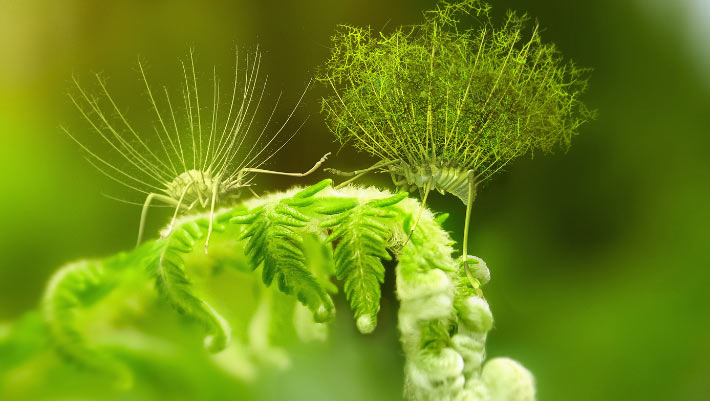
New Crested Dinosaur Species Identified in Canada
De nouvelles espèces de dinosaures à crête identifiées au Canada
crête Canada Campanien Crétacé Dinosauria Hadrosauridae datation nouvelle espèce
Un nouveau genre et une nouvelle espèce de dinosaure hadrosauridé lambéosaurine ont été identifiés dans le sud de l'Alberta, au Canada, remontant à 77 millions d'années, à l'âge campanien du Crétacé. L'article Nouvelles espèces de dinosaures à crête identifiées au Canada apparaît en premier sur Sci.News : Breaking Science News.
14/07/2026 sci-news ⚙ Traduction automatique
Des scientifiques décrivent officiellement le premier fossile de dinosaure découvert en Antarctique
vertèbre Antarctique Crétacé Crétacé supérieur fossile Dinosauria Titanosauria découverte
Les scientifiques ont officiellement décrit le premier fossile de dinosaure découvert en Antarctique. La découverte remarquable est une seule vertèbre provenant d’un titanosaure du Crétacé supérieur. Bien que le fossile ait été collecté il y a plus de quarante ans, les chercheurs n’ont confirmé son identité que récemment.  Le premier fossile de dinosaure découvert en Antarctique est décrit dans la revue Acta Palaeontologica Polonica.
29/06/2026 everythingdinosaur ⚙ Traduction automatique
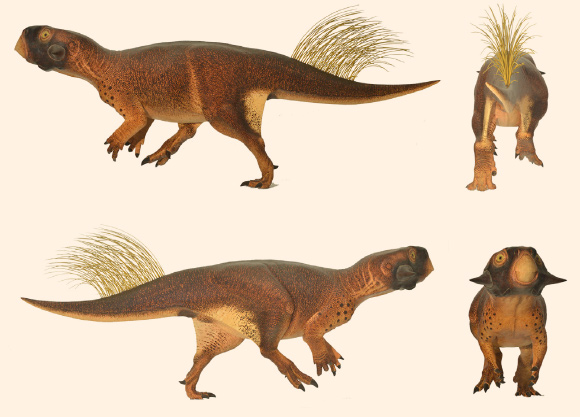
Flowering Plants Were Already Thriving before Dinosaur-Killing Asteroid Hit
Les plantes à fleurs prospéraient déjà avant l’impact de l’astéroïde tueur de dinosaures
Mexique Crétacé fossile Dinosauria extinction formation
Les fossiles de la formation Jose Creek au Nouveau-Mexique révèlent que les angiospermes (plantes à fleurs) avaient construit des forêts denses et fruitières il y a près de 75 millions d'années - près de 9 millions d'années avant l'extinction massive de la fin du Crétacé qui a tué les dinosaures - remettant en question un récit évolutif de longue date sur la façon dont ils sont parvenus à dominer la planète. L'article Les plantes à fleurs prospéraient déjà avant l'attaque d'un astéroïde tueur de dinosaures apparaît en premier sur Sci.News : Breaking Science News.
29/06/2026 sci-news ⚙ Traduction automatique
New Feathered Dinosaur from China Had Peacock-Like Tail
Un nouveau dinosaure à plumes de Chine avait une queue semblable à celle d'un paon
plume Chine Crétacé Crétacé inférieur Dinosauria oiseau évolution nouvelle espèce
Un nouveau genre et une nouvelle espèce de dinosaure pennaraptoran à quatre ailes du Crétacé inférieur du nord de la Chine ajoutent une autre tournure à l'histoire de l'évolution des oiseaux à partir de leurs ancêtres dinosaures. L'article Un nouveau dinosaure à plumes de Chine avait une queue semblable à un paon est apparu en premier sur Sci.News : Breaking Science News.
23/06/2026 sci-news ⚙ Traduction automatique
1 2 3 4 5 6 7 8 9 10