←

Crétacé

Intervalle géologique

163 image(s) · 58 Actualités

Voir la fiche

Galerie d'images

landscape of Montmorélien (Cretaceous Campanian), Charente, SW France

landscape of Montmorélien (Cretaceous Campanian), Charente, SW France

France Campanien Crétacé
A fossil tree from the Coal Creek region, Fruitland Formation, latest Cretaceous (Late Campanian), San Juan Basin, New Mexico

A fossil tree from the Coal Creek region, Fruitland Formation, latest Cretaceous (Late Campanian), San Juan Basin, New Mexico

Mexique Fruitland Campanien Crétacé +2
Holotype skull of the centrosaurine ceratopsian dinosaur Diabloceratops eatoni from the Late Cretaceous (Campanian) of the Wahweap Formation, Grand Staircase-Escalante National Monument, Utah. Photograph by Nick Longrich, 2023.

Holotype skull of the centrosaurine ceratopsian dinosaur Diabloceratops eatoni from the Late Cretaceous (Campanian) of the Wahweap Formation, Grand Staircase-Escalante National Monument, Utah. Photograph by Nick Longrich, 2023.

Campanien Crétacé Crétacé supérieur holotype +5
Outcrops of the Late Cretaceous (Campanian) aged Aguja Formation, Big Bend National Park, Texas, USA
Formations Aguja

Outcrops of the Late Cretaceous (Campanian) aged Aguja Formation, Big Bend National Park, Texas, USA

États-Unis Aguja Campanien Crétacé +2
Mawsonia , giant coelocanth from the Cretaceous period (Albian and Cenomanian stages) of South America and North Africa

Mawsonia , giant coelocanth from the Cretaceous period (Albian and Cenomanian stages) of South America and North Africa

Albien Cénomanien Crétacé
Life restoration of Cearadactylus atrox.
Based on figure 2 of "On the systematic relationships of Cearadactylus atrox, an enigmatic Early Cretaceous pterosaur from the Santana Formation of Brazil" by D. M. Unwin Mitteilungen Museum für Naturkunde Berlin, Geowissenschaftlichen Reihe 5: 239-263

Life restoration of Cearadactylus atrox. Based on figure 2 of "On the systematic relationships of Cearadactylus atrox, an enigmatic Early Cretaceous pterosaur from the Santana Formation of Brazil" by D. M. Unwin Mitteilungen Museum für Naturkunde Berlin, Geowissenschaftlichen Reihe 5: 239-263

musée Brésil Crétacé Crétacé inférieur +4
A map showing the distribution of paraves in Late Cretaceous with the respective paleogeographic setting.

A map showing the distribution of paraves in Late Cretaceous with the respective paleogeographic setting.

Crétacé Crétacé supérieur Paraves
A map showing the distribution of paraves in Early Cretaceous with respective paleogeographic setting.

A map showing the distribution of paraves in Early Cretaceous with respective paleogeographic setting.

Crétacé Crétacé inférieur Paraves
Diuqin is an unenlagiine dinosaur from the Late Cretaceous of what is now Argentina. Unenlagiines, known exclusively from South America, are usually classified as dromaeosaurs though this is sometimes debated. Like dromaeosaurs, they were covered in feathers, carnivorous, and had the large sickle-like claw on the inner toe of each foot. Unique to unenlagiines is their elongated snout, suggesting a piscivorous diet. Diuqin was a medium-sized unenlagiine, at about 4 m in length.

Diuqin is an unenlagiine dinosaur from the Late Cretaceous of what is now Argentina. Unenlagiines, known exclusively from South America, are usually classified as dromaeosaurs though this is sometimes debated. Like dromaeosaurs, they were covered in feathers, carnivorous, and had the large sickle-like claw on the inner toe of each foot. Unique to unenlagiines is their elongated snout, suggesting a piscivorous diet. Diuqin was a medium-sized unenlagiine, at about 4 m in length.

griffe plume Argentine Crétacé +5
Figure 1. Evolution of macroecological traits in Dinosauria. Large scale event in dinosaur evolution (a); the origin of dinosaurs (star), hyperthermals (volcano), the earliest fossil Avialae (bird), the earliest fossil angiosperm (flower), the Cretaceous/Palaeogene mass extinction (asteroid). Phylogeny of dinosaurs (b) redrawn from Sereno and adapted to the current consensus and upon which an ancestral state reconstruction of temperature niche (mean annual temperature) after Chiarenza et al. is plotted; Mesozoic palaeogeographies (c) for Triassic (T), Jurassic (J) and Cretaceous (K). Silhouette colours symbolize body mass for each of the taxa represented; information on dietary habits are plotted after Barrett and Zanno & Makovicky; numbers represent clades discussed through this study: 1, Ornithischia; 2, Thyreophora; 3, Ornithopoda; 4, Hadrosauroidea; 5, Marginocephalia; 6, Ceratopsia; 7, Saurischia; 8, Sauropodomorpha; 9, Sauropoda; 10, Theropoda; 11, Ceratosauria; 12, Tetanurae; 13, Coelurosauria; 14, Maniraptoriformes; 15, Maniraptora; 16, Deinonychosauria; 17, Avialae; 18, Ornithothoraces. Palaeogeographies modified from original plots via R package ‘mapast’ using plate models by Scotese.

Figure 1. Evolution of macroecological traits in Dinosauria. Large scale event in dinosaur evolution (a); the origin of dinosaurs (star), hyperthermals (volcano), the earliest fossil Avialae (bird), the earliest fossil angiosperm (flower), the Cretaceous/Palaeogene mass extinction (asteroid). Phylogeny of dinosaurs (b) redrawn from Sereno and adapted to the current consensus and upon which an ancestral state reconstruction of temperature niche (mean annual temperature) after Chiarenza et al. is plotted; Mesozoic palaeogeographies (c) for Triassic (T), Jurassic (J) and Cretaceous (K). Silhouette colours symbolize body mass for each of the taxa represented; information on dietary habits are plotted after Barrett and Zanno & Makovicky; numbers represent clades discussed through this study: 1, Ornithischia; 2, Thyreophora; 3, Ornithopoda; 4, Hadrosauroidea; 5, Marginocephalia; 6, Ceratopsia; 7, Saurischia; 8, Sauropodomorpha; 9, Sauropoda; 10, Theropoda; 11, Ceratosauria; 12, Tetanurae; 13, Coelurosauria; 14, Maniraptoriformes; 15, Maniraptora; 16, Deinonychosauria; 17, Avialae; 18, Ornithothoraces. Palaeogeographies modified from original plots via R package ‘mapast’ using plate models by Scotese.

écaille Crétacé Jurassique Mésozoïque +23
A photograph of partial specimen American Museum of Natural History (AMNH) 22555, skull without mandible, of Anhanguera sp. (formerly often assigned to Anhanguera santanae),[1] from the Early Cretaceous Romualdo Formation (former Romualdo Member of the Santana Formation) of NE Brazil in right lateral view.

A photograph of partial specimen American Museum of Natural History (AMNH) 22555, skull without mandible, of Anhanguera sp. (formerly often assigned to Anhanguera santanae),[1] from the Early Cretaceous Romualdo Formation (former Romualdo Member of the Santana Formation) of NE Brazil in right lateral view.

musée Brésil Conway Romualdo +7
A photograph of partial specimen American Museum of Natural History (AMNH) 22555, anterior dorsal vertebrae, dorsal ribs and partial shoulder girdle (at least right scapula) of Anhanguera sp. (formerly often assigned to Anhanguera santanae),[1] from the Early Cretaceous Romualdo Formation (former Romualdo Member of the Santana Formation) of NE Brazil in dorsal view.

A photograph of partial specimen American Museum of Natural History (AMNH) 22555, anterior dorsal vertebrae, dorsal ribs and partial shoulder girdle (at least right scapula) of Anhanguera sp. (formerly often assigned to Anhanguera santanae),[1] from the Early Cretaceous Romualdo Formation (former Romualdo Member of the Santana Formation) of NE Brazil in dorsal view.

musée Brésil Conway Romualdo +6
A photograph of partial specimen American Museum of Natural History (AMNH) 22555, posterior dorsal vertebrae, and the sacrum and pelvis (both iliae, and right ischium and pubis) of Anhanguera sp. (formerly often assigned to Anhanguera santanae),[1] from the Early Cretaceous Romualdo Formation (former Romualdo Member of the Santana Formation) of NE Brazil in dorsal view.

A photograph of partial specimen American Museum of Natural History (AMNH) 22555, posterior dorsal vertebrae, and the sacrum and pelvis (both iliae, and right ischium and pubis) of Anhanguera sp. (formerly often assigned to Anhanguera santanae),[1] from the Early Cretaceous Romualdo Formation (former Romualdo Member of the Santana Formation) of NE Brazil in dorsal view.

bassin musée Brésil Conway +7
Reconstitution d'un Tylosaurus rex dans la voie maritime intérieure occidentale de l'Amérique du Nord, datant de l'époque du Crétacé.

Reconstitution d'un Tylosaurus rex dans la voie maritime intérieure occidentale de l'Amérique du Nord, datant de l'époque du Crétacé.

jeu reconstitution Crétacé Tylosaurus
Elasmosaurus platyurus, plesiosaurian from Late Cretaceous (Campanian) of North America

Elasmosaurus platyurus, plesiosaurian from Late Cretaceous (Campanian) of North America

Campanien Crétacé Crétacé supérieur Elasmosaurus +1
Elasmosaurus platyurus, plesiosaurian from Late Cretaceous (Campanian) of North America

Elasmosaurus platyurus, plesiosaurian from Late Cretaceous (Campanian) of North America

Campanien Crétacé Crétacé supérieur Elasmosaurus +1
1 2 3 4 5 6 7 8 9 10 11

Actualités

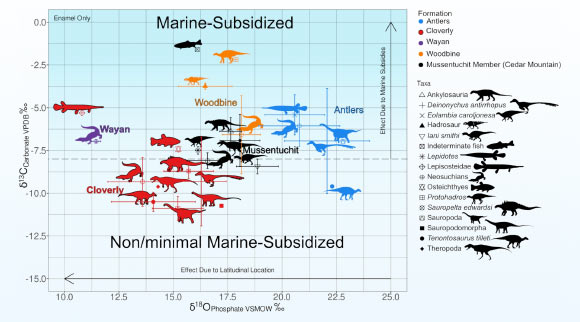
Dinosaurs May Have Dined on Seaweed, Study Suggests
Crétacé fossile Dinosauria isotope étude
Paleontologists studying Cretaceous fossils have repeatedly found that the teeth of many ancient animals contain more of a heavier carbon isotope, carbon-13, than their presumed plant-based diets would predict. The post Dinosaurs May Have Dined on Seaweed, Study Suggests appeared first on Sci.News: Breaking Science News.
01/10/2026 sci-news
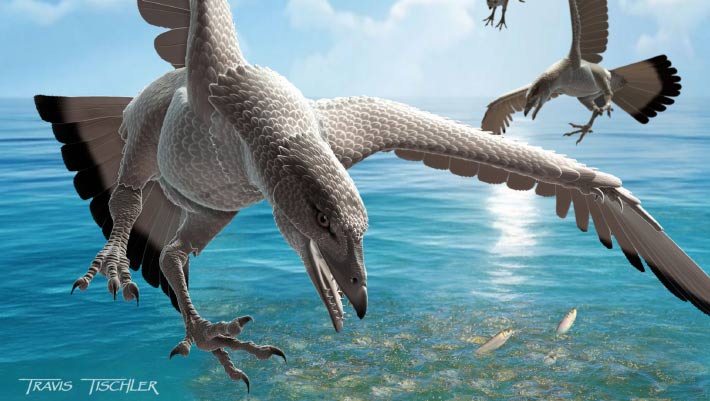
New Enantiornithine Bird Joins Australia’s Sparse Fossil Record
Un nouvel oiseau énantiornithine rejoint le record australien de fossiles clairsemés
Australie Crétacé fossile oiseau
Tenuicruris piscanexum n'est que la deuxième espèce d'oiseau du Crétacé nommée sur le continent australien. L’article Un nouvel oiseau énantiornithine rejoint le record australien de fossiles clairsemés est apparu en premier sur Sci.News : Breaking Science News.
30/09/2026 sci-news ⚙ Traduction automatique
Les scientifiques se sont trompés sur cet étrange mammifère pendant près de 40 ans
Mongolie Crétacé fossile mammifères
Un fossile magnifiquement conservé du désert de Gobi en Mongolie a résolu un mystère qui a intrigué les paléontologues pendant près de 40 ans. Tamirkhan balcarceli montre que les zhelestidés n'étaient pas les premiers parents des mammifères placentaires modernes, malgré leurs dents qui semblaient le suggérer. Au lieu de cela, l’animal ressemblant à un lapin appartenait à une lignée distincte de petits mammifères du Crétacé.
28/09/2026 sciencedaily ⚙ Traduction automatique
Garudimimus: Beast of the Week
Garudimimus : la bête de la semaine
Mongolie Crétacé Dinosauria Garudimimus oiseau évolution
Cette semaine, nous examinons un dinosaure à plumes qui nous aide à comprendre l'évolution de la famille des dinosaures « imitateurs d'oiseaux ».  Entrez Garudimimus brevipes ! Garudimimus était un dinosaure théropode qui vivait dans ce qui est aujourd'hui la Mongolie pendant la période du Crétacé, il y a entre 96 et 89 millions d'années.  Du bec à la queue, il mesurait environ 3,5 mètres de long et il aurait probablement été omnivore de son vivant.  Le nom du genre se traduit par « Garuda Mimic », en référence à Garuda, le
27/09/2026 prehistoricbeastoftheweek ⚙ Traduction automatique
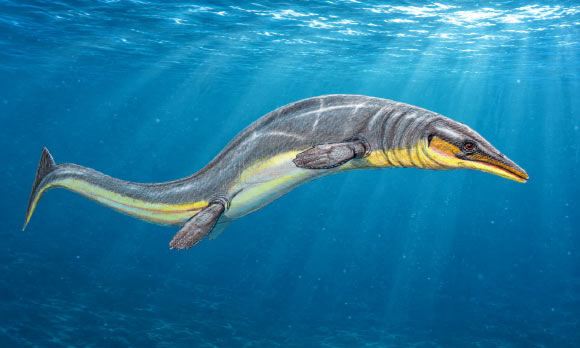
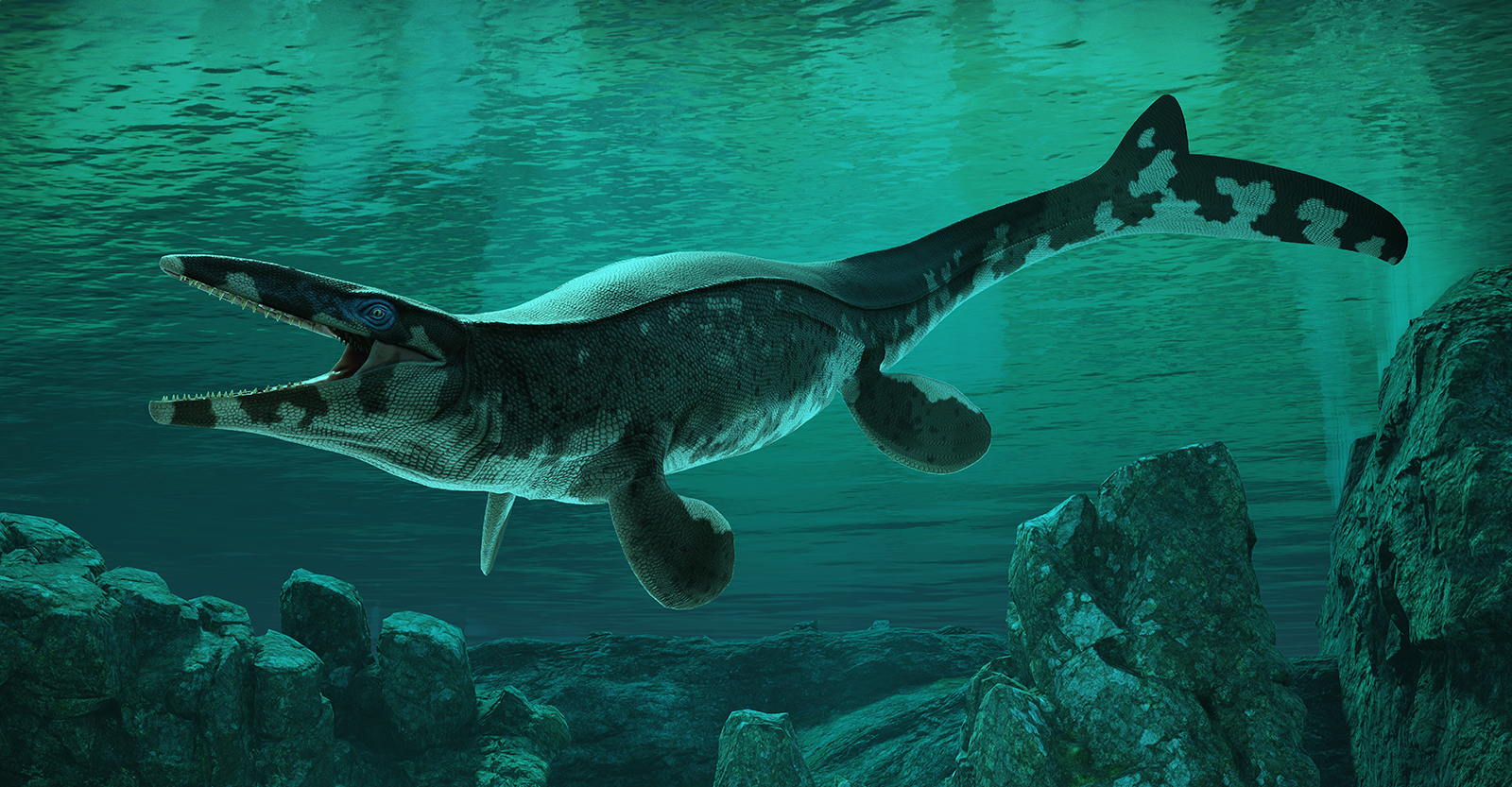
Paleontologists Uncover New Mosasaur Species in Egypt’s Western Desert
Des paléontologues découvrent de nouvelles espèces de mosasaures dans le désert occidental d’Égypte
Égypte Crétacé fossile Dinosauria Halisaurus
Les paléontologues ont décrit une espèce jusqu'alors inconnue de mosasaure – un groupe de reptiles marins disparus qui patrouillaient dans les mers du Crétacé aux côtés des dinosaures terrestres – sur la base de fossiles découverts dans l'oasis de Dakhla en Égypte. L’article Des paléontologues découvrent de nouvelles espèces de mosasaures dans le désert occidental égyptien est apparu en premier sur Sci.News : Breaking Science News.
16/09/2026 sci-news ⚙ Traduction automatique
1 2 3 4 5 6 7 8 9 10 11 12