skeleton

View type

294 image(s) · 23 News

Image gallery

Chaohusaurus specimen AGM CHS-5, a nearly complete skeleton that is almost as large as AGM I-1. Large scale bars are 10 cm, and short bars 2 cm.
Taxa Chaohusaurus

Chaohusaurus specimen AGM CHS-5, a nearly complete skeleton that is almost as large as AGM I-1. Large scale bars are 10 cm, and short bars 2 cm.

scale specimen Chaohusaurus skeleton
The holotype and only known specimen of the hauffiopterygian leptonectid, Xiphodracon goldencapensis (ROM VP52596) from Golden Cap, between Charmouth and Seatown, Dorset, UK. The skeleton is exposed in ventrolateral view. The skull has been fully prepared free of matrix whereas most of the skeleton is still in matrix. The left (upper) forefin has been prepared so that it is three-dimensionally preserved and projects upwards. Scale bar represents 20 cm.
Taxa Xiphodracon

The holotype and only known specimen of the hauffiopterygian leptonectid, Xiphodracon goldencapensis (ROM VP52596) from Golden Cap, between Charmouth and Seatown, Dorset, UK. The skeleton is exposed in ventrolateral view. The skull has been fully prepared free of matrix whereas most of the skeleton is still in matrix. The left (upper) forefin has been prepared so that it is three-dimensionally preserved and projects upwards. Scale bar represents 20 cm.

scale United Kingdom holotype specimen +5
Holotype of Alcione elainus.
Fig. 6 of:
Longrich, N. R., Martill, D. M., & Andres, B. (2018). Late Maastrichtian pterosaurs from North Africa and mass extinction of Pterosauria at the Cretaceous-Paleogene boundary. PLoS biology, 16(3), e2001663.
---
Original figure legend:
A. elainus FSAC-OB 2, holotype partial skeleton and FSAC-OB 217, metacarpal IV.

(A) Holotype right humerus in anterior view, (B) holotype right ulna and radius in anterior view, respectively, (C) holotype sternum in left lateral view, (D) referred metacarpal IV, (E) holotype, distal end of left metacarpal IV and left scapulocoracoid, and (F) holotype right femur in posterior view. Abbreviations: co, coracoid; cr, cristospine; dc, distal condyle; dpc, deltopectoral crest; ect, ectepicondyle; fh, femoral head; gl, glenoid; gt, greater trochanter; hh, humeral head; hum, humerus; mcIV, metacarpal IV, pc, proximal cotyle; pf, pneumatic foramen; rad, radius; scpr, supracondylar process; ste, sternum; uln, ulna.

Holotype of Alcione elainus. Fig. 6 of: Longrich, N. R., Martill, D. M., & Andres, B. (2018). Late Maastrichtian pterosaurs from North Africa and mass extinction of Pterosauria at the Cretaceous-Paleogene boundary. PLoS biology, 16(3), e2001663. --- Original figure legend: A. elainus FSAC-OB 2, holotype partial skeleton and FSAC-OB 217, metacarpal IV. (A) Holotype right humerus in anterior view, (B) holotype right ulna and radius in anterior view, respectively, (C) holotype sternum in left lateral view, (D) referred metacarpal IV, (E) holotype, distal end of left metacarpal IV and left scapulocoracoid, and (F) holotype right femur in posterior view. Abbreviations: co, coracoid; cr, cristospine; dc, distal condyle; dpc, deltopectoral crest; ect, ectepicondyle; fh, femoral head; gl, glenoid; gt, greater trochanter; hh, humeral head; hum, humerus; mcIV, metacarpal IV, pc, proximal cotyle; pf, pneumatic foramen; rad, radius; scpr, supracondylar process; ste, sternum; uln, ulna.

crest humerus Cretaceous Maastrichtian +7
Holotype of Alcione elainus.
Fig. 6 of:
Longrich, N. R., Martill, D. M., & Andres, B. (2018). Late Maastrichtian pterosaurs from North Africa and mass extinction of Pterosauria at the Cretaceous-Paleogene boundary. PLoS biology, 16(3), e2001663.
---
Original figure legend:
A. elainus FSAC-OB 2, holotype partial skeleton and FSAC-OB 217, metacarpal IV.

(A) Holotype right humerus in anterior view, (B) holotype right ulna and radius in anterior view, respectively, (C) holotype sternum in left lateral view, (D) referred metacarpal IV, (E) holotype, distal end of left metacarpal IV and left scapulocoracoid, and (F) holotype right femur in posterior view. Abbreviations: co, coracoid; cr, cristospine; dc, distal condyle; dpc, deltopectoral crest; ect, ectepicondyle; fh, femoral head; gl, glenoid; gt, greater trochanter; hh, humeral head; hum, humerus; mcIV, metacarpal IV, pc, proximal cotyle; pf, pneumatic foramen; rad, radius; scpr, supracondylar process; ste, sternum; uln, ulna.
Taxa Alcione

Holotype of Alcione elainus. Fig. 6 of: Longrich, N. R., Martill, D. M., & Andres, B. (2018). Late Maastrichtian pterosaurs from North Africa and mass extinction of Pterosauria at the Cretaceous-Paleogene boundary. PLoS biology, 16(3), e2001663. --- Original figure legend: A. elainus FSAC-OB 2, holotype partial skeleton and FSAC-OB 217, metacarpal IV. (A) Holotype right humerus in anterior view, (B) holotype right ulna and radius in anterior view, respectively, (C) holotype sternum in left lateral view, (D) referred metacarpal IV, (E) holotype, distal end of left metacarpal IV and left scapulocoracoid, and (F) holotype right femur in posterior view. Abbreviations: co, coracoid; cr, cristospine; dc, distal condyle; dpc, deltopectoral crest; ect, ectepicondyle; fh, femoral head; gl, glenoid; gt, greater trochanter; hh, humeral head; hum, humerus; mcIV, metacarpal IV, pc, proximal cotyle; pf, pneumatic foramen; rad, radius; scpr, supracondylar process; ste, sternum; uln, ulna.

crest humerus Cretaceous Maastrichtian +7
Photograph of a fossil cast of a Tanycolagreus topwilsoni skeleton taken at the North American Museum of Ancient Life.

Photograph of a fossil cast of a Tanycolagreus topwilsoni skeleton taken at the North American Museum of Ancient Life.

museum cast fossil Coeluridae +2
Mounted skeleton (cast) of Majungasaurus crenatissimus, Stony Brook University.

Mounted skeleton (cast) of Majungasaurus crenatissimus, Stony Brook University.

cast Majungasaurini Majungasaurus skeleton
Plesioplatecarpus planifrons mounted skeleton in the Rocky Mountain Dinosaur Resource Center in Woodland Park, Colorado

Plesioplatecarpus planifrons mounted skeleton in the Rocky Mountain Dinosaur Resource Center in Woodland Park, Colorado

Dinosauria Plesioplatecarpus Plioplatecarpini skeleton
Reconstructed skeleton of the indeterminate Moroccan Cretaceous plioplatecarpine (Mosasauridae: Plioplatecarpinae) NMNS005676 F043103, possibly Gavialimimus almaghribensis or an unnamed species (according to Yang, 2022). A collection of the National Museum of Natural Science (Taichung, Taiwan), the specimen was on display in the National Taiwan Museum during a special exhibition.

Reconstructed skeleton of the indeterminate Moroccan Cretaceous plioplatecarpine (Mosasauridae: Plioplatecarpinae) NMNS005676 F043103, possibly Gavialimimus almaghribensis or an unnamed species (according to Yang, 2022). A collection of the National Museum of Natural Science (Taichung, Taiwan), the specimen was on display in the National Taiwan Museum during a special exhibition.

museum Taiwan Cretaceous specimen +6
Identifier: waterreptilesofp1914will
Title: Water reptiles of the past and present
Year: 1914 (1910s)
Authors:  Williston, Samuel Wendell, 1851-1918
Subjects:  Aquatic reptiles
Publisher:  Chicago, Ill., The University of Chicago Press
Contributing Library:  Boston Public Library
Digitizing Sponsor:  Boston Public Library

View Book Page: Book Viewer
About This Book: Catalog Entry
View All Images: All Images From Book
Click here to view book online to see this illustration in context in a browseable online version of this book.

Text Appearing Before Image:
served and very complete skeletons ofdifferent species of ichthyosaurs from the Jurassic deposits ofWiirtemberg, in which remains of these animals occur in great 112 WATER REPTILES OF THE PAST AND PRESENT profusion. His researches, and those of several authors since then,supplementing and confirming or disproving those of the manyobservers made during the preceding seventy years, have finallydetermined almost perfectly the complete structure of the moretypical ichthyosaurs, enabling us to infer not a little as to theirhabits and distribution in the old Jurassic oceans. Within thepast few years the discoveries of Professor J. C. Merriam of Cali-fornia have likewise added greatly to our knowledge of the earlierichthyosaurs. It may now truthfully be said that of no group ofextinct reptiles do we have a more complete and satisfactory knowl-edge than of the ichthyosaurs. Nevertheless we have yet very much more to learn about theorder Ichthyosauria as a whole—whence they came and how they
Text Appearing After Image:
Fig. 52.—Ichthyosaurus quadricissus.museum, from Dr. Dreverman. Photograph of specimen in Senckenberg originated; what their nearest kin were among other reptiles; andespecially, more about the connecting links between them andterrestrial reptiles. They have, as an order, so isolated a position,are so widely separated from all other reptiles in structure, that theyhave long been a puzzle to paleontologists. Like the whales andother cetaceans among mammals, we know the ichthyosaurs wellin the plenitude of their power and the fulness of their development,but have yet only an imperfect knowledge of their earlier history,and none whatever of their earliest. However, as will be seenfarther on, the recent discoveries by Merriam have shed much lighton some of the stages of their evolution. So nearly perfectly wereall the later ichthyosaurs adapted to their life in the water that itwas believed by nearly all paleontologists until about a score of years ICHTHYOSAURIA 3 ago that they had desc

Note About Images

Please note that these images are extracted from scanned page images that may have been digitally enhanced for readability - coloration and appearance of these illustrations may not perfectly resemble the original work.

Identifier: waterreptilesofp1914will Title: Water reptiles of the past and present Year: 1914 (1910s) Authors: Williston, Samuel Wendell, 1851-1918 Subjects: Aquatic reptiles Publisher: Chicago, Ill., The University of Chicago Press Contributing Library: Boston Public Library Digitizing Sponsor: Boston Public Library View Book Page: Book Viewer About This Book: Catalog Entry View All Images: All Images From Book Click here to view book online to see this illustration in context in a browseable online version of this book. Text Appearing Before Image: served and very complete skeletons ofdifferent species of ichthyosaurs from the Jurassic deposits ofWiirtemberg, in which remains of these animals occur in great 112 WATER REPTILES OF THE PAST AND PRESENT profusion. His researches, and those of several authors since then,supplementing and confirming or disproving those of the manyobservers made during the preceding seventy years, have finallydetermined almost perfectly the complete structure of the moretypical ichthyosaurs, enabling us to infer not a little as to theirhabits and distribution in the old Jurassic oceans. Within thepast few years the discoveries of Professor J. C. Merriam of Cali-fornia have likewise added greatly to our knowledge of the earlierichthyosaurs. It may now truthfully be said that of no group ofextinct reptiles do we have a more complete and satisfactory knowl-edge than of the ichthyosaurs. Nevertheless we have yet very much more to learn about theorder Ichthyosauria as a whole—whence they came and how they Text Appearing After Image: Fig. 52.—Ichthyosaurus quadricissus.museum, from Dr. Dreverman. Photograph of specimen in Senckenberg originated; what their nearest kin were among other reptiles; andespecially, more about the connecting links between them andterrestrial reptiles. They have, as an order, so isolated a position,are so widely separated from all other reptiles in structure, that theyhave long been a puzzle to paleontologists. Like the whales andother cetaceans among mammals, we know the ichthyosaurs wellin the plenitude of their power and the fulness of their development,but have yet only an imperfect knowledge of their earlier history,and none whatever of their earliest. However, as will be seenfarther on, the recent discoveries by Merriam have shed much lighton some of the stages of their evolution. So nearly perfectly wereall the later ichthyosaurs adapted to their life in the water that itwas believed by nearly all paleontologists until about a score of years ICHTHYOSAURIA 3 ago that they had desc Note About Images Please note that these images are extracted from scanned page images that may have been digitally enhanced for readability - coloration and appearance of these illustrations may not perfectly resemble the original work.

Jurassic Ichthyosauria Stenopterygiidae skeleton
Jeholornis prima skeleton (IVPP V13350) on display at the Paleozoological Museum of China.
Taxa Jeholornithiformes

Jeholornis prima skeleton (IVPP V13350) on display at the Paleozoological Museum of China.

museum China Jeholornithidae Jeholornithiformes +2
Jeholosaurus skeleton

Jeholosaurus skeleton

Jeholosauridae Jeholosaurus skeleton
Fossil skeleton of Guaibasaurus, a basal Saurischian dinosaur genus

Fossil skeleton of Guaibasaurus, a basal Saurischian dinosaur genus

fossil Dinosauria Guaibasauridae Guaibasaurus +2
Mounted skeleton of Allosaurus fragilis, on display at the Carnegie Museum of Natural History, Pittsburgh, Pennsylvania, USA
Taxa Allosaurinae

Mounted skeleton of Allosaurus fragilis, on display at the Carnegie Museum of Natural History, Pittsburgh, Pennsylvania, USA

museum United States Allosauria Allosauridae +2
Compsognathidae skeletons to scale.
Taxa Sinosauropterygidae

Compsognathidae skeletons to scale.

scale Compsognatha Compsognathidae Sinosauropterygidae +1
Compsognathidae skeletons to scale.
Taxa Compsognatha

Compsognathidae skeletons to scale.

scale Compsognatha Compsognathidae Sinosauropterygidae +1
Mosasaurus skeleton; Maastricht Natural History Museum, The Netherlands.
Taxa Plotosaurini

Mosasaurus skeleton; Maastricht Natural History Museum, The Netherlands.

museum Netherlands Mosasaurini Mosasaurus +2
1 2 3 4 5 6 7 8 9 10 11 12 13 14 15 16 17 18 19

News

This school-bus-sized “terror croc” ate dinosaurs. Now it’s back
museum fossil Dinosauria Georgia skeleton
A massive crocodilian capable of attacking dinosaurs has been brought back to life as the first scientifically accurate mounted skeleton of Deinosuchus schwimmeri. The 31-foot replica at Georgia’s Tellus Science Museum was built from detailed fossil scans and more than 40 years of research by paleontologist Dr. David Schwimmer, for whom the species was named.
05/08/2026 sciencedaily
Small Sauropod Dinosaur from Jurassic Period Discovered in India
pelvis India Jurassic Middle Jurassic Dinosauria partial skeleton
Paleontologists in India have unearthed a partial skeleton of a diminutive, previously unknown neosauropod dinosaur from the Middle Jurassic rocks of Gujarat’s Kachchh Basin. The post Small Sauropod Dinosaur from Jurassic Period Discovered in India appeared first on Sci.News: Breaking Science News.
21/07/2026 sci-news
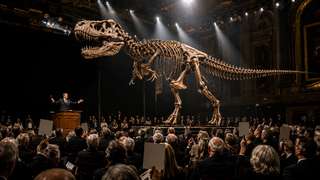
Il devient le dinosaure le plus cher du monde en 10 minutes : voici l’incroyable histoire de Gus
He becomes the most expensive dinosaur in the world in 10 minutes: here is Gus' incredible story
museum Dinosauria Tyrannosaurus skeleton
It spent 67 million years buried in the ground before shaking an auction house. The skeleton of Tyrannosaurus rex nicknamed “Gus” was sold for $50.13 million at Sotheby’s in New York. An absolute record for a dinosaur, which revives the debate on the privatization of...
15/07/2026 futura-terre ⚙ Auto-translated
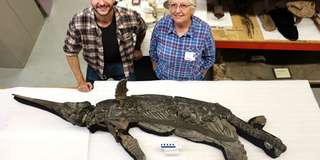
Voici le mystérieux dragon marin qui pourrait résoudre une énigme vieille de presque 200 millions d'années
Meet the mysterious sea dragon that could solve a riddle almost 200 million years old
United Kingdom Xiphodracon skeleton
A three-metre skeleton has been lying dormant in Dorset chalk for 150 million years. Amateur excavators brought it out of obscurity in 2001, but it took more than twenty years for science to finally give it a name. This sea dragon shakes up what we thought we knew about...
21/06/2026 futura-terre ⚙ Auto-translated
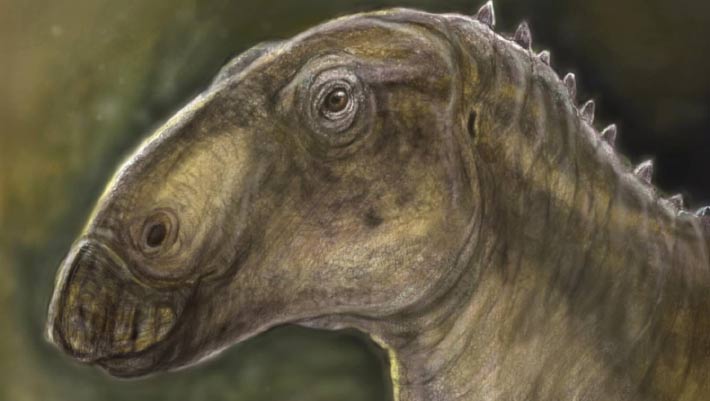
New Duck-Billed Dinosaur Unearthed in Romania
pelvis Hungary Italy Romania United Kingdom Maastrichtian Dinosauria Kryptohadros new species skeleton
An international team of paleontologists from Romania, Hungary and Italy has identified a new genus and species of herbivorous, duck-billed dinosaur from an incomplete skeleton unearthed in the Hațeg Basin, a bowl-shaped depression in the Carpathians of present-day Romania. The post New Duck-Billed Dinosaur Unearthed in Romania appeared first on Sci.News: Breaking Science News.
16/06/2026 sci-news
1 2 3 4 5