squelette

Type de vue

167 image(s) · 17 Actualités

Galerie d'images

Photograph and outline drawing of the skeleton of Chuanqilong chaoyangensis.

A, photograph; B, outline drawing. Abbreviations: ca, caudal vertebrae; cb, cervical band; da, dermal armor; dr, dorsal rib; lfe, left femur; lfi, left fibula; lhu, left humerus; lil, left ilium; lis, left ischium; lma, left maxilla; lmd, left mandible; lmt, left metatarsal; lra, left radius; lsc, left scapula; lti, left tibia; lul, left ulna; mc, metacarpals; orb, orbital; pl, plates; q, quadrate; rfe, right femur; rfi, right fibula; rhu, right humerus; ril, right ilium; rma, right maxilla; rmd, right mandible; rmt, right metatarsals; rra, right radius; rsc, right scapula; rti, right tibia; rul, right ulna; sar, sacral rib; te, tendons. [planned for page width].
Taxons Chuanqilong

Photograph and outline drawing of the skeleton of Chuanqilong chaoyangensis. A, photograph; B, outline drawing. Abbreviations: ca, caudal vertebrae; cb, cervical band; da, dermal armor; dr, dorsal rib; lfe, left femur; lfi, left fibula; lhu, left humerus; lil, left ilium; lis, left ischium; lma, left maxilla; lmd, left mandible; lmt, left metatarsal; lra, left radius; lsc, left scapula; lti, left tibia; lul, left ulna; mc, metacarpals; orb, orbital; pl, plates; q, quadrate; rfe, right femur; rfi, right fibula; rhu, right humerus; ril, right ilium; rma, right maxilla; rmd, right mandible; rmt, right metatarsals; rra, right radius; rsc, right scapula; rti, right tibia; rul, right ulna; sar, sacral rib; te, tendons. [planned for page width].

armure humérus dessin Chuanqilong +1
Reconstructed skeleton of Zuul
Taxons Zuul

Reconstructed skeleton of Zuul

Zuul squelette
Fossil skeleton of Gargoyleosaurus parkpinorum taken in 2007 at the Denver Museum of Nature and Science.
Taxons Gargoyleosaurus

Fossil skeleton of Gargoyleosaurus parkpinorum taken in 2007 at the Denver Museum of Nature and Science.

musée Denver fossile Gargoyleosaurus +1
Copy of a skeleton of a Lessemsaurus in the exhibition "Gigasaurier - Die Riesen Argentiniens" in Frankfurt am Main 2010
Taxons Lessemsaurus

Copy of a skeleton of a Lessemsaurus in the exhibition "Gigasaurier - Die Riesen Argentiniens" in Frankfurt am Main 2010

Lessemsauridae Lessemsaurus squelette
Copy of a skeleton of a Lessemsaurus in the exhibition "Gigasaurier - Die Riesen Argentiniens" in Frankfurt am Main 2010
Taxons Lessemsauridae

Copy of a skeleton of a Lessemsaurus in the exhibition "Gigasaurier - Die Riesen Argentiniens" in Frankfurt am Main 2010

Lessemsauridae Lessemsaurus squelette
The incomplete skeleton of Cetiosauriscus stewarti (BMNH R3078) mounted prior to display in around
1903. Photographed in the BMNH, and reproduced courtesy of the Leeds family, with layout by J. J. Liston. Note

the similarity of this photograph to the drawing of the skeleton in Woodward (1905); previously figured in Anon. (1924) and Naish & Martill (2008).[1][2]
Taxons Cetiosauriscus

The incomplete skeleton of Cetiosauriscus stewarti (BMNH R3078) mounted prior to display in around 1903. Photographed in the BMNH, and reproduced courtesy of the Leeds family, with layout by J. J. Liston. Note the similarity of this photograph to the drawing of the skeleton in Woodward (1905); previously figured in Anon. (1924) and Naish & Martill (2008).[1][2]

dessin Cetiosauriscus squelette
Xianshanosaurus skeleton
Taxons Xianshanosaurus

Xianshanosaurus skeleton

Xianshanosaurus squelette
Reconstructed skeleton of Daxiatitan binglingi.
Taxons Daxiatitan

Reconstructed skeleton of Daxiatitan binglingi.

Daxiatitan squelette
Skeletons of Bonatitan and Austroraptor at the Museo Argentino de Ciencias Naturales Bernardino Rivadavia
Taxons Bonatitan

Skeletons of Bonatitan and Austroraptor at the Museo Argentino de Ciencias Naturales Bernardino Rivadavia

Austroraptor Bonatitan squelette
Herbivorous dinosaur found in the Al-khoudh area.  This dinosaur is similar to the Zalmoxes and Rhabdodon dinosaurs.  The skeleton in the Bait Al Baranda Museum was assembled from bones borrowed from several museums.

Herbivorous dinosaur found in the Al-khoudh area. This dinosaur is similar to the Zalmoxes and Rhabdodon dinosaurs. The skeleton in the Bait Al Baranda Museum was assembled from bones borrowed from several museums.

os musée Dinosauria Mochlodon +3
Rates of skeletal character evolution in the skull and postcranial skeleton of hadrosauroids. Cladograms illustrate the results from branch likelihood tests for two morphological partitions: skull (cranium and mandible) (A) and postcranial skeleton (B). In both cladograms, results from the branch likelihood tests are summarized on a strict consensus tree derived from four separately analyzed MPTs, each with 100 dating replicates (a total of 400 Hedman-dated phylogenies). Pie charts on branches illustrate the proportion of dating replicates that showed significantly high rates (red), slow rates (blue), or nonsignificant average rates (white). No pie charts are plotted on branches that showed nonsignificant rates in 100% of dating replicates. Branches that showed high rates (red) in more than 50% of dating replicates are doubled in length. See the Supplementary Material for Hedman-based results plotted separately for each MPT (Supplementary Fig. S2) and for results using the MBL dating method (Supplementary Fig. S3). Silhouettes were created by Scott Hartman and were downloaded from http://phylopic.org (Creative Commons license CC BY 3.0).

Rates of skeletal character evolution in the skull and postcranial skeleton of hadrosauroids. Cladograms illustrate the results from branch likelihood tests for two morphological partitions: skull (cranium and mandible) (A) and postcranial skeleton (B). In both cladograms, results from the branch likelihood tests are summarized on a strict consensus tree derived from four separately analyzed MPTs, each with 100 dating replicates (a total of 400 Hedman-dated phylogenies). Pie charts on branches illustrate the proportion of dating replicates that showed significantly high rates (red), slow rates (blue), or nonsignificant average rates (white). No pie charts are plotted on branches that showed nonsignificant rates in 100% of dating replicates. Branches that showed high rates (red) in more than 50% of dating replicates are doubled in length. See the Supplementary Material for Hedman-based results plotted separately for each MPT (Supplementary Fig. S2) and for results using the MBL dating method (Supplementary Fig. S3). Silhouettes were created by Scott Hartman and were downloaded from http://phylopic.org (Creative Commons license CC BY 3.0).

Protohadros datation évolution squelette +1
Restoration of the spinosaurid dinosaur Siamosaurus in the Sao Khua Formation palaeoenvironment, with Sunosuchus in the middle left and a herd of Phuwiangosaurus in the background.
References:
Siamosaurus based on tooth specimens [1] and the neural spine of a possibly referable skeleton[2], with other missing elements filled in with relatives (Suchomimus[3], Baryonyx[4], IchthyovenatorFile:Ichthyovenator_laosensis_skeletal_reconstruction_by_PaleoGeek.png).
Phuwiangosaurus based on skeletal by Suteethorn et al. (2009)[5] and missing elements of skull of EuhelopusFile:Euhelopus.png.

Sunosuchus based on Suteethorn and Ingavat (1983)[6] and missing elements based on Goniopholis[7].
Formations Sao Khua

Restoration of the spinosaurid dinosaur Siamosaurus in the Sao Khua Formation palaeoenvironment, with Sunosuchus in the middle left and a herd of Phuwiangosaurus in the background. References: Siamosaurus based on tooth specimens [1] and the neural spine of a possibly referable skeleton[2], with other missing elements filled in with relatives (Suchomimus[3], Baryonyx[4], IchthyovenatorFile:Ichthyovenator_laosensis_skeletal_reconstruction_by_PaleoGeek.png). Phuwiangosaurus based on skeletal by Suteethorn et al. (2009)[5] and missing elements of skull of EuhelopusFile:Euhelopus.png. Sunosuchus based on Suteethorn and Ingavat (1983)[6] and missing elements based on Goniopholis[7].

dent dessin Sao Khua spécimen +11
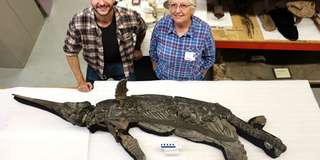
Life restoration of the German Jurassic ichthyosaur Suevoleviathan disinteger. The dorsal and caudal fins are loosely based on those of Stenopterygius.
References
Maisch, M.W. (2020). "The best-preserved skeleton of Suevoleviathan integer (Bronn, 1844)(Reptilia: Ichthyosauria) from the lower Jurassic of south-western Germany, with a discussion of the genus". Neues Jahrbuch für Geologie und Paläontologie, Abhandlungen 297 (2): 153–172.
Maisch, M.W. (1998). "A new ichthyosaur genus from the Posidonia Shale (Lower Toarcian, Jurassic) of Holzmaden, SW-Germany with comments on the phylogeny of post-Triassic ichthyosaurs". Neues Jahrbuch für Geologie und Paläontologie-Abhandlungen 209 (1): 47–78.

Life restoration of the German Jurassic ichthyosaur Suevoleviathan disinteger. The dorsal and caudal fins are loosely based on those of Stenopterygius. References Maisch, M.W. (2020). "The best-preserved skeleton of Suevoleviathan integer (Bronn, 1844)(Reptilia: Ichthyosauria) from the lower Jurassic of south-western Germany, with a discussion of the genus". Neues Jahrbuch für Geologie und Paläontologie, Abhandlungen 297 (2): 153–172. Maisch, M.W. (1998). "A new ichthyosaur genus from the Posidonia Shale (Lower Toarcian, Jurassic) of Holzmaden, SW-Germany with comments on the phylogeny of post-Triassic ichthyosaurs". Neues Jahrbuch für Geologie und Paläontologie-Abhandlungen 209 (1): 47–78.

Allemagne Posidonia Shale Jurassique Toarcien +6
Skeleton of Tuarangisaurus at the Museo Argentino de Ciencias Naturales Bernardino Rivadavia

Skeleton of Tuarangisaurus at the Museo Argentino de Ciencias Naturales Bernardino Rivadavia

Tuarangisaurus squelette
Tuarangisaurus cabazai skeleton restoration, Copenhagen

Tuarangisaurus cabazai skeleton restoration, Copenhagen

Tuarangisaurus squelette
MRF 319, a partial oviraptorosaurian skeleton referred to Anzu wyliei. 
(A) Skeletal reconstruction in left lateral view, with preserved bones in gray and bones represented in other Anzu specimens in white (hatching indicates heavily reconstructed portions of the ilia of CM 78001). Middle-posterior (ninth?) cervical vertebra in (B) anterior, (C) left lateral, and (D) dorsal views. Posterior (11th?) cervical vertebra in (E) anterior, (F) left lateral, and (G) dorsal views. Posterior (12th?) cervical vertebra in (H) anterior, (I) left lateral, and (J) dorsal views. Anteroposteriorly crushed left radius in lateral (K) and anterior (L) views. Mediolaterally crushed left ulna in lateral (M) and anterior (N) views. (O) Partial left scapulocoracoid in lateral view. Dorsal rib in anterior (P) and posterior (Q) views. Abbreviations: acr, acromial process; cr, cervical rib; dip, distal processes; pat, pathology; pf, pneumatic fossa. Scale bars = 50 cm in A; 1 cm in B–Q.

MRF 319, a partial oviraptorosaurian skeleton referred to Anzu wyliei. (A) Skeletal reconstruction in left lateral view, with preserved bones in gray and bones represented in other Anzu specimens in white (hatching indicates heavily reconstructed portions of the ilia of CM 78001). Middle-posterior (ninth?) cervical vertebra in (B) anterior, (C) left lateral, and (D) dorsal views. Posterior (11th?) cervical vertebra in (E) anterior, (F) left lateral, and (G) dorsal views. Posterior (12th?) cervical vertebra in (H) anterior, (I) left lateral, and (J) dorsal views. Anteroposteriorly crushed left radius in lateral (K) and anterior (L) views. Mediolaterally crushed left ulna in lateral (M) and anterior (N) views. (O) Partial left scapulocoracoid in lateral view. Dorsal rib in anterior (P) and posterior (Q) views. Abbreviations: acr, acromial process; cr, cervical rib; dip, distal processes; pat, pathology; pf, pneumatic fossa. Scale bars = 50 cm in A; 1 cm in B–Q.

os écaille vertèbre pathologie +5
1 2 3 4 5 6 7 8 9 10 11

Actualités

New Jurassic Pterosaur Unearthed in Germany
Un nouveau ptérosaure du Jurassique découvert en Allemagne
Allemagne Jurassique fossile Monofenestrata Pterosauria nouvelle espèce squelette
Les paléontologues ont décrit un nouveau genre et une nouvelle espèce de ptérosaure monofenestratan précoce sur la base d'un squelette fossile presque complet et bien conservé découvert en Bavière, en Allemagne. L'article Un nouveau ptérosaure jurassique découvert en Allemagne est apparu en premier sur Sci.News : Breaking Science News.
19/05/2026 sci-news ⚙ Traduction automatique
Magnifique squelette fossile d'Eryops exposé
prédateur musée Permien fossile squelette
Quand j'étais enfant, l'un de mes animaux préhistoriques préférés était le géant temnospondyl Eryops.  Cela me fait toujours plaisir de tomber sur des fossiles de ce prédateur du Permien inférieur.  En effet, le simple fait de voir un squelette reconstruit me fait sourire.  Quand je suis au Musée d'Histoire Naturelle de Londres, j'essaie de prendre le temps d'observer l'Eryops megacephalus.
06/05/2026 everythingdinosaur ⚙ Traduction automatique
Une « plante grimpante des sables » géante vieille de 240 millions d’années découverte cachée dans un mur de soutènement
dent prédateur Australie fossile découverte squelette
Un fossile oublié caché dans un mur de jardin s’est avéré être l’une des découvertes préhistoriques les plus remarquables d’Australie. Les scientifiques ont maintenant identifié l'amphibien Arenaerpeton supinatus, vieux de 240 millions d'années, révélant un squelette presque parfaitement conservé, avec de rares traces de peau. Cet ancien prédateur de rivière, mesurant environ 1,2 mètre de long, ressemblait un peu à une salamandre géante, mais il était plus volumineux et armé de redoutables dents en forme de crocs.
06/05/2026 sciencedaily ⚙ Traduction automatique
Early Sauropodomorph Dinosaur Unearthed in China
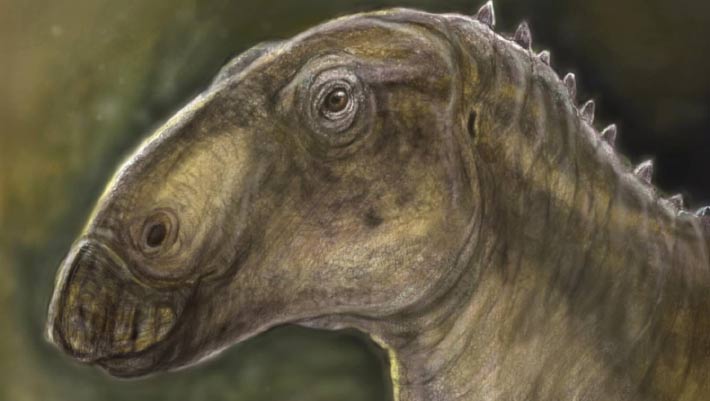
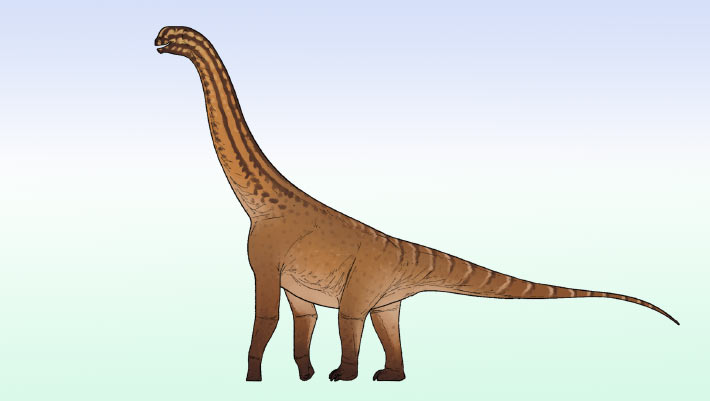
Un dinosaure sauropodomorphe découvert en Chine
Chine Jurassique inférieur Jurassique Dinosauria Massopoda nouvelle espèce partiel squelette
Un nouveau genre et une nouvelle espèce de sauropodomorphe massopodan qui vivaient au début du Jurassique ont été identifiés à partir d'un squelette partiel découvert dans le sud-ouest de la Chine. L'article Les premiers dinosaures sauropodomorphes découverts en Chine est apparu en premier sur Sci.News : Breaking Science News.
04/05/2026 sci-news ⚙ Traduction automatique
Ce « crocodile terroriste » de 31 pieds mangeait des dinosaures. Maintenant c'est de retour
prédateur musée États-Unis Dinosauria squelette
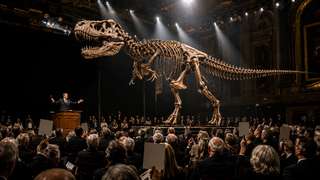
Un énorme « crocodile terroriste » de la taille d’un bus qui s’attaquait autrefois aux dinosaures a été ramené à la vie avec des détails époustouflants grâce au premier squelette complet scientifiquement précis de Deinosuchus schwimmeri. S'étendant sur plus de 9 mètres de long, cet ancien prédateur suprême régnait sur le sud-est des États-Unis il y a plus de 75 millions d'années. Les visiteurs peuvent désormais le voir de près au Tellus Science Museum, le seul endroit au monde à posséder cette réplique.
15/04/2026 sciencedaily ⚙ Traduction automatique
1 2 3 4