squelette

Type de vue

294 image(s) · 23 Actualités

Galerie d'images

"Daspletosaurus torosus" skeleton cast, reconstructed and mounted by Triebold Paleontology based on a nearly complete specimen from Montana's Judith River Formation
Taxons Daspletosaurini

"Daspletosaurus torosus" skeleton cast, reconstructed and mounted by Triebold Paleontology based on a nearly complete specimen from Montana's Judith River Formation

Judith River moulage spécimen Daspletosaurini +3
Reconstruction of skeleton; Lower Cretaceous (120 mio. Years); Jungar Basin, China.
Taxons Dsungaripteridae

Reconstruction of skeleton; Lower Cretaceous (120 mio. Years); Jungar Basin, China.

Chine Crétacé Dsungaripteridae squelette
Reconstruction of skeleton; Lower Cretaceous (120 mio. Years); Jungar Basin, China.
Taxons Dsungaripterus

Reconstruction of skeleton; Lower Cretaceous (120 mio. Years); Jungar Basin, China.

Chine Crétacé Dsungaripteridae squelette
Mounted replica of a composite skeleton of Edmontosaurus annectens on display at the University of Oxford Museum, Oxford, England. The original skeleton is compiled from disarticulated fossil bones from a bonebed of the Hell Creek Formation, exposed in the Ruth Mason Quarry in Harding County, South Dakota. It is 8.5 m (28 ft.) long and the skull is almost 1 m (39 in.) in length.[1][2]


↑ Dinosaurs in the Museum. Oxford University Museum of Natural History (brochure, PDF), p. 7

↑ BHI Fossil Replica Catalog 2012. Black Hills Institute of Geological Research, Inc., Hill City, SD, 2012 (PDF), p. 22
Taxons Saurolophinae

Mounted replica of a composite skeleton of Edmontosaurus annectens on display at the University of Oxford Museum, Oxford, England. The original skeleton is compiled from disarticulated fossil bones from a bonebed of the Hell Creek Formation, exposed in the Ruth Mason Quarry in Harding County, South Dakota. It is 8.5 m (28 ft.) long and the skull is almost 1 m (39 in.) in length.[1][2] ↑ Dinosaurs in the Museum. Oxford University Museum of Natural History (brochure, PDF), p. 7 ↑ BHI Fossil Replica Catalog 2012. Black Hills Institute of Geological Research, Inc., Hill City, SD, 2012 (PDF), p. 22

os musée Hell Creek fossile +6
Holotype block of Oksoko avarsan MPC-D 102/110. (a,b) Holotype block with skeletons in ventral view. Colours distinguish different individuals; the holotype individual is in blue.
Taxons Oksoko

Holotype block of Oksoko avarsan MPC-D 102/110. (a,b) Holotype block with skeletons in ventral view. Colours distinguish different individuals; the holotype individual is in blue.

holotype Oksoko squelette
Restoration of the skeleton, Age of Dinosaur Museum, Winton, Australia
Taxons Australovenator

Restoration of the skeleton, Age of Dinosaur Museum, Winton, Australia

musée Australie Winton Australovenator +2
Giganotosaurus skeleton mount at the Fernbank Museum of Natural History in Atlanta, Georgia.
Taxons Giganotosaurus

Giganotosaurus skeleton mount at the Fernbank Museum of Natural History in Atlanta, Georgia.

musée Géorgie Giganotosaurus squelette
Mounted skeleton of Acrocanthosaurus specimen NCSM 14345 at North Carolina Museum of Natural Sciences
Taxons Acrocanthosaurus

Mounted skeleton of Acrocanthosaurus specimen NCSM 14345 at North Carolina Museum of Natural Sciences

musée spécimen Acrocanthosaurus squelette
Velociraptor skeleton
Taxons Velociraptor

Velociraptor skeleton

Velociraptor squelette
Reconstructed skeleton of Argentinonectes calafatensis at the Bernardino Rivadavia Natural Sciences Argentine Museum in 2018.

Reconstructed skeleton of Argentinonectes calafatensis at the Bernardino Rivadavia Natural Sciences Argentine Museum in 2018.

musée Argentine Argentinonectes squelette
Schematic drawing of MUPA-ATZ0103, postcranial skeleton of the paratype of Paludidraco multidentatus.

Schematic drawing of MUPA-ATZ0103, postcranial skeleton of the paratype of Paludidraco multidentatus.

dessin Paludidraco squelette
Reconstructed skeleton of a megaraptoran highlighting the known bones of Joaquinraptor casali in blue. Reconstruction by TK Robinson and Andrew McAfee. Scale bar=1 m.

Reconstructed skeleton of a megaraptoran highlighting the known bones of Joaquinraptor casali in blue. Reconstruction by TK Robinson and Andrew McAfee. Scale bar=1 m.

os écaille Joaquinraptor Megaraptora +1
Hypothetical reconstruction of the skeleton of Amanasaurus nesbitti gen. et sp. nov. depicting (in orange) the preserved portions. (a) CAPPA/UFSM 0374 (holotype), a proximal portion of a right femur in anterior view. (b) CAPPA/UFSM 0375 (referred specimen), a distal portion of a left femur in anterior view. Figures were generated with GIMP 2.8 (https://www.gimp.org/).
Cropped from original image and letters adjusted to match.

Hypothetical reconstruction of the skeleton of Amanasaurus nesbitti gen. et sp. nov. depicting (in orange) the preserved portions. (a) CAPPA/UFSM 0374 (holotype), a proximal portion of a right femur in anterior view. (b) CAPPA/UFSM 0375 (referred specimen), a distal portion of a left femur in anterior view. Figures were generated with GIMP 2.8 (https://www.gimp.org/). Cropped from original image and letters adjusted to match.

holotype spécimen Amanasaurus squelette
Pliosaurus (Luskhan itilensis) lived on the territory of the Volga region in the Hauterivian age of the Early Cretaceous period. Discovered in 2002 by G.N. Uspensky on the banks of the Volga near the village of Slantsevy Rudnik. This is the most complete pliosaurus skeleton found in Russia. This pliosaurus was not a predator and preferred to feed on fish and cephalopods.

Pliosaurus (Luskhan itilensis) lived on the territory of the Volga region in the Hauterivian age of the Early Cretaceous period. Discovered in 2002 by G.N. Uspensky on the banks of the Volga near the village of Slantsevy Rudnik. This is the most complete pliosaurus skeleton found in Russia. This pliosaurus was not a predator and preferred to feed on fish and cephalopods.

prédateur Russie Crétacé Crétacé inférieur +5
Skeleton and reconstruction of Luskhan
Taxons Luskhan

Skeleton and reconstruction of Luskhan

Luskhan squelette
Holotype of Alcione elainus.
Fig. 6 of:
Longrich, N. R., Martill, D. M., & Andres, B. (2018). Late Maastrichtian pterosaurs from North Africa and mass extinction of Pterosauria at the Cretaceous-Paleogene boundary. PLoS biology, 16(3), e2001663.
---
Original figure legend:
A. elainus FSAC-OB 2, holotype partial skeleton and FSAC-OB 217, metacarpal IV.

(A) Holotype right humerus in anterior view, (B) holotype right ulna and radius in anterior view, respectively, (C) holotype sternum in left lateral view, (D) referred metacarpal IV, (E) holotype, distal end of left metacarpal IV and left scapulocoracoid, and (F) holotype right femur in posterior view. Abbreviations: co, coracoid; cr, cristospine; dc, distal condyle; dpc, deltopectoral crest; ect, ectepicondyle; fh, femoral head; gl, glenoid; gt, greater trochanter; hh, humeral head; hum, humerus; mcIV, metacarpal IV, pc, proximal cotyle; pf, pneumatic foramen; rad, radius; scpr, supracondylar process; ste, sternum; uln, ulna.

Holotype of Alcione elainus. Fig. 6 of: Longrich, N. R., Martill, D. M., & Andres, B. (2018). Late Maastrichtian pterosaurs from North Africa and mass extinction of Pterosauria at the Cretaceous-Paleogene boundary. PLoS biology, 16(3), e2001663. --- Original figure legend: A. elainus FSAC-OB 2, holotype partial skeleton and FSAC-OB 217, metacarpal IV. (A) Holotype right humerus in anterior view, (B) holotype right ulna and radius in anterior view, respectively, (C) holotype sternum in left lateral view, (D) referred metacarpal IV, (E) holotype, distal end of left metacarpal IV and left scapulocoracoid, and (F) holotype right femur in posterior view. Abbreviations: co, coracoid; cr, cristospine; dc, distal condyle; dpc, deltopectoral crest; ect, ectepicondyle; fh, femoral head; gl, glenoid; gt, greater trochanter; hh, humeral head; hum, humerus; mcIV, metacarpal IV, pc, proximal cotyle; pf, pneumatic foramen; rad, radius; scpr, supracondylar process; ste, sternum; uln, ulna.

crête humérus Crétacé Maastrichtien +7
1 2 3 4 5 6 7 8 9 10 11 12 13 14 15 16 17 18 19

Actualités

Ce « crocodile terroriste » de la taille d’un autobus scolaire a mangé des dinosaures. Maintenant c'est de retour
musée fossile Dinosauria Géorgie squelette
Un crocodile massif capable d'attaquer les dinosaures a été ramené à la vie en tant que premier squelette monté scientifiquement précis de Deinosuchus schwimmeri. La réplique de 31 pieds du Tellus Science Museum de Géorgie a été construite à partir d’analyses détaillées de fossiles et de plus de 40 ans de recherches menées par le paléontologue Dr David Schwimmer, en l’honneur duquel l’espèce doit son nom.
05/08/2026 sciencedaily ⚙ Traduction automatique
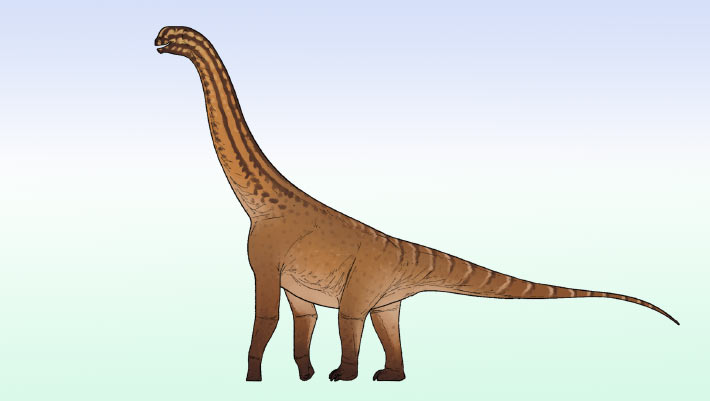
Small Sauropod Dinosaur from Jurassic Period Discovered in India
Un petit dinosaure sauropode du Jurassique découvert en Inde
bassin Inde Jurassique Jurassique moyen Dinosauria partiel squelette
Des paléontologues indiens ont mis au jour un squelette partiel d’un petit dinosaure néosauropode jusqu’alors inconnu dans les roches du Jurassique moyen du bassin de Kachchh, dans le Gujarat. L'article Petit dinosaure sauropode de la période jurassique découvert en Inde apparaît en premier sur Sci.News : Breaking Science News.
21/07/2026 sci-news ⚙ Traduction automatique
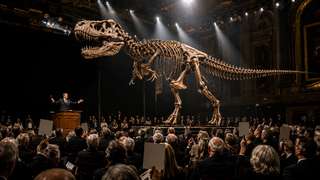
Il devient le dinosaure le plus cher du monde en 10 minutes : voici l’incroyable histoire de Gus
musée Dinosauria Tyrannosaurus squelette
Il a traversé 67 millions d’années enfoui dans le sol avant de faire trembler une salle des ventes. Le squelette de Tyrannosaurus rex surnommé "Gus" a été adjugé 50,13 millions de dollars chez Sotheby’s, à New York. Un record absolu pour un dinosaure, qui ravive le débat sur la privatisation des...
15/07/2026 futura-terre
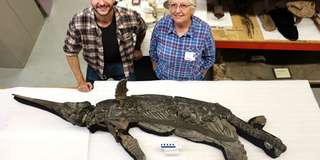
Voici le mystérieux dragon marin qui pourrait résoudre une énigme vieille de presque 200 millions d'années
Royaume-Uni Xiphodracon squelette
Un squelette de trois mètres dormait dans la craie du Dorset depuis 150 millions d'années. Des fouilleurs amateurs l'ont sorti de l'obscurité en 2001, mais il a fallu attendre plus de vingt ans pour que la science lui donne enfin un nom. Ce dragon marin bouleverse ce que l'on croyait savoir sur...
21/06/2026 futura-terre
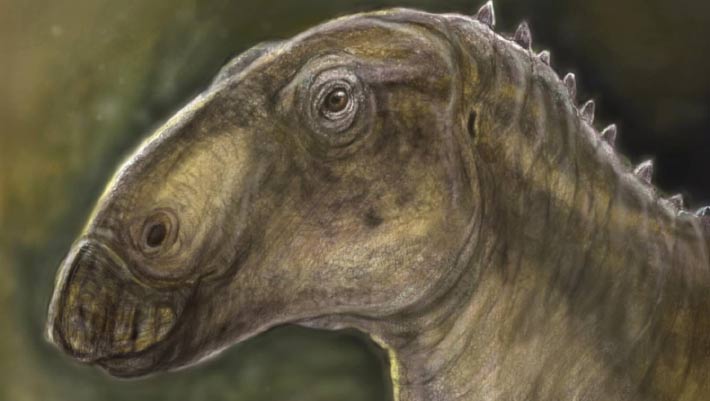
New Duck-Billed Dinosaur Unearthed in Romania
Un nouveau dinosaure à bec de canard découvert en Roumanie
bassin Hongrie Italie Roumanie Royaume-Uni Maastrichtien Dinosauria Kryptohadros nouvelle espèce squelette
Une équipe internationale de paléontologues de Roumanie, de Hongrie et d'Italie a identifié un nouveau genre et une nouvelle espèce de dinosaure herbivore à bec de canard à partir d'un squelette incomplet découvert dans le bassin de Hațeg, une dépression en forme de bol dans les Carpates de l'actuelle Roumanie. L'article Un nouveau dinosaure à bec de canard découvert en Roumanie est apparu en premier sur Sci.News : Breaking Science News.
16/06/2026 sci-news ⚙ Traduction automatique
1 2 3 4 5